You have probably seen the photos on Instagram. A hyper-saturated, bubblegum-pink body of water sitting right next to the deep blue ocean, separated by a thin strip of white sand. It looks fake. It looks like someone went completely wild with the saturation slider in Lightroom.
When you stand next to one of Australia's pink lakes, you realize the photos aren't lying. The water really is that pink.
Many people assume these waterways are the result of chemical dumping or some bizarre industrial runoff. That is completely wrong. The vibrant hues are entirely natural, driven by an extreme biological battle for survival in some of the saltiest environments on the planet. If you are planning a trip to see these natural wonders, understanding how they work will completely change how you view them.
The Chemistry of a Bubblegum Pink Lake
For decades, even scientists were not entirely sure what caused the intense coloration of these water bodies. They assumed a single type of algae was responsible. Recent genetic testing has revealed a much more complex microbial community at play.
The magic happens because these lakes have no outlet. Water flows in, but it only leaves through evaporation. Over thousands of years, this process leaves behind massive concentrations of salt, making the water up to ten times saltier than the ocean. Regular fish and marine plants cannot survive here. Instead, these hypersaline environments become dominated by extreme micro-organisms called halophiles.
The main player is an alga called Dunaliella salina. Under normal conditions, it looks green. When the water temperature rises, the sun beats down, and the salt levels skyrocket, the alga goes into defense mode. It starts producing massive amounts of beta-carotene to protect itself from radiation. This is the exact same red-orange pigment found in carrots.
Algae are only half the story. In 2015, molecular biologists with the Extreme Microbiome Project conducted DNA sampling on Lake Hillier. They discovered that Dunaliella salina actually made up a tiny fraction of the lake's microbial life. Instead, the water was packed with a red bacterium called Salinibacter ruber and an ancient organism called Halobacterium salinarum. These microbes produce their own pink and red pigments, called bacterioruberin, to trap light for energy. The combination of these algae, bacteria, and archaea working together creates the brilliant pink shade you see from the shore.
The hue is highly unstable. Because the color relies on living organisms and salt concentrations, a heavy rainfall event can dilute the lake and turn the water a dull blue-grey overnight. It requires a delicate balance of intense heat, high evaporation, and low rainfall to keep the pink looking its best.
Inside Australia's Seven Most Vibrant Pink Waterways
You can find pink lakes scattered across several states, mostly in Western Australia and South Australia. Each one behaves differently based on the local climate and mineral composition.
The Pink and Rainbow Lakes of Esperance
The southern coast of Western Australia features a vast network of salt lakes tucked into the agricultural countryside near Esperance. From the ground, many of these lakes look completely ordinary or slightly washed out. You need to get into the air to truly appreciate them.
From a scenic flight, you can see dozens of distinct circular lakes shifting through shades of soft rose, amber, and deep crimson. The contrast against the nearby white sand dunes of Cape Le Grand National Park is spectacular. The best time to catch the full spectrum is between June and January, when the seasonal water levels line up perfectly with the region's sunlight hours.
Hutt Lagoon and the Industrial Algae Farms
Located a six-hour drive north of Perth along the Coral Coast, Hutt Lagoon is perhaps the most reliable pink lake in the country. It spans roughly 70 square kilometres and rarely loses its color completely. The lake changes character constantly throughout the day. Mid-morning light usually brings out a bright bubblegum pink, while late afternoon can turn the water deep violet or blood red.
This lake is so consistently rich in Dunaliella salina that it houses a commercial algae farm. BASF uses massive artificial ponds on the edge of the lagoon to harvest the algae for beta-carotene, which is then used in natural food dyes and dietary supplements. You can easily view the lake from lookouts along George Grey Drive, but taking a scenic flight from nearby Geraldton shows the true scale of the color grids.
Kati Thanda Lake Eyre's Rare Desert Floods
Kati Thanda-Lake Eyre is Australia's largest salt lake, sitting in a remote, arid basin in outback South Australia. For most of the decade, it is not actually pink. It is a blinding, flat expanse of white salt crust that stretches to the horizon.
Every few years, heavy rains in Queensland travel down ancient river systems to fill the basin. When this water arrives, it dissolves the surface salt crust, triggering a massive bloom of dormant algae. The dry desert floor transforms into an oasis of pale pink, orange, and yellow water, attracting thousands of migratory birds. It is a fleeting phenomenon, making it one of the most sought-after sights for outback travelers.
Lake Bumbunga and the Changing Salinity
If you don't want to charter a plane or drive deep into the outback, Lake Bumbunga is your best option. Located less than two hours north of Adelaide on the edge of the Clare Valley wine region, it sits right next to the highway.
Bumbunga is incredibly shallow, meaning its water levels and salt concentrations shift rapidly with the weather. It can cycle from bright magenta to a chalky white or even a pale blue within a matter of weeks. Photographers love it because the shallow water creates a near-perfect mirror surface on calm days, allowing you to walk out onto the salt crust for surreal reflection shots.
Lake MacDonnell and the Watermelon Avenue Contrast
Situated on the remote Eyre Peninsula, Lake MacDonnell is famous for a single road called Watermelon Avenue. This narrow dirt track cuts directly through the salt lake, splitting it into two distinct zones with completely different environmental conditions.
On one side of the road, the water is intensely pink due to high evaporation and concentrated salinity. On the other side, the water remains a stark mint green or deep blue. The visual line down the middle looks completely intentional, making it a favorite for drone operators. The pink side gets incredibly vibrant during the hot summer months when the water levels drop and the microbes thrive.
Lake Hart and the Sparkling Salt Crusts
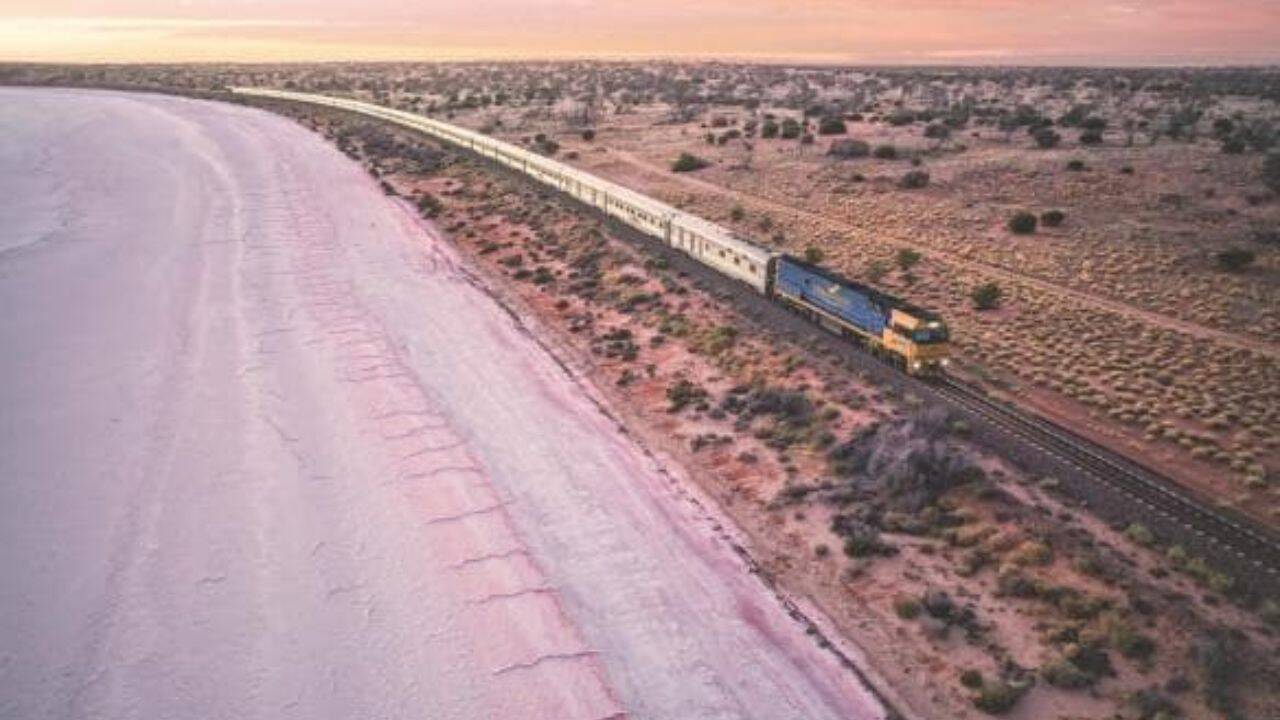
Deep in the South Australian outback, along the route of the Indian Pacific train line, lies Lake Hart. This shallow lake is surrounded by isolated desert plains. The high salt concentration causes crystals to form directly under the soft, pastel-pink water, making the surface sparkle intensely under the midday sun.
Because there are no towns or city lights for hundreds of kilometers, Lake Hart offers a unique experience at night. The pale pink salt bed acts as a natural reflector for the Milky Way, creating an incredible setting for stargazing and long-exposure astrophotography.
The Pink Lakes of Murray Sunset National Park
Victoria's northwest corner holds a cluster of four color-changing salt lakes: Lake Crosbie, Lake Becking, Lake Kenyon, and Lake Hardy. They sit within the wilderness of Murray-Sunset National Park.
Unlike many of the coastal lakes that require bright sunshine to show off their color, these outback lakes often look their best on overcast days. The clouds soften the glare from the salt crust, making the deep rose and salmon hues pop against the surrounding yellow gum trees and saltbush. During the late summer heat, the water evaporates almost entirely, leaving behind glistening pink salt crystals along the shoreline.
Practical Survival Tips for Pink Lake Photography
Don't just turn up at noon expecting a perfect photo. Capturing these lakes requires a bit of planning.
Cloud cover changes everything. While some inland lakes look great under clouds, coastal spots like Hutt Lagoon can look grey or silver if the sky is overcast. Aim for mid-morning on a clear day when the sun is high enough to light up the pigments but not so high that it blows out the reflections.
Think twice before swimming. While the algae and bacteria themselves are harmless to humans, the water is intensely hypersaline. If you have any small cuts or scratches, the salt will sting instantly. The mud beneath the salt crust can also be incredibly sticky and full of sharp salt crystals that can easily cut bare feet. Stick to walking on the established paths or solid salt crusts.
Bring a polarizing filter for your camera or drone. The glare off the white salt and shallow water can easily wash out the pink tones in your lens. A polarizer cuts through the surface reflection, allowing the camera to capture the true depth of the colored water below.
Check the recent local weather before you make a long road trip. If a region has just experienced historic rainfall, the lake you are targeting might be temporarily washed out into a standard muddy brown or dull blue. Local visitor centers or regional social media tags are the best way to get real-time color updates before you drive out into the middle of nowhere.