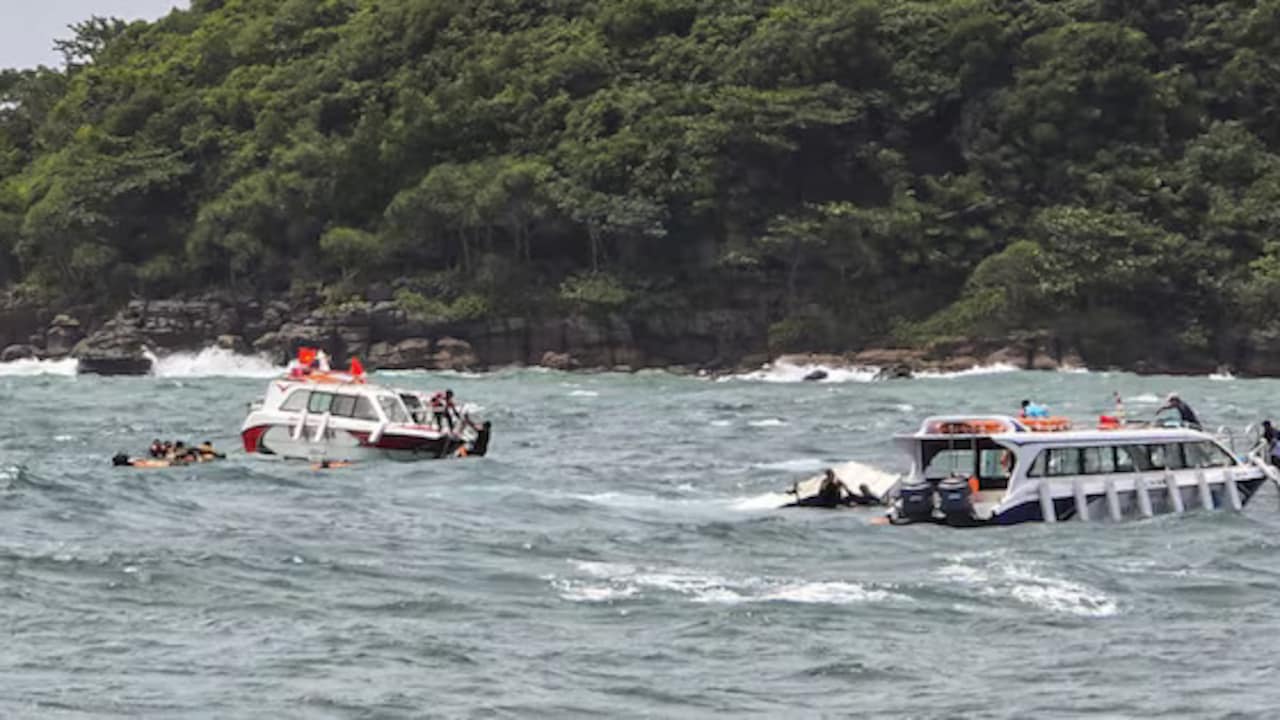
A devastating speedboat capsize off Vietnam’s Phu Quoc Island has turned a corporate holiday into a nightmare, leaving 15 Indian tourists dead and sparking a fierce debate over emergency response times.
The disaster occurred on Saturday, July 11, 2026, when the speedboat Ocean Pearl Island overturned just 400 meters from Hon May Rut Ngoai Island. It was carrying 32 Indian tourists—all employees, distributors, or retail partners of the Indian smartphone company Lava International—alongside four Vietnamese crew members.
While survivors recount horror stories of being trapped underwater and point to a lack of immediate medical supplies on the shore, local officials are pushing back. Tran Minh Khoa, Chairman of the Phu Quoc Special Economic Zone, has broken his silence to firmly reject allegations of a delayed rescue, claiming that locals and emergency units did everything they humanly could under treacherous conditions.
Here is what we know about the tragedy, the survivor accounts, and the official response from Vietnamese authorities.
Three Minutes to Disaster: A Survivor’s Account
The excursion was supposed to be the final, relaxing leg of a company incentive trip. The group split into three smaller boat parties to travel between the idyllic islets off Phu Quoc. The first boat departed, while the others remained docked.
It took only three minutes for everything to go wrong.
Nirmal Kumar, a survivor from Tamil Nadu, recalled that the enclosed speedboat had traveled barely 300 meters from the beach when it met a massive wave. The wave slammed the vessel, tilting it violently. As passengers on one side were thrown across the cabin, the weight shifted instantly, and the boat flipped completely upside down.
"The boat tilted after being struck by an extremely strong wave," Kumar said. "Passengers seated on one side were thrown across, causing the weight to shift suddenly. The boat then overturned completely."
For those inside, the design of the enclosed speedboat became a death trap.
While the driver, tour guide, and about 20 passengers near the exits managed to jump into the sea immediately, those seated toward the rear of the cabin had nowhere to go.
Even though passengers wore life jackets, the buoyancy actually worked against them. The upward force of the vests pinned them against the ceiling of the capsized, enclosed hull, keeping them submerged underwater.
The Controversy Over the Rescue and Medical Response
Eyewitnesses on the shore watched the capsize unfold and began screaming for help. Nearby tourist boats and local fishermen rushed toward the site, but rough seas with waves reaching up to 10 feet made it incredibly difficult to get close. Rescuers feared their boat propellers would strike those struggling in the water.
Ultimately, Jet Skis and smaller watercraft managed to pluck survivors out of the water. While floating survivors were pulled out relatively quickly, recovering those trapped deep inside the overturned cabin took an agonizing 20 to 30 minutes.
A major point of contention has emerged regarding what happened once the victims were brought back to land.
Kumar and other survivors have openly criticized the lack of immediate emergency medical infrastructure on the beach. A doctor who happened to be part of the tour group performed CPR alongside locals, but the necessary emergency medicines and medical equipment were missing.
According to Kumar, the doctor believed that if basic emergency medicines had been available at the site, four or five more lives could have been saved.
"Did Everything We Could": The Official Counter-Perspective
Refuting any claims of negligence or delay, Phu Quoc SEZ Chairman Tran Minh Khoa addressed the Indian press to defend the local response. He argued that the timeline circulated by some survivors does not reflect the immense, coordinated effort that took place under extreme weather conditions.
Khoa explained that the region’s standing "four-on-the-spot" search and rescue plan was activated instantly. This protocol mobilizes local civilian boat operators alongside the rapid deployment of border guards, police, military, coast guard, and naval medical units.
"The information referred to [allegations of delay] does not accurately reflect the actual circumstances of the incident response, nor the tireless rescue and relief efforts undertaken by residents and the Vietnamese authorities," Khoa stated.
Despite the high winds and heavy swell, responders pulled all 36 individuals from the water. 17 survivors were successfully treated at Sun International Hospital.
One 49-year-old survivor, who suffered multiple traumas, near-drowning, and a heart attack, was airlifted in critical condition to Cho Ray Hospital in Ho Chi Minh City, where top specialists are monitoring him. Vietnamese authorities confirmed that all of his medical expenses are being covered by the state.
Criminal Investigation and Next Steps
While Vietnamese officials point to a sudden, unpredictable shift in weather as the primary trigger, they aren't letting the operator off the hook.
The Investigation Police Agency of An Giang Province has officially launched a criminal investigation. The speedboat's captain, 57-year-old Nguyen Hong Hai, has been detained and placed in temporary custody for alleged violations of waterway transport safety regulations.
Investigators are focusing on several key safety factors:
- The Use of Enclosed Speedboats: Enclosed speedboats are popular because they shield tourists from wind and spray, but they drastically reduce evacuation routes when a vessel capsizes.
- Life Jacket Compliance: Although the captain reportedly instructed passengers to wear life jackets, some survivors and local media reports noted that several passengers were merely holding them or had not secured them properly.
- Severe Weather Warnings: Investigators are verifying whether the vessel should have departed at all given the rapidly deteriorating sea conditions.
The mortal remains of the 15 victims—10 from Tamil Nadu, three from Andhra Pradesh, and two from Kerala—were repatriated on a Vietnam Airlines flight and arrived in India on Tuesday morning, where they were handed over to grieving families.
If you are planning to travel to coastal destinations in Southeast Asia, this tragedy highlights the critical importance of booking only with highly rated, fully licensed operators, checking local maritime weather warnings independently before boarding, and ensuring you know how to rapidly exit an enclosed cabin in an emergency.