Elon Musk’s Starlink network was never supposed to be a frontline military asset. Yet, it became the backbone of Ukrainian battlefield communication. For a long time, the low-Earth orbit satellite network seemed mostly immune to heavy electronic warfare. That reality is shifting right now. Russian forces are actively fielding a highly specialized, truck-mounted electronic warfare system built for one specific purpose. They want to completely blind the Starlink terminals guiding Ukraine's long-range strike drones.
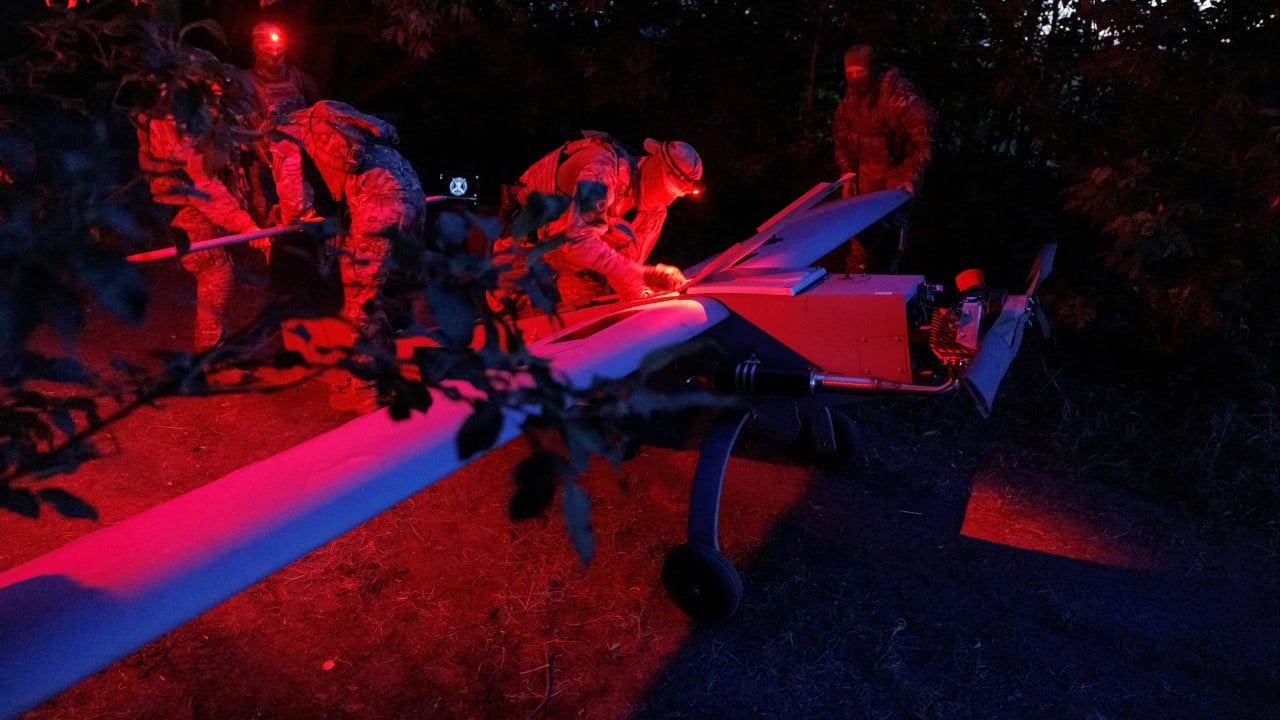
It is a desperate technological chess match. Ukraine pioneered what commanders call the mid-strike drone campaign. These are relatively cheap, explosive-laden drones that fly dozens of kilometers behind the front lines. They hunt down high-value targets. They hit fuel depots, command posts, and ammunition trucks. Because these missions require long-distance, real-time control, pilots rely on Starlink terminals strapped directly to the drone setups or ground control stations.
Russia's response is a system named Volna Kupol Garant. It represents a targeted pivot away from broad, old-school radio jamming toward highly localized satellite denial. But here is the catch. The technology is expensive, the physical footprint is huge, and Ukrainian drone pilots are already finding ways to blow them up.
Inside the Russian Volna Kupol Garant System
To understand why this electronic battle matters, you have to look at the hardware Russia is putting on the field. The Volna Kupol Garant system is not a small, mobile jammer you throw on the back of a pickup truck. It is a massive, multi-vehicle assembly produced by a company called Russkiy Kupol, operating out of Russian-occupied Simferopol in Crimea.
A single full system spans up to six heavy trailers. Each of these trailers transports specialized equipment, generators, and large, steerable antennas hidden under egg-shaped protective domes. The whole setup costs roughly $1.5 million per unit. That is a massive price tag for a system that only covers a tiny patch of ground.
The engineering behind it focuses entirely on Starlink's specific vulnerabilities. Serhii Beskrestnov, a well-known advisor to Ukraine's defense ministry, revealed that the system specifically targets the Starlink uplink band. This is the radio frequency range between 14 GHz and 14.5 GHz. When a ground terminal tries to talk to a SpaceX satellite moving rapidly overhead, it sends data through this specific window.
The Volna Kupol Garant uses eight distinct satellite dishes. Each dish locks onto a single frequency channel with a bandwidth of 62.5 MHz. Instead of trying to block the entire sky, the system floods these specific channels with raw, high-powered radio noise. It essentially deafens the satellite. When the satellite cannot hear the weak signal coming from the ground terminal, the connection drops instantly.
How Ground Based Jamming Actually Operates
The mechanics of this fight come down to basic physics. Russia is not shooting lasers into space or hacking SpaceX software. They are using ground-based electronic warfare to overpower a delicate signal.
When a Starlink terminal operates normally, it creates a narrow, highly directional beam pointing directly at a satellite in low-Earth orbit. Because those satellites move fast, the beam constantly adjusts its angle. This directional nature is exactly what made Starlink so hard to jam during the early phases of the war. Traditional Russian jammers blast noise in all directions, which wastes energy and fails to hit the tight, vertical beam of a satellite terminal.
The Volna Kupol Garant changes the equation by using its own steerable, high-gain directional antennas to pump massive amounts of targeted interference directly into the local airspace. If a Ukrainian drone flies into the active zone, the terminal on the drone or its local relay station gets overwhelmed by the Russian signal. The radio noise acts like a megaphone drowning out a whisper.
The drone loses its data link. The video feed goes black. The pilot loses control.
But this approach has severe physical limitations. The footprint of this $1.5 million system is surprisingly small. It covers a localized area of about 20 square kilometers. Mathematically, that translates to a circular radius of just over 2.5 kilometers. If you want to protect a major logistics highway or a sprawling military base, a single system is nowhere near enough. You need dozens of them deployed in overlapping rings.
The Strategic Flaw in Point Denial Tactics
Because the coverage area is so small, the Volna Kupol Garant acts as a point-denial system rather than a broad shield. This creates a massive tactical dilemma for Russian military planners. They have to decide exactly which fuel depots, air defense installations, or command nodes get the protection. Everything else remains completely exposed to mid-strike drone attacks.
This localized approach reveals a massive vulnerability. High-powered radio jammers are not stealthy. By definition, a system that pumps out immense amounts of radio frequency interference is a glowing beacon on the electronic battlefield. Ukrainian electronic intelligence units can track the source of the jamming signal with incredible precision.
Once the system turns on, it immediately becomes a top-priority target for the very drones it is trying to stop.
Units like Ukraine's 422nd Unmanned Systems Regiment are actively hunting these jammers. They recently released battlefield footage showing the destruction of two separate Volna Kupol Garant installations in the southern Zaporizhzhia region. In one joint operation with the SBU security service, Ukrainian forces located a jammer and wiped it out just hours after it was deployed. The video showed a massive explosion ripping through six trailer units.
Ukrainian drone commanders noted that the moment the jammer exploded, their Starlink-connected drones instantly regained full signal and flew through the area without a single glitch.
Ukrainian Countermeasures and Tactical Adaptation
Drone technology is moving too fast for static jamming systems to stay ahead for long. Ukrainian engineers and pilots are already implementing counter-strategies that bypass the need for a continuous live satellite link.
The biggest shift is the integration of automatic target tracking and electro-optical guidance systems directly onto the drones. In a standard setup, a human pilot watches a live video feed over Starlink and manually guides the drone into the target. If the signal drops, the mission fails.
With automated guidance, the human pilot only needs to steer the drone close to the target area. Before the drone enters the 2.5-kilometer jamming bubble, the pilot selects the target on their screen. The onboard computer locks onto the visual shape of the target using basic machine-vision algorithms.
Even if the Starlink connection drops completely a moment later, the drone does not crash. It switches to autonomous mode, uses its onboard sensors to track the visual target, and completes the strike without needing a single byte of external data. The jamming becomes irrelevant.
Furthermore, Ukraine is diversifying its communication methods. They do not rely solely on Starlink anymore. They use a mix of localized radio relays, frequency-hopping software-defined radios, and fiber-optic tethered drones for shorter-range operations.
What Happens Next on the Electronic Battlefield
Russia knows its electronic shields are fragile. To compensate for the limitations of systems like the Volna Kupol Garant, the Russian military is changing its entire logistics playbook on the fly.
Instead of moving fuel and ammunition in massive, easily spotted truck convoys, they are breaking shipments down into tiny components. Ukrainian intelligence reports indicate that Russian forces are increasingly using civilian cars, quad bikes, and even motorcycles to transport supplies to frontline positions. They are hiding fuel inside abandoned buildings, camouflaged dugouts, and active civilian gas stations to shield them from aerial surveillance. Fuel tankers are now frequently escorted by pickup trucks armed with heavy machine guns to shoot down incoming drones manually.
This shows that technology alone cannot win the electronic warfare race. It is a constant cycle of adaptation. If Russia manages to scale up the production of the Volna Kupol Garant and deploy hundreds of units, they will make Ukraine's mid-strike campaign significantly harder and more expensive. But as long as those jammers remain expensive, highly visible, and vulnerable to automated visual strikes, Starlink will continue to anchor Ukrainian drone operations.
If you are tracking defense technology or analyzing modern electronic warfare, look beyond the marketing claims of un-jammable networks or perfect military shields. Focus on the physical footprint, the frequency bands, and the speed of software adaptations on the ground. Watch how quickly Ukrainian units share coordinates when a new jammer goes live. The side that adapts its code and its targeting parameters fastest will control the local airspace. Keep an eye on the production numbers of Russkiy Kupol units over the coming months to see if Russia can actually achieve the scale they need to tip the balance.