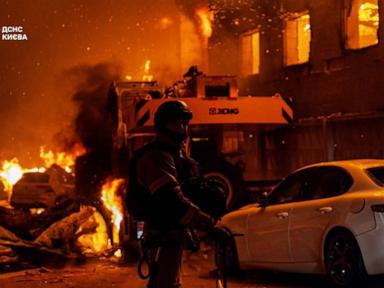
The sirens in Kyiv didn't sound until after the ground shook. Shortly after midnight on July 8, 2026, a series of deafening explosions ripped through the Ukrainian capital before any air raid alert could warn civilians to get underground. It was a terrifying, inverted sequence of events that highlights a dangerous tactical shift. For the second consecutive night, Russia hammered Kyiv in a relentless aerial assault, killing three people across the country and exposing severe, widening vulnerabilities in Ukraine's Western-supplied defense grid.
While international headlines focus heavily on the frontline trenches, the real war of attrition is playing out in the skies over major cities. Russia's latest campaign is distinct, using a hyper-saturated mix of long-range strike drones, decoy aircraft, and fast-moving ballistic missiles.
If you want to understand why these strikes are getting through—and why the traditional air defense umbrella is failing—you have to look at the math behind the latest barrage.
The Grim Math of Saturation Attacks
Ukraine’s Air Force confirmed that Russia launched 169 long-range strike drones alongside seven missiles overnight. This package included five ballistic missiles, which fly on high, fast trajectories that standard anti-aircraft batteries can't touch.
Ukrainian air defense crews worked miracles, intercepting or electronically jamming 139 drones. Two anti-radar missiles missed their targets completely. But the remaining weapons hit with precision. All five ballistic missiles and 20 drones slipped through the net, striking 15 separate locations across the country.
The immediate human toll was devastating. In Kyiv, falling debris and direct impacts killed one woman and injured two others. The blast wave shattered administrative buildings, tore through warehouses, wrecked a local garage complex, and destroyed city trams. Hundreds of kilometers away in Kharkiv, a separate series of overnight strikes killed two people and left 20 others injured, according to Mayor Ihor Terekhov. In Zaporizhzhia, Russian guided bombs struck residential areas, injuring an elderly man and woman.
This isn't an isolated incident. Just 48 hours prior, a massive Russian assault killed over 20 people in Kyiv. The pattern is clear, and the strategic objective goes far beyond hitting infrastructure. Russia is intentionally draining Ukraine’s finite stockpile of interceptor missiles, like the U.S.-made Patriot systems. When Russia fires a cheap drone swarm followed immediately by ballistic missiles, Ukrainian commanders face an impossible choice. They have to decide whether to burn a million-dollar interceptor on a low-cost drone or risk letting a missile destroy a city block. Right now, Ukraine is running out of interceptors, and Russia knows it.
The Asymmetric Drone War Deep Inside Russia
Moscow claims these heavy strikes are direct retaliation for Ukraine's increasingly bold, long-range drone campaign deep inside Russian territory. For months, Ukraine has leveraged its own rapidly evolving drone technology to hit Russian energy infrastructure, causing localized fuel shortages and putting immense political pressure on the Kremlin.
The scale of Ukraine’s counter-offensive in the skies is massive. The Russian Defense Ministry claimed its forces downed 415 Ukrainian drones over a 24-hour period. Ukrainian President Volodymyr Zelenskyy confirmed that Kyiv’s long-range drones successfully hit targets in Saratov, Tatarstan, and Bashkortostan. These areas sit 800, 1,400, and 1,500 kilometers away from the frontline, proving that Ukraine can now project power deep into the Russian heartland.
- Saratov Region: Governor Roman Busargin reported that a Ukrainian drone strike killed one person and damaged an oil refinery.
- Tatarstan: Drones struck industrial facilities in the city of Nizhnekamsk, including another major oil refinery, leaving several people injured.
- Taganrog Bay: Two empty oil tankers heading to the port of Rostov-on-Don were hit and damaged, forcing the evacuation of one crew.
- The Blue Stream Pipeline: Russian gas giant Gazprom stated that Ukrainian drones targeted the Krasnodarskaya compressor station. This facility serves the vital Blue Stream natural gas pipeline to Turkey. Kremlin spokesman Dmitry Peskov called the move a dangerous attack on international energy systems, though gas supplies weren't disrupted.
What This Air War Means Next
The timing of this escalation isn't accidental. It coincides with critical diplomatic talks, where Zelenskyy is making direct, urgent appeals to Western allies for more Patriot missile batteries and advanced air defenses.
The tactical takeaway from this week's strikes is that defensive shields alone won't secure Ukrainian skies. As Russia adapts its tactics, using jet-powered drones and sophisticated decoy packages to confuse radar systems, Ukraine's current defense infrastructure is being pushed past its breaking point.
The next step for Western allies isn't just sending more ammunition. It requires a fundamental shift toward supplying systems capable of tracking and neutralizing ballistic threats before they ever leave the launchpad. Until then, civilians in Kyiv will continue to listen for explosions before the sirens even have a chance to scream.