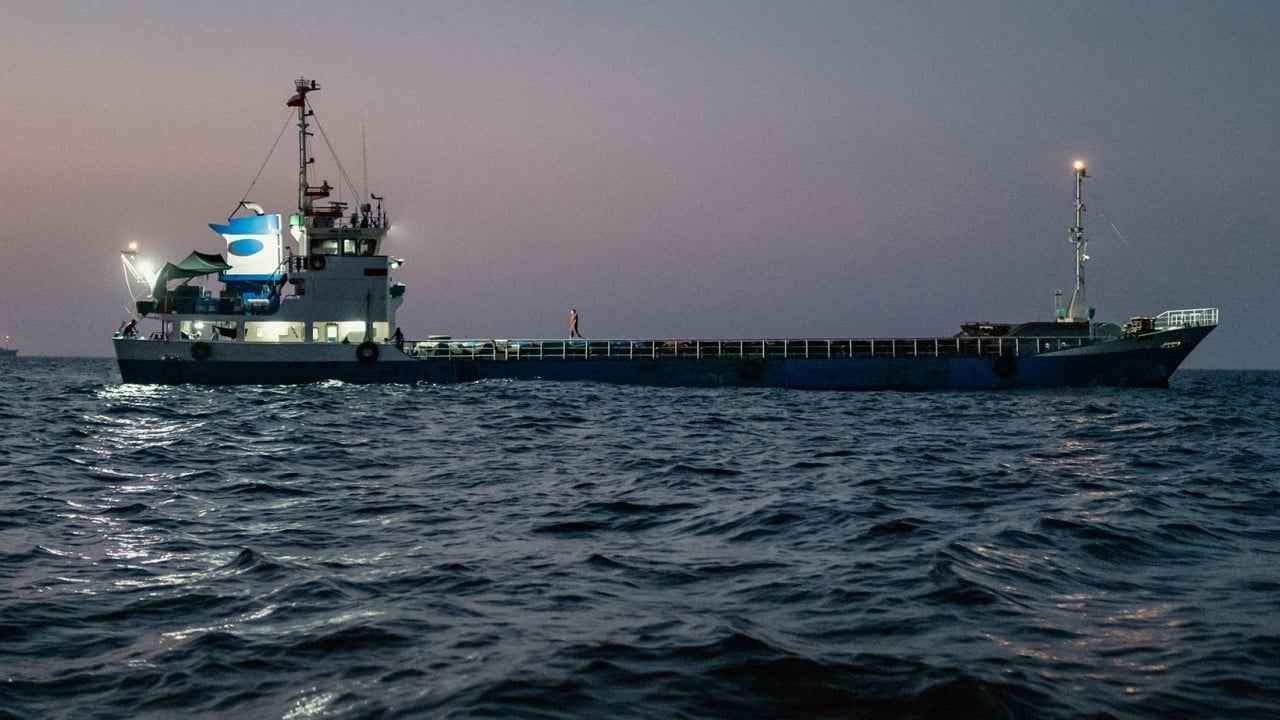
The maritime chess game in the Indian Ocean just took a bizarre turn. On Tuesday, two heavily sanctioned tankers loaded with Iranian crude quietly changed their destination signals to Karachi.
This isn't a standard commercial delivery. Pakistan hasn't officially imported a single drop of Iranian crude in over a decade. Buying this oil directly would trigger a avalanche of secondary US sanctions that Islamabad simply cannot afford. Instead, this sudden course correction is a desperate reaction to Washington's newly reinstated naval blockade.
As the brief, fragile summer truce between Washington and Tehran collapses back into a hot trade war, the shadow fleet is running out of places to hide.
The Sudden Shift to Karachi Waters
The two vessels at the center of this geopolitical scramble are the Rani and the Amil. Together, they are carrying roughly one million barrels of Iranian crude oil.
According to tracking data compiled by Bloomberg, both ships updated their transponders to list Karachi as their next destination shortly after exiting the Persian Gulf. They were already in open waters when the US Navy officially renewed its blockade.
Let's look at the players involved. The Rani is a Suezmax tanker. Equasis database records show it is owned and managed by Starboard Shipping Inc-Pan, a Panama-registered entity. The Amil is a smaller, medium-range tanker. It is owned by Malaysia-registered Amelie Ltd. and managed by Hong Kong's Espoir Shipping Ltd. Both ships are formally blacklisted by the US Treasury.
If they aren't going to unload their cargo at Pakistani terminals, what are they doing?
What the Shadow Fleet Is Actually Planning
Maritime security analysts point to a few highly likely scenarios. None of them involve a standard port delivery.
Using Karachi as a Safe Waiting Room
During the intense blockade run earlier this spring, several empty, Iran-linked tankers hovered just off the coast of Karachi. They weren't there to trade. They were waiting for a window of opportunity to slip back through the Strait of Hormuz to reload. Charlie Brown, an adviser to the watchdog group United Against Nuclear Iran (UANI), suggests this trend is re-emerging. Tanker operators view the waters just outside Pakistan's territorial jurisdiction as a relatively safe spot to drop anchor and wait for diplomatic winds to shift.
Ship-to-Ship Cargo Laundering
The ultimate destination for almost all of this oil is China's independent "teapot" refineries. To get it there, the shadow fleet relies on ship-to-ship (STS) transfers. Typically, a sanctioned vessel will pull up alongside an unsanctioned "clean" tanker in a quiet patch of ocean, pump its cargo over, and falsify the shipping documents to list the origin as somewhere neutral, like Malaysia or Oman. By idling near Pakistan, the Rani and Amil might be waiting for a partner vessel to perform a dark transfer.
Avoiding the US Navy Patrols
Vortexa analyst Xavier Tang pointed out a simpler, more tactical explanation. The tankers might just be hugging the Pakistani coastline to stay as far away from US Navy warships as possible. By listing Karachi as a waypoint on their transponders, they maintain a veneer of legitimate regional transit while planning to eventually slip south toward Southeast Asian holding areas.
Why the Truce Failed and the Blockade Returned
To understand why these ships are running scared, we have to look at the spectacular collapse of the June peace talks.
A momentary sigh of relief went through global energy markets on June 17, 2026, when the US and Iran signed a temporary memorandum of understanding. The deal, brokered in part by Swiss, Qatari, and Pakistani mediators, was supposed to open a 60-day window for broader negotiations. The US even issued General License X, which briefly allowed conventional banks, insurers, and shipping registries to engage with some Iranian oil transactions without getting hit by sanctions.
It didn't last.
By July 8, the fragile peace shattered. Iran-backed forces launched fresh attacks on commercial shipping in the Strait of Hormuz, killing an Indian sailor and striking UAE-flagged tankers. The response from Washington was swift. President Donald Trump scrapped his proposed transit toll plan for the Strait and ordered the US Navy to immediately reinstate the full naval blockade on all Iranian ports.
Once again, the US military is actively turning back vessels trading with Iran and threatening to strike Iranian oil infrastructure if the shipments don't stop.
Where the Rest of the Oil Is Going
While Pakistan serves as a temporary shelter, the real logistical engine of Iran’s oil export machine lies much further east.
The waters off the eastern coast of Malaysia, particularly around the Riau Islands, remain the primary staging ground for the shadow fleet. Satellite imagery has consistently caught dozens of blacklisted tankers operating in the dark there, turning off their AIS transponders to mask massive cargo transfers.
While most vessels leaving the Gulf continue to list Singapore as their nominal destination to throw off regulators, the reality is that the oil is systematically blended, rebranded, and shipped directly to Chinese ports.
But getting the oil to East Asia is becoming infinitely harder under the renewed US blockade. During the peak of the spring blockade, Iran's exports reportedly plummeted to just 260,000 barrels per day—a massive drop from its usual 1.5 million barrels.
What to Watch Next
The presence of the Rani and the Amil near Karachi is a clear indicator that the shadow fleet's logistics are under severe strain. If you are tracking energy markets or maritime risk, keep a close eye on these specific developments.
- Watch the AIS Transponders: See if the Rani and Amil suddenly go dark (turn off their automatic tracking) off the coast of Pakistan. If they do, an unsanctioned tanker is likely meeting them for a covert ship-to-ship transfer.
- Monitor Pakistan's Port Authorities: Look for official statements from Karachi port officials. While Pakistan wants to maintain good diplomatic ties with Iran, allowing these ships to dock or discharge cargo would draw immediate, devastating sanctions from the US Treasury.
- Track the Discount Rates: As the US blockade tightens, the price discount on Iranian crude will likely widen. Watch whether independent Chinese refineries increase their buying of "Malaysian blend" oil in the coming weeks.
The shadow fleet is incredibly adaptable, but even the most sophisticated evasion networks struggle when the US Navy is actively turning ships around in the Gulf of Oman. For now, Karachi is a temporary escape hatch. It won't stay open forever.