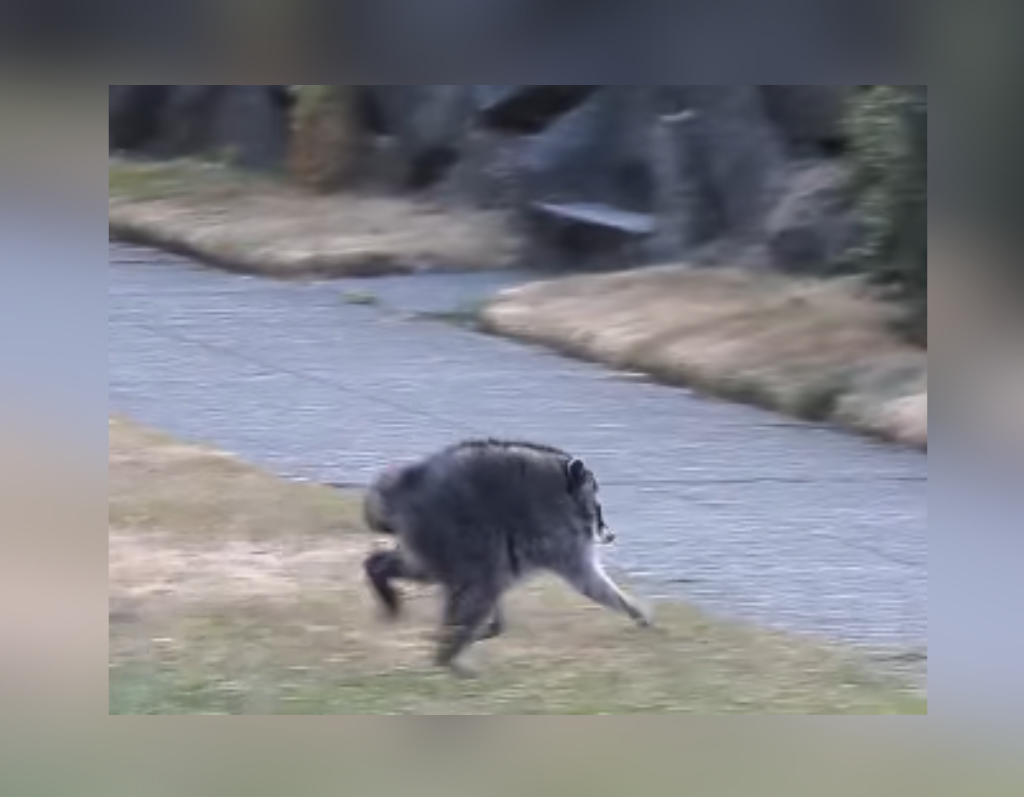
If you walk through Seattle's Ballard neighborhood right now, you aren't going to hear people chatting about local politics or rain forecasts. They're talking about a raccoon. Specifically, an unusually compact, round wild raccoon affectionately named Jimothy.
Jimothy doesn't look like any raccoon you've ever seen. He has almost no visible neck, his front and back legs sit remarkably close together, and his back slopes into a tight, ball-like silhouette. He looks like a creature drawn by a cartoonist who forgot to draw the middle section.
When Seattle resident Kiana Hall spotted him beneath a parked car on an evening walk with her husband and posted a video on social media, the internet blew up overnight. Millions of views accumulated within days. People started drawing fan art, getting tattoos, and lobbying the city council.
Underneath all the memes and viral hype lies a surprisingly fascinating story about animal genetics, urban wildlife resilience, and why we should leave wild animals alone even when we love them.
The Science Behind Jimothy Short Body
Veterinarians who watched the viral clips quickly spotted what makes Jimothy unique. Dr. Carrie Schneider of Seattle's Family Pet Veterinary Hospital noted that Jimothy likely suffers from a rare congenital condition known as short spine syndrome.
Short spine syndrome happens during early fetal development in utero. Instead of individual vertebrae forming a long, flexible spine, certain vertebrae fuse together or fail to harden properly. The result is a drastically shortened spinal column, compressed vertebrae, and a firm, stocky frame.
You might have heard of this in dogs. Famous canine internet figures like Cuda the Pit Bull or Pig the Dog brought attention to the condition years ago. But seeing short spine syndrome in wild raccoons is incredibly rare.
Geneticists suspect inbreeding in isolated urban animal populations can increase the odds of these recessive mutations popping up. Cities form natural barriers. Highways, concrete walls, and waterways squeeze wildlife pockets together, shrinking the gene pool.
Dr. Marcie Logsdon, an associate professor at Washington State University’s Veterinary Teaching Hospital, reviewed footage of Jimothy and pointed out that without an X-ray, nobody can offer a 100% formal diagnosis. Still, the physical cues are unmistakable.
The surprising part? Jimothy isn't in pain.
Many people assuming a deformed spine equals suffering get this wrong. Animals born with congenital conditions like short spine syndrome adapt from day one. They don't lose mobility because their muscles and nervous systems develop alongside their modified skeleton.
Jimothy climbs, runs, and scampers through backyards just fine.
Growing Up Compact in Ballard
Jimothy isn't a new resident of Ballard; he's a veteran.
While the internet discovered him in July 2026, locals have known about him for years. Neighbor Ben Trammell shared early footage showing Jimothy as a baby raccoon. He was born in a cluster of cedar trees in a local yard, part of a normal raccoon litter.
Trammell recalled watching the mother raccoon and her siblings take care of the awkward, tiny kit. The family used fences as a protected ramp across yards. Because Jimothy was smaller and less agile, his mother and siblings would slow down, nudge him along, and occasionally pick him up so he wouldn't fall.
Another resident, Dmitriy Ishimskiy, has security camera footage of Jimothy hanging out on his property dating back to July 2025. The raccoon regularly sits on fences, scratches his ear, or digs through gardens searching for grubs.
Living as a wild animal in a major city is tough under normal circumstances. Doing it with a distinct spinal deformity requires incredible adaptability. Jimothy proved he has plenty of it.
He avoids traffic. He finds food. He outsmarted predators.
Why the Internet Loves an Oddball Animal
We see hundreds of viral pet videos every week. Why did this specific wild raccoon blow up globally?
Psychologists point to a simple concept: unexpected symmetry and roundness. Human brains are hardwired to find shortened, compact features cute. It’s the same reason humans favor pugs, French bulldogs, or round cartoon characters. Jimothy looks like a creature straight out of a Studio Ghibli film.
Beyond his appearance, Jimothy represents something relatable. He's a scrappy under-dog navigating a complex world.
The cultural response across Seattle was fast and intense.
- Local artists created street murals and enamel pins.
- Seattle Mariners featured clips of Jimothy on the stadium big screen during a home game.
- Game modders added Jimothy models into video games like Stardew Valley and Skyrim.
- Blizzard Entertainment added a subtle nod to the raccoon in World of Warcraft.
- Seattle City Council member Alexis Mercedes Rinck planned an official city proclamation in his honor.
It’s fun. It’s lighthearted. But it also presents a very real problem for wildlife managers.
The Dark Side of Viral Animal Fame
When a wild animal goes viral, human behavior usually turns reckless.
People want selfie photos. They want to touch the animal. They leave food out to lure the creature onto their porch.
The Washington Department of Fish and Wildlife issued a direct statement asking the public to leave Jimothy alone. Feeding Jimothy or trying to approach him ruins his natural survival instincts. A habituated raccoon becomes a bold raccoon, and bold raccoons end up getting hit by cars or put down by animal control when they enter homes.
Wildlife biologists emphasize three rules for dealing with local neighborhood icons:
- Never leave food out. Raccoons are natural foragers. Dog food on a porch attracts rats, creates conflict with domestic pets, and makes raccoons dependent on handouts.
- Keep your distance. If you see Jimothy or any wild animal, take your photos from at least 20 feet away. Don't chase him down an alley or block his path.
- Do not attempt rescue. Jimothy looks strange, but he is not injured. Trapping him to put him in a sanctuary or rehabilitation center would cause severe psychological stress to an animal that has successfully lived in the wild for years.
What You Should Do If You Spot Jimothy
If you live in Ballard or visit the Seattle area, there's a small chance you'll catch a glimpse of Jimothy during evening hours.
Enjoy the moment from afar. Grab your camera, take a video, and let him go about his business.
If you want to support urban wildlife like Jimothy, donate to local wildlife rehabilitation centers like PAWS Wildlife Center in Washington rather than trying to feed your neighborhood animals. They provide professional care for injured and orphaned wild animals without habituating them to human contact.
Jimothy survived because his mother protected him, his neighborhood gave him space, and his body adapted. Keeping him safe means keeping him wild.