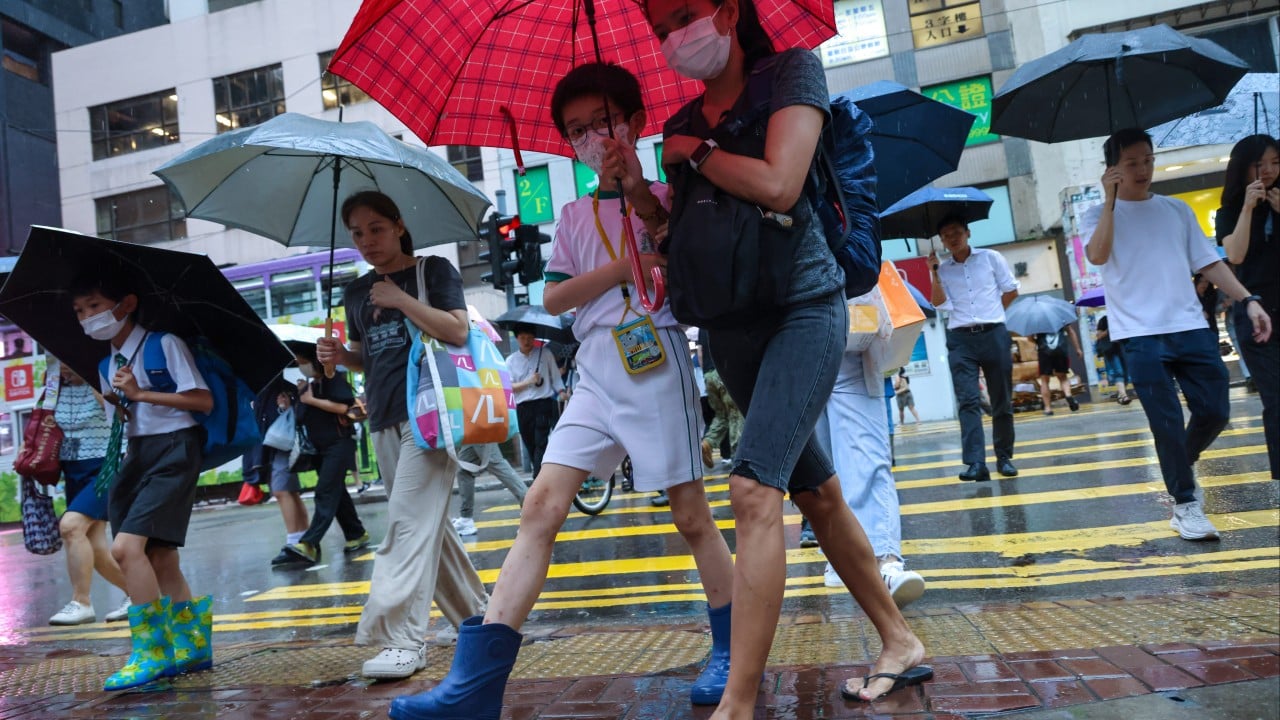
You know the routine. You look at your phone, see the amber rainstorm warning icon, shrug, and grab a cheap convenience store umbrella. Most people in Hong Kong treat the amber signal as a mild annoyance. It is just a bit of rain, right?
That is a dangerous mistake.
On Wednesday, July 15, 2026, the Hong Kong Observatory hoisted yet another Amber Rainstorm Warning Signal at 10:05 a.m. This came alongside a persistent thunderstorm warning. An active southwesterly airstream brought heavy, dumping showers and squally thunderstorms across the coast of Guangdong. While the amber signal literally means rainfall has exceeded, or is expected to exceed, 30 millimeters in an hour, what it actually represents is a ticking clock.
Treating this level of weather as a signal to carry on with business as usual is how people end up trapped in flash floods or stranded in gridlock. When the sky opens up in Hong Kong, things go downhill fast.
The Real Danger Of The Amber Signal
The amber warning is not a passive "heads up." It is the first line of defense. The Hong Kong Observatory uses this signal to put key emergency departments, utility companies, and public transport operators on high alert.
Localised downpours during an amber alert can easily match the intensity of a red or black warning in specific neighborhoods. Because of Hong Kong's steep, concrete-heavy topography, water does not just pool. It flows downward rapidly, turning roads into rushing rivers within minutes.
During this week's storm, the Observatory warned of immediate flooding in low-lying and poorly drained areas. If you live or work near watercourses, particularly in the New Territories, an amber warning is your cue to move. Waiting for a red or black warning to take action is often too late.
What Actually Happens Behind The Scenes
When the warning drops, a coordinated response begins across the city.
- The Drainage Services Department deploys emergency clearance teams to flood-prone blackspots to clear blocked drains.
- Public transport operators monitor rail lines and bus routes for potential landslips or deep pooling.
- Property management offices across Central and Kowloon scramble to erect flood barriers at basement parking entrances.
If you are outdoors, you need to adapt immediately.
Get Out of the Water
If you are swimming, hiking near streams, or doing water sports, get out. Flash floods in places like Lantau or New Territories streams happen in seconds. You will not see the water rising until it is already sweeping you off your feet.
Stay Off High Ground
The squally thunderstorms accompanying these systems bring severe wind gusts. Keep away from highly conductive objects, isolated trees, and masts.
Monitor the Escalation
Never assume an amber signal will stay amber. The Observatory monitors real-time radar images to see if the thundery shower bands are consolidating. If the rain intensifies, they will upgrade the signal to Red (50 mm/hour) or Black (70 mm/hour). Keep your weather app open and notifications turned on.
How To Prep Before The Next Downpour Hits
Don't wait for the next alert to figure out what to do. Take these steps now.
- Clear your household drains. If you have a rooftop, balcony, or garden, clear out leaves and debris weekly during the rainy season.
- Know your commute alternatives. MTR stations can flood, and bus services easily freeze up when roads clog. Know at least two ways to get home.
- Secure loose balcony items. High winds easily toss plants and laundry racks off high-rise buildings, turning them into deadly projectiles.
- Keep emergency contacts ready. Bookmark the Hong Kong Observatory and the Drainage Services Department hotline (2300 1110) on your phone.
The weather will remain highly unsettled over the next few days. Stay dry, stay alert, and don't underestimate the amber signal.