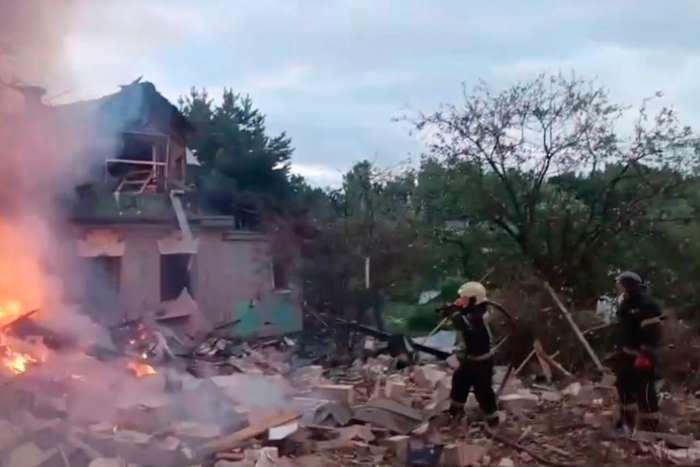
The fragile peace in the Middle East didn't just crack this weekend. It shattered. If you thought the mid-June memorandum of understanding between Washington and Tehran would hold, Saturday night gave you a brutal reality check. The US military launched a massive wave of airstrikes against Iranian territory, hitting roughly 140 targets in its third major operation this week. Tehran didn't back down. Instead, the Islamic Revolutionary Guard Corps fired back, launching missiles and drones at US military installations situated right inside the borders of America's Gulf allies.
Right now, the global economy is staring down a massive threat. Iran claims the Strait of Hormuz is officially closed. US Central Command insists it's wide open. This disagreement matters immensely because a fifth of the world's oil and liquefied natural gas flows through this tiny choke point. If ships can't pass safely, global energy markets will spiral.
The Saturday Night Blitz
US Central Command deployed everything from fighter jets to naval vessels and drones to execute the weekend strikes. According to the Pentagon, the operation specifically targeted locations meant to degrade Iran's ability to harass commercial shipping. We're talking about drone storage facilities, coastal radar stations, naval assets, and missile launch sites. The bombs hit major hub cities including Bandar Abbas, the port of Jask, and Chabahar.
Iranian state media confirmed the strikes, reporting casualties including a naval lieutenant in Jask. The Ministry of Health in Tehran had already claimed earlier in the week that prior US raids killed 17 people and injured over a hundred. This latest escalation completely upends the status quo established after the war originally broke out on February 28.
The immediate trigger for this weekend's massive retaliation was an Iranian attack on a Cyprus-flagged container ship transiting the strait. The vessel was set ablaze, forcing its crew to abandon ship. Iran claimed the ship ignored warnings and used an unauthorized route, using that as justification to declare the entire waterway closed.
Gulf Allies Catch the Counterfire
Tehran didn't just target American ships this time. They expanded their target list to hit US bases located in neighboring Gulf countries. This is a massive shift in strategy. For months, Iran avoided hitting certain neighbors to keep diplomatic doors open. That restraint is gone.
Drones and missiles rained down on locations across the region:
- Jordan: Three missiles hit a facility, targeting what Iran claimed was a command center and drone hangar.
- Kuwait: A US military radar site came under direct fire.
- Oman: Iranian forces targeted naval support and refueling platforms in the Musandam region.
- Qatar: The IRGC launched attacks targeting a prominent US base on Qatari soil.
This regional spread changes the entire diplomatic equation. Qatar has been the central mediator trying to patch together a permanent ceasefire between the US and Iran. Doha has made its position crystal clear in the past: it won't act as a neutral mediator while its own territory is getting hit by missiles. By dragging Qatar into the crosshairs, Iran is effectively tearing up the diplomatic playbook.
The Battle for the Strait
Who actually controls the water right now? It depends entirely on who you ask.
CENTCOM released a firm statement declaring that Iran does not control the Strait of Hormuz and that the waterway remains open to all commercial vessels. They claim their forces are actively coordinating safe passage for tankers.
Step over to the Iranian side, and the rhetoric is completely opposite. The IRGC posted on social media that passage through the strait is currently impossible. They claim they disabled a second unauthorized vessel on Sunday. They vow the shipping lanes will stay blocked until the US completely ends its military presence in the region.
Shipping companies are stuck in the middle of these conflicting orders. Do you trust the American promise of protection, or do you avoid the route entirely to save your crew and cargo? Most commercial operators are choosing caution, which means tankers are dropping anchor and waiting out the storm.
The Economic Fallout Is Already Hitting
You're going to feel this flare-up at the gas pump very soon. The effective blockade of the strait has already sent energy prices upward. This isn't just a local security issue; it's a global inflation engine.
High energy prices are a massive political headache for President Trump as the November congressional elections approach. A spike in gasoline prices right before voting begins is the exact scenario the White House wanted to avoid.
Rhetoric Reaches a Boiling Point
The language coming out of both capitals suggests neither side wants to step back first. President Trump recently warned that he would completely destroy Iran if the regime made any attempt on his life, stating that 1,000 missiles are locked, loaded, and aimed at the country.
In response, Iran's Supreme Leader released a statement vowing continued resistance and revenge. The interim agreement signed in June is essentially dead paper at this point. While an Iranian delegation did travel to Oman this weekend to keep indirect talks alive via mediators, the heavy exchange of fire makes a real breakthrough highly unlikely.
What Happens Next
The UN Secretary-General has called for an immediate halt to the fighting, but calls for calm won't clear the shipping lanes. Keep an eye on two specific indicators over the next 48 hours to see where this crisis goes.
First, look at the insurance rates for commercial maritime transit. If maritime insurers stop covering vessels traveling through the Gulf, the Strait of Hormuz is effectively closed to commerce, no matter what CENTCOM says. Second, watch the movement of US carrier strike groups. If the Pentagon moves more naval assets directly into the strait to escort tankers by force, we're likely to see direct, ship-to-ship engagements.
The window for a diplomatic exit is closing fast, and the risk of a full-scale regional conflict has never been higher.