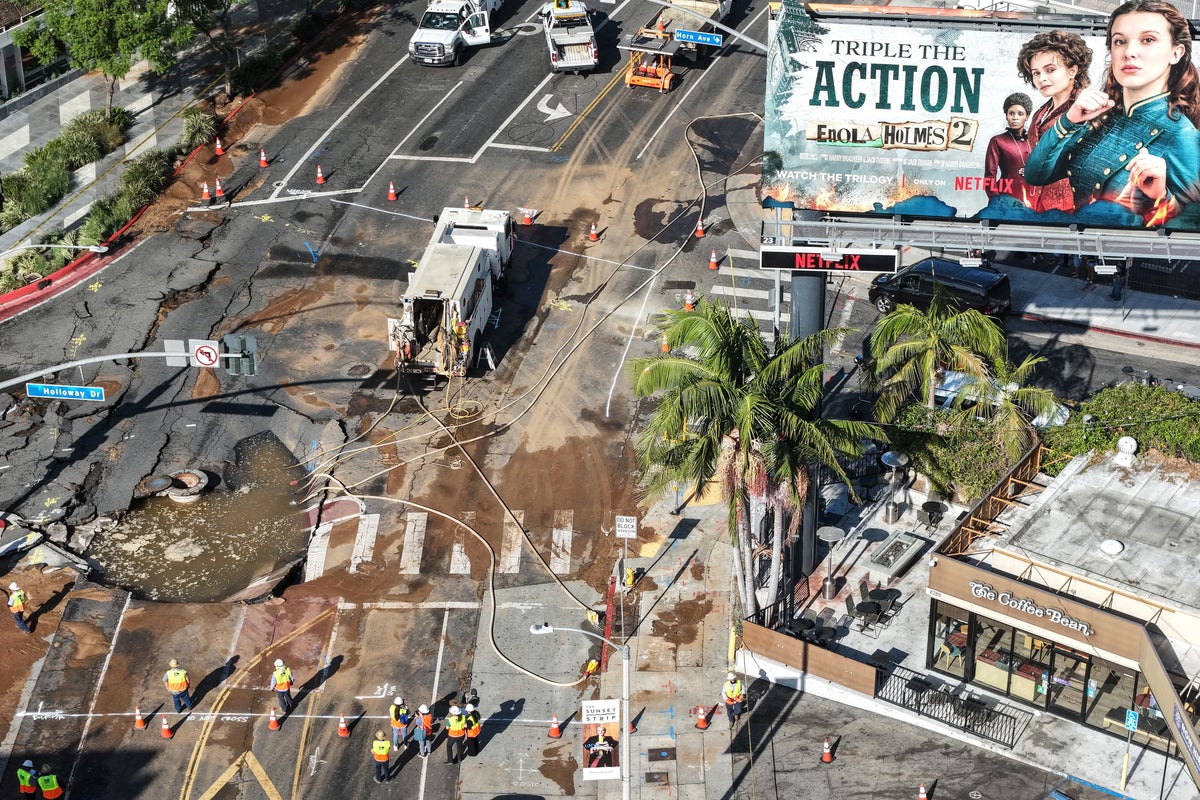
Waking up to a geyser in the middle of a world-famous street isn't what most people expect on a Thursday morning. Yet on July 16, 2026, residents in West Hollywood watched as Sunset Boulevard turned into a rushing brown river. A 110-year-old water main split wide open, buckling concrete, submerging dozens of cars in underground parking garages, and opening up a dangerous sinkhole that swallowed a piece of the sidewalk.
This isn't just a local traffic headache or an isolated bad day for the Sunset Strip. It's a flashing red warning light for urban infrastructure across the country. When a single pipeline laid down during World War I can paralyze a major economic hub, we have a profound problem that patch jobs can't fix.
The Chaos on the Sunset Strip
The failure happened around 3:00 a.m. near Palm Avenue and Holloway Drive. Because water system pressures hit their peak during the middle of the night when everyone is asleep, aging systems face intense stress during these hours. The Los Angeles Department of Water and Power (LADWP) confirmed that the 36-inch trunk line split open after its ancient rivets failed.
Incident Details: July 16, 2026 Water Main Rupture
- Location: Sunset Boulevard and Holloway Drive, West Hollywood
- Pipe Age: 110 years old (Installed in 1916)
- Pipe Size: 36-inch trunk line
- Initial Water Removed: 195,000 gallons from the repair site alone
The resulting torrent ran all the way down to Santa Monica Boulevard. It flooded a Metro bus yard, filled subterranean garages, and forced the total closure of iconic commercial areas, including the historic former Tower Records building. Near Dialog Cafe, a popular local spot that suffered heavy damage, a sidewalk collapsed entirely. Two men fell right into the sudden sinkhole, though thankfully they avoided serious injury.
Shutting down a massive pipe like this isn't as simple as turning off a backyard garden hose. It took utility crews about four hours of slow, deliberate work to shut the high-pressure underground valves. Doing it too fast causes a phenomenon called water hammer—a shockwave that can easily blow out surrounding pipelines and trigger an even bigger disaster.
Why This Keeps Happening
If this narrative sounds familiar, that's because it's happened before on this exact stretch of road. Sunset Boulevard is practically a repeat offender for catastrophic pipe failures.
In 2014, a 93-year-old steel pipe ruptured further down Sunset, sending 20 million gallons of water onto the UCLA campus and causing $13 million in damage. In 2020, a 99-year-old pipe burst and flooded UCLA again. Just a year after that, an 82-year-old line broke further west.
The math is simple and terrifying. Thousands of miles of water lines buried beneath our feet were designed to last 50 to 75 years. Many of them are pushing past a century. The LADWP replaces roughly 45 miles of pipeline a year, but with a massive system stretching across thousands of miles, they are constantly racing against time. Weak spots are inevitable. They reveal themselves in the most destructive ways possible.
The Economic and Civil Cost of Old Iron
While LADWP managed to keep drinking water flowing to local homes via an intact 8-inch bypass line, the external economic toll is severe. Businesses had to close during peak summer operating days. Parking enforcement had to be suspended across multiple districts just to deal with the fact that residents couldn't access their own flooded driveways or garages.
LA Mayor Karen Bass used the disaster to highlight the immediate need for a comprehensive infrastructure plan, which is headed to the voter ballot. It highlights a fundamental truth about modern cities. We love funding shiny new projects, but we consistently ignore the invisible, unsexy utility networks that keep society functioning day to day.
When engineers excavated the site, they found they had to cut away a full 25-foot section of the ruined pipeline. The fix requires fabricating a custom steel piece from scratch, transporting it to the Strip, and executing 16 continuous hours of welding just to seal it in place. It’s a painstaking process that reminds us how fragile our daily routines really are.
What Needs to Change Right Now
We cannot keep treating these failures as freak accidents. They are predictable systemic outcomes. City governments and water districts must shift their approach immediately.
First, municipalities need to accelerate the transition away from old riveted iron and cast-iron lines to modern welded steel and high-density plastic alternatives that better withstand pressure fluctuations.
Second, asset management must become predictive. Instead of waiting for a pipe to blow apart and open a sinkhole on a busy avenue, utility companies need to invest heavily in acoustic monitoring and smart pressure-management sensors. These tools identify micro-leaks and structural stress before a catastrophic rupture occurs.
Finally, voters have to stop penalizing cities for spending money on underground maintenance. Upgrading water mains requires tearing up roads, causing short-term traffic pain. But as the West Hollywood mess clearly shows, the cost of neglect is always far higher than the cost of prevention.