Western museums have been playing a frustrating game of musical chairs with stolen colonial artifacts for years. They hold endless panels, commission decades of "provenance research," and issue vague press releases about ethical stewardship. It's a hollow performance designed to stall. But on Monday, June 29, 2026, Switzerland actually did something that moves past the usual empty talk.
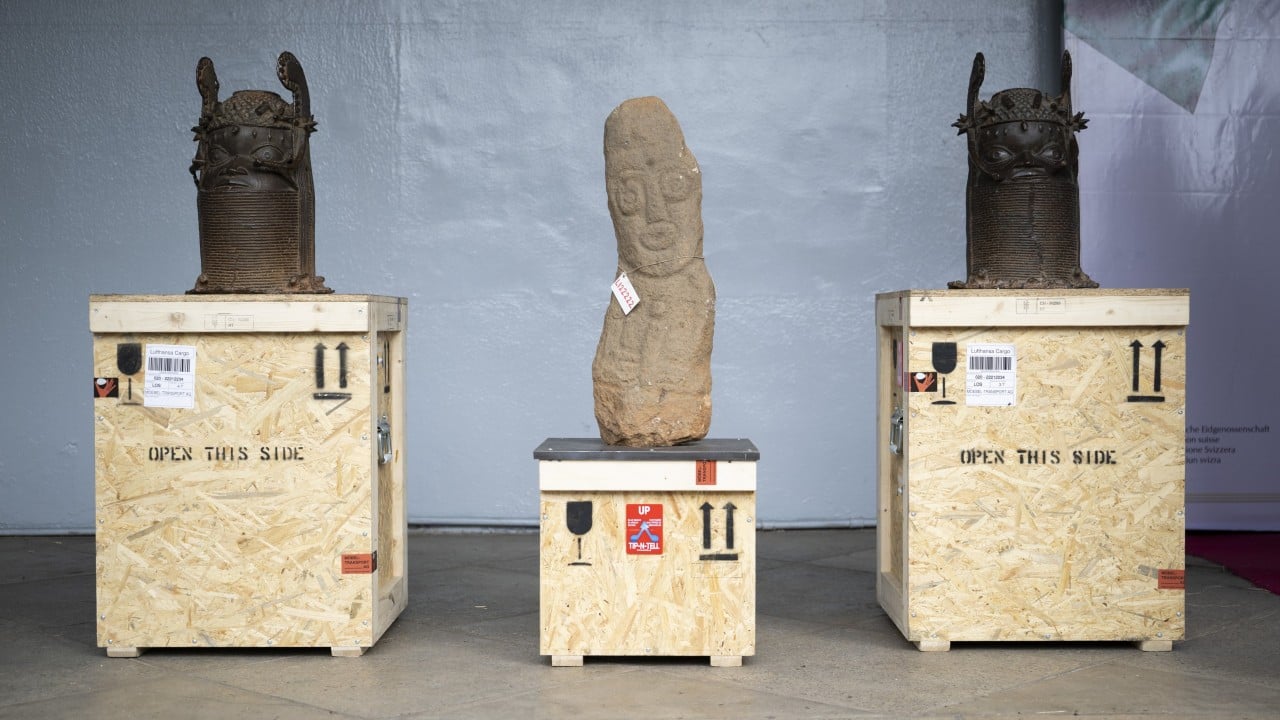
At a formal ceremony at the National Museum in Lagos, Swiss officials handed over 18 priceless Benin Kingdom artifacts directly to Nigeria.
This isn't just another minor legal transaction. It marks a major shift in how the international community handles looted art. If you think this is just about returning a few dusty bronze pieces to a museum display case, you're missing the bigger picture. This move completely changes the leverage dynamics for every other major Western institution still hoarding stolen history.
The Brutal History Behind the Art
Let's clear up a massive misconception right now. These objects aren't "sculptures" or "art pieces" in the way Westerners think of them. They are historical records, spiritual objects, and ancestral archives.
In 1897, British forces launched a violent, punitive expedition against the Kingdom of Benin, located in modern-day Nigeria. They slaughtered residents, burned the royal palace to the ground, and looted thousands of brass plaques, ivory carvings, and ceremonial heads. The British military then sold these treasures to fund the expedition. European museums and private Swiss collectors bought them up greedily on the open art market, fully aware of the bloody context.
The items returned from Switzerland carry immense cultural weight. They include a rare Aken'ni Elao—a brass alter piece used to venerate deceased kings. When the British plundered the kingdom, they ripped these pieces straight off ancestral altars, separating them from the memorial heads they belonged to.
How the Swiss Outmaneuvered the Art Establishment
What makes the Swiss repatriation stand out isn't just the physical return. It's the coordinated, institutional strategy behind it.
Instead of fighting individual legal battles, eight Swiss museums teamed up in 2021 to form the Benin Initiative Switzerland. Backed by the Swiss Federal Office of Culture, they worked directly with Nigerian researchers to trace the exact lineage of 96 objects. They didn't hide the results. They proved conclusively that the vast majority of these pieces were stolen during the 1897 massacre.
The 18 physically returned objects came from three main institutions:
- The Ethnographic Museum at the University of Zurich (14 objects)
- Museum Rietberg Zurich (2 objects)
- The Musée d'Ethnographie de Genève (2 objects)
The broader legal agreement actually transfers the ownership of 28 total objects to Nigeria. While 18 flew home to Lagos this summer, 10 will remain in Switzerland on temporary loan, displayed under clear Nigerian ownership.
But Switzerland didn't stop there. Swiss Federal Councillor Elisabeth Baume-Schneider and Nigeria's Minister of Art, Culture, and the Creative Economy, Hannatu Musa Musawa, used the ceremony to sign a sweeping international treaty. This new agreement builds a strict legal framework to block the illicit trade of cultural property and fast-track the return of smuggled goods. It turns a symbolic apology into an active legal shield.
The Real Crisis Coming Next
Getting the art back is a massive victory, but honestly, it triggers a completely new set of headaches. The real work starts now, and it's heavily tied up in internal Nigerian politics.
Where do these objects actually go?
For years, the plan was to house repatriated bronzes in the upcoming Museum of West African Art (MOWAA) in Benin City. That plan hit a massive wall when Nigeria's federal government declared that Oba Ewuare II—the current ceremonial king of Benin and a direct descendant of the plundered royals—holds personal ownership over all returned artifacts.
Right now, most of the returned Swiss pieces will go into temporary, secure storage at the Oba Ovonramwen facility inside the National Museum in Benin City. The National Commission for Museums and Monuments (NCMM) promises a world-class gallery to display everything, but building that infrastructure takes serious time, money, and political stability.
No More Excuses for London and Paris
The Swiss model utterly destroys the favorite excuse of mega-institutions like the British Museum or the Louvre. For decades, these legacy museums have claimed that global collections are too legally complex to untangle, or that repatriation requires impossible administrative hurdles.
Switzerland just proved that if you actually want to do the right thing, you can build a multi-institutional framework, execute the research transparently with the source country, transfer legal title, and return the physical objects in less than five years.
With Germany returning over 1,100 pieces, the Netherlands handing back 119, and Cambridge University surrendering 116 works, the British Museum is increasingly left completely isolated. They can no longer pretend they're protecting global culture. They are simply holding onto stolen goods while the rest of the world moves forward.
What Needs to Happen Now
If you care about the future of cultural heritage, tracking these stories from a distance isn't enough. Pressure works. Here is exactly what needs to happen to sustain this momentum:
- Audit local museum collections. Look up the provenance policies of museums in your own city. Demand transparency regarding any West African or colonial-era acquisitions.
- Support Nigerian curation initiatives. The global community needs to back Nigerian-led museums, funding drives, and conservation training programs to ensure these objects are preserved on Nigeria's own terms.
- Target holdout institutions. Keep the public pressure on institutions like the British Museum through targeted advocacy and public awareness. The Swiss have shown the blueprint. The excuse of "complexity" is officially dead.