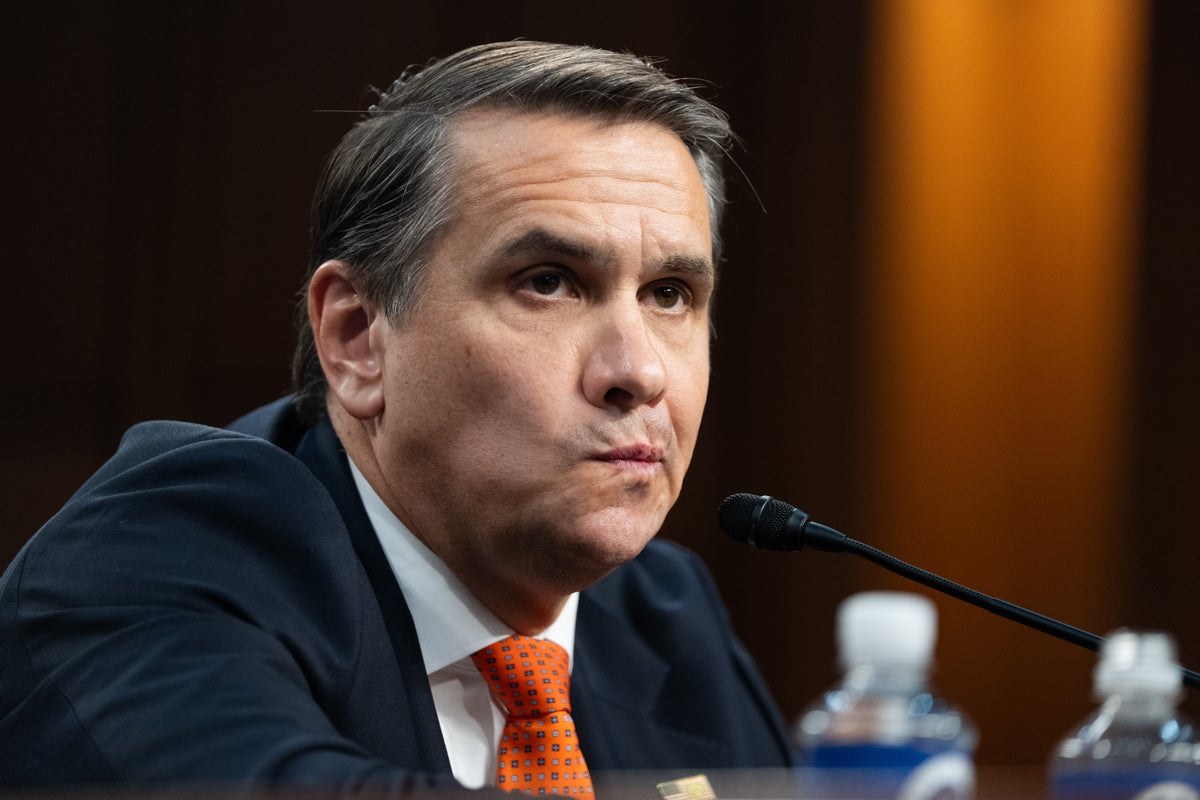
It is the classic Freudian slip, the kind that makes a room go dead silent before the cameras start flashing.
At his Senate Judiciary Committee confirmation hearing on July 15, 2026, acting Attorney General Todd Blanche was asked a straightforward question by Republican Senator John Kennedy of Louisiana: Are you and Donald Trump friends?
"I'm his lawyer," Blanche replied.
He caught himself almost instantly. "Was his lawyer," he corrected, trying to pivot. But the damage was done. In a five-hour hearing meant to prove he is independent enough to lead the Department of Justice, Blanche accidentally summarized the exact fear keeping his critics awake at night.
For over a year, Blanche has operated in the shadow of his former client. Now, as he seeks a permanent promotion from deputy attorney general to the nation’s top law enforcement officer, that shadow has only grown.
The Audition for a Permanent Job
Blanche has been running the Justice Department in an acting capacity since the abrupt firing of Pam Bondi in April. Before that, he was easily confirmed as deputy attorney general. But the top job is a different beast entirely, and the math on the Senate Judiciary Committee is razor-thin.
With the committee currently sitting at 11 Republicans and 10 Democrats, Blanche cannot afford a single defection if he wants his nomination reported favorably to the full Senate.
Democrats on the committee, led by Senator Cory Booker of New Jersey, made it clear they are not looking at his promises—they are looking at his actual track record. Booker pointed out that this wasn't just a confirmation hearing; it was a job performance review. And the performance, from the perspective of the committee’s left flank, has been a systemic dismantling of the Justice Department's traditional independence.
The Ghost of the Anti-Weaponization Fund
Perhaps the most contentious policy hanging over Blanche's head is the controversial $1.8 billion "anti-weaponization" fund. Born out of a settlement over Trump's lawsuit against the IRS regarding his leaked tax returns, the fund has been widely criticized as an attempt to funnel taxpayer money into a political war chest.
Blanche tried to put the issue to bed during the hearing, insisting that the fund is "dead" and the administration has no intention of moving forward with it. But senators on both sides of the aisle aren't buying his word alone.
Outgoing Republican Senator Jon Cornyn of Texas pointed out a glaring loophole: the settlement agreement remains a legally enforceable contract. Because Trump has not agreed in writing to officially terminate the deal, his private attorneys could theoretically sue to revive the fund at any moment.
When pressed by Cornyn, Blanche had to admit that this legal reality exists. It was a moment of vulnerability that left key swing votes like Senator Thom Tillis of North Carolina demanding absolute certainty before they commit to supporting his nomination. Tillis even floated the idea of Congress passing a law to officially kill the fund, a move Blanche said the DOJ would support.
The Unresolved Anger Over the Epstein Files
If the IRS settlement represented a policy headache, Blanche’s handling of the Jeffrey Epstein files remains a deeply emotional point of friction.
The Justice Department under Blanche’s watch has faced heavy fire for releasing millions of pages of Epstein documents with critical redaction errors. Some of Epstein's survivors had their personal information exposed to the public due to these failures.
Several of those survivors sat directly behind Blanche in the Senate gallery during the hearing. While Blanche acknowledged the "mistakes that were made" and took personal responsibility for the technical slip-ups, he stubbornly refused to commit to a personal meeting with the victims.
Instead, Blanche claimed he was legally barred from meeting with them because they are represented by counsel—an explanation Booker dismissed as "utter nonsense". Blanche’s counteroffer to have a staff member meet with them did little to soothe the tension in the room.
Red Lines and Oaths of Office
To his credit, Blanche did try to establish some boundaries between his duty to the Constitution and his loyalty to the president. Under sharp questioning, he stated that he would resign if Donald Trump ever ordered him to do something illegal.
"I am not going to violate my oath to the Constitution," Blanche testified.
But to his critics, those words ring hollow when compared to his actions over the last year. Democrats highlighted how the DOJ under his leadership has targeted Trump’s political foes—even suggesting that former special counsel Jack Smith could face an investigation for perjury. When asked about Trump’s sweeping pardons of January 6 rioters, Blanche declined to offer any personal criticism, hiding behind the legal reality of presidential authority.
"The fact that I represented President Trump for a period of time under two years does not define my career, nor does it define me," Blanche pleaded to the committee.
He wants to be judged as the career federal prosecutor he once was. But in Washington, you are defined by the company you keep and the clients you defend. For Todd Blanche, the transition from Trump’s personal defense lawyer to the defender of the United States Constitution is proving to be a incredibly difficult gap to bridge.
What Happens Next
The Senate Judiciary Committee's path forward is tight, and Blanche's confirmation remains on a knife-edge. If you are watching this process, here are the key markers to track:
- The Swing Votes: Watch Senators Jon Cornyn and Thom Tillis. Their public statements over the coming days will signal whether the Republican majority will hold together to push Blanche through.
- The Paper Trail: Look for whether the DOJ or the White House issues a formal, written termination of the $1.8 billion settlement fund to satisfy skeptical lawmakers.
- The Committee Vote: The committee is expected to vote on his nomination later this month. If he secures all 11 Republican votes, he will head to the Senate floor, where the margin for error is just as slim.