He wanted to run the Strait of Hormuz like a New Jersey turnpike. It did not last twenty-four hours.
On Monday, President Donald Trump shocked the maritime world by announcing a plan to slap a massive 20% "United States Reimbursement Fee" on all commercial cargo passing through the world's most critical energy choke point. The goal was to force global shipping companies to pay for the cost of U.S. military protection in the Persian Gulf.
By Tuesday, the threat was dead.
Following a flurry of urgent phone calls from Middle Eastern monarchs and a wave of panic in global energy markets, Trump used his Truth Social platform to announce a complete U-turn. Instead of the toll, he claimed that Gulf nations had agreed to funnel "MASSIVE" trade and investment deals directly into the United States.
It was a classic Trumpian climbdown, packaged as a masterclass in dealmaking. But behind the bluster lies a messy reality of illegal threats, panicking allies, and a highly dangerous military escalation that is actively spiraling out of control.
The Twenty-Four Hour Toll Plan That Rattled the World
The idea of charging a toll to transit international waters is, to put it mildly, unprecedented in modern history. The United States has spent the last eighty years acting as the guarantor of free navigation across the globe. Under international maritime treaties, no country has the right to charge commercial ships simply for passing through an international strait.
Trump did not care.
Facing an increasingly expensive and dangerous military deployment in the region, his instinct was to treat American naval protection as a paid security service. He argued that if the U.S. military is risking lives and spending millions of dollars to keep oil flowing to Europe and Asia, those receiving the cargo should foot the bill.
The shipping industry reacted with sheer horror. This was not a minor administrative fee. A 20% toll on the value of cargo carried by modern supertankers is a astronomical sum.
Consider the raw math of global shipping:
- A fully laden Very Large Crude Carrier (VLCC) can hold roughly two million barrels of crude oil. Even if global oil prices hover around $60 a barrel, a single tanker’s cargo is worth $120 million. A 20% toll on that shipment would equal $24 million.
- For a large liquefied natural gas (LNG) carrier, experts at Lloyd's List estimated that the fee would have hovered around $17 million per single transit.
- Some of the largest vessels carrying high-value refined products or specialty chemicals could have faced bills upwards of $30 million for a single voyage.
Richard Meade, the editor-in-chief of Lloyd's List Intelligence, described the industry's reaction as "expletive-laden curiosity". There was no structure, no collection mechanism, and absolutely no legal basis for the move. It was a chaotic policy grenade thrown into an already volatile market.
The Legal and Diplomatic Wall Trump Smashed Into
The backlash was instant, and it did not just come from foreign capitals. It came from inside Trump's own administration.
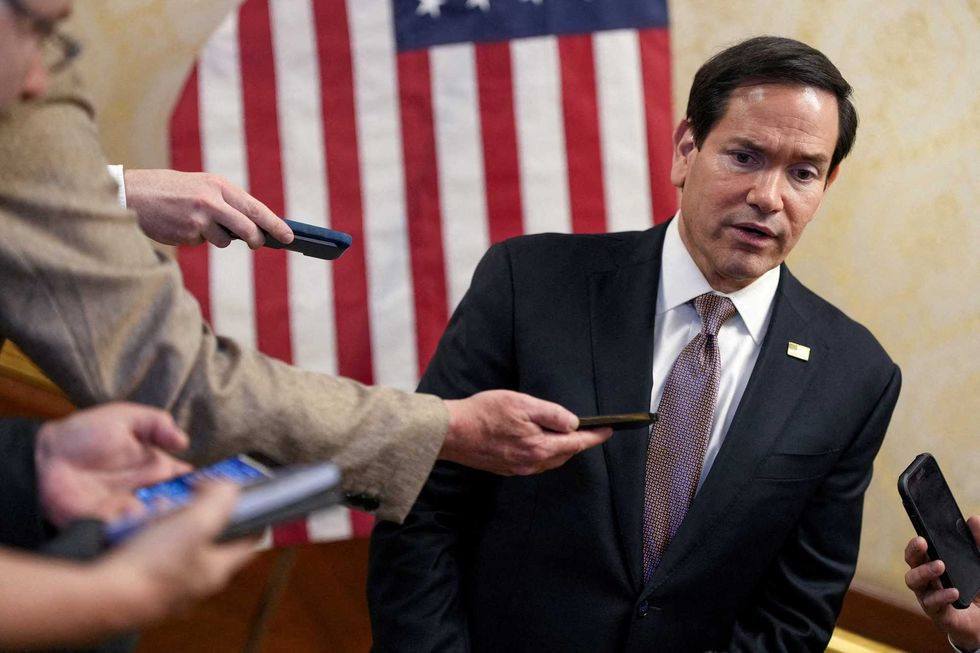
Just weeks before Trump's announcement, Secretary of State Marco Rubio had explicitly told regional allies that the United States would keep the waterway free and open without tolls. Rubio had publicly stated that under international law, "no country is allowed to charge tolls or fees on an international waterway". Trump’s sudden proposal directly contradicted his own chief diplomat, creating a glaring policy disconnect that left Washington looking disorganized.
Major shipping lines were quick to point out the absurdity of the plan. German shipping giant Hapag-Lloyd issued a blunt public statement explaining that while canals like Suez or Panama charge fees, those are artificial waterways built and maintained via massive physical infrastructure investments. The Strait of Hormuz is a natural body of water. Charging a toll there is fundamentally illegal.
The United Nations' International Maritime Organization (IMO) also chimed in, reiterating that there is absolutely no legal framework to support mandatory transit tolls in international straits.
Had Trump pushed forward, he would have effectively torn up the United Nations Convention on the Law of the Sea (UNCLOS). While the U.S. has never formally ratified UNCLOS, it has historically operated under its rules as customary international law. Violating those rules would have given green lights to other nations to start charging arbitrary tolls at other critical maritime choke points, like the Malacca Strait or the Bab-el-Mandeb.
Kings Emirs and Recycled Promises
How did the White House climb down so fast without looking like they lost? They used a time-tested strategy: declare victory and change the subject.
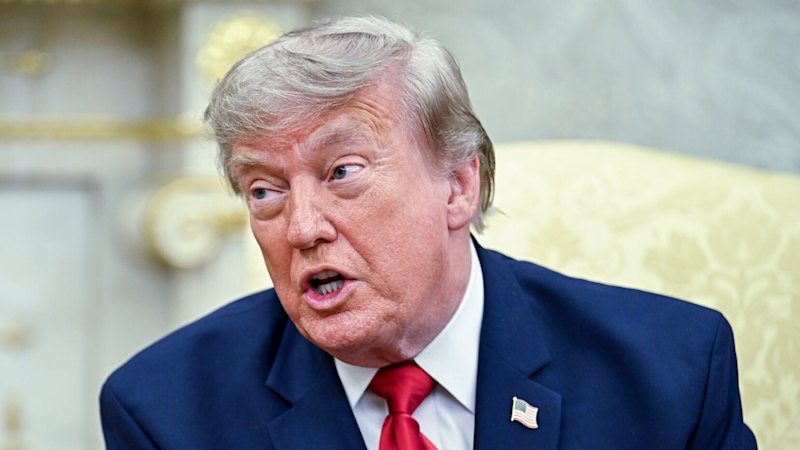
Trump explained to reporters in the Oval Office that he received urgent phone calls from "kings and emirs" across the Persian Gulf. According to Trump, these leaders begged him to drop the toll and offered a different deal. They said they would rather invest billions directly in the American economy than pay a direct shipping tax.
"I don't think anybody should be able to charge a fee for the strait," Trump said on Tuesday, suddenly sounding like a defender of international law.
But you have to look closely at what these Gulf states actually promised. Saudi Arabia, the United Arab Emirates, and Qatar have already committed trillions of dollars to U.S. investments over the years. When Trump claims he secured "MASSIVE" new trade deals, he is highly likely repackaging existing investment plans and relabeling them as a diplomatic win.
It allowed Gulf leaders to protect their sovereign rights and keep the shipping lanes free of Western taxes, while giving Trump a shiny headline to present to his domestic base. It is a win-win for political theater, but it does absolutely nothing to solve the underlying crisis in the region.
A Very Dangerous Precedent
Even though the toll plan was aborted, the mere fact that a U.S. president proposed it has done lasting damage.
By framing maritime security as a paid transaction rather than a global public good, Trump has shifted the conversation. Michelle Brouhard, an expert at maritime intelligence firm Kpler, pointed out that future debates over key trade routes will no longer just be about who has access. They will be about who pays.
The most alarming reaction came from Tehran.
Iranian Foreign Minister Abbas Araghchi took to social media to mock Trump’s proposal, but he did so with a terrifying twist. Araghchi mockingly agreed with Trump's logic, arguing that whoever secures the strait should indeed be paid. He then declared that Iran has always been the "GUARDIAN of the Strait" and would remain so forever.
"20% is of course too much," Araghchi wrote sarcastically. "We will be fair".
The Dangerous Logical Shift:
[Old Norm] -> Global waterways are public goods protected for free trade.
[Trump's Pitch] -> Security is a service; transit requires a 20% payment to the U.S.
[Iran's Response] -> Agreed. We control the strait, so you will pay us instead.
If the United States legitimizes the idea of charging transit fees for security, it hands a massive rhetorical weapon to adversaries. Iran can now claim a legitimate right to tax or block shipping under the guise of "providing security". It is a dangerous Pandora's box that the White House opened and is now desperately trying to shut.
Blood and Fire in the Gulf
While the diplomatic back-and-forth plays out in air-conditioned offices, the actual situation in the water is terrifying.
An interim peace deal that briefly halted the fighting is completely dead. The conflict has reignited with a vengeance.
On Monday night, U.S. Central Command launched a major wave of airstrikes targeting Iranian coastal defense systems, missile launch pads, and drone facilities. The Pentagon said the strikes were designed to degrade Iran's ability to terrorize commercial shipping.
Iran's retaliation was swift and violent.
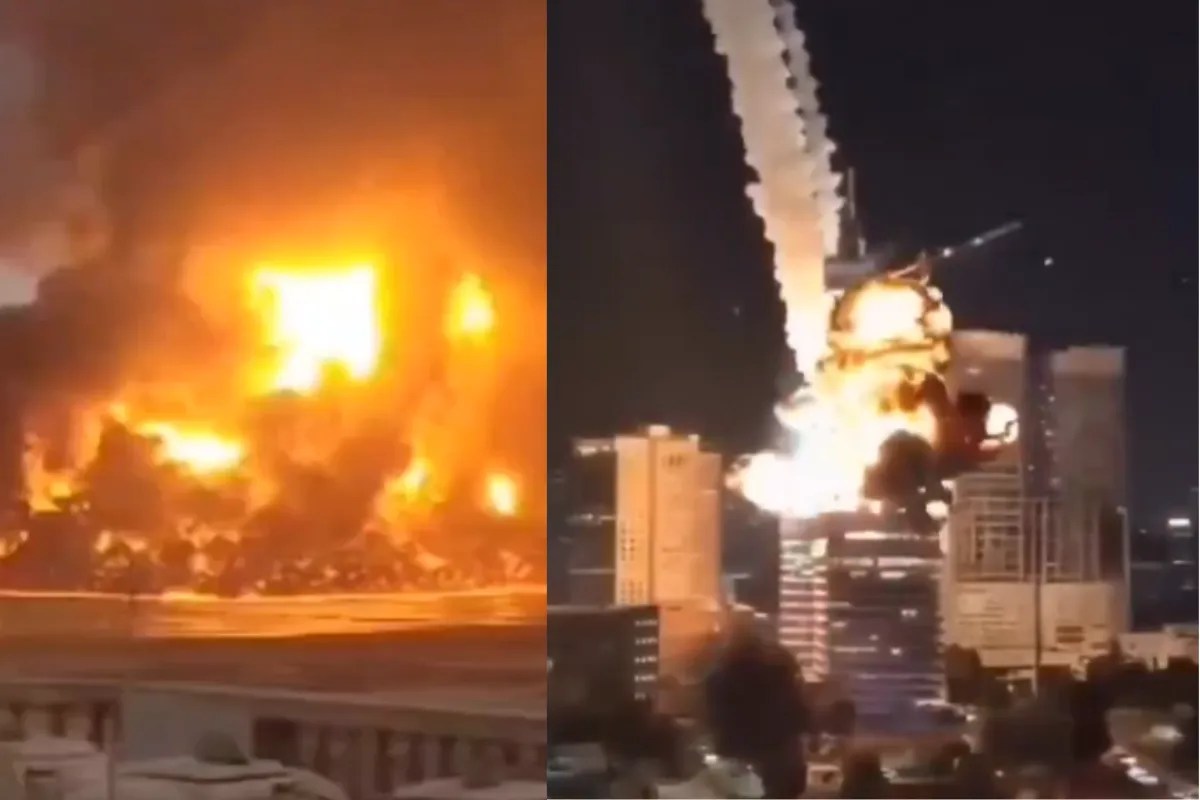
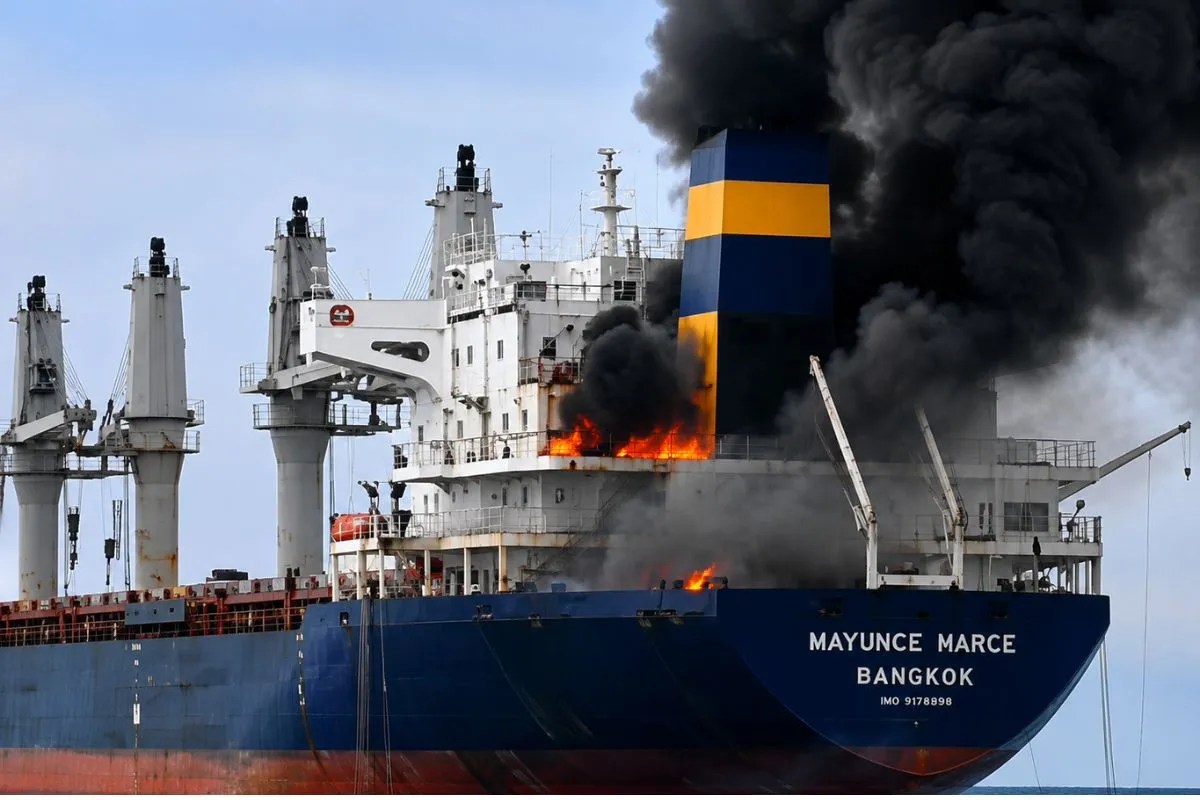
Its forces launched coordinated drone and missile strikes targeting commercial tankers and American regional allies. Three tankers traveling through the outer transit routes near Oman were hit:
- The Mombasa: An Emirati-linked tanker, set ablaze after a drone strike. One sailor was killed and eight others were wounded.
- The Al Bahiyah: Another Emirati-associated vessel targeted in the same wave.
- The Stolt Magnesium: A Dutch-owned chemical tanker that suffered a severe engine room fire after being struck off the coast of Oman.
Iran's Revolutionary Guard claimed the vessels ignored repeated warnings to change course. The UAE has already threatened to retaliate for the attacks on its ships, raising the prospect of a wider regional war that goes far beyond a U.S.-Iran conflict.
The chaos is bleeding into the skies as well. Missile sirens wailed in Bahrain, home to the U.S. Navy's Fifth Fleet, as air defenses scrambled to intercept incoming threats. Jordan's military confirmed it shot down four Iranian missiles crossing its airspace.
The European Union Aviation Safety Agency has issued an urgent warning advising all commercial airlines to completely avoid the airspace over Bahrain, Kuwait, Qatar, the UAE, and the Gulf of Oman. One stray air-defense missile could easily bring down a passenger jet.
Navigating the Fallout: Actionable Steps for Businesses
The shipping toll is dead, but the naval blockade of Iran is still going active. If you are an energy trader, supply chain manager, or investor, you cannot afford to treat this as a temporary blip.
You need to take concrete, protective steps immediately to insulate your operations from the escalating violence.
1. Re-Route Bulk Cargo Away from the Strait
If your supply chain relies on transit through the Persian Gulf for non-energy bulk goods, search for alternative overland or rail routes through Saudi Arabia where possible. While container land-bridges are expensive, they are far cheaper than losing a vessel or paying skyrocketing war-risk insurance premiums.
2. Lock in Energy Supply Contracts Now
With Brent crude spiking past $86 a barrel on the heels of the recent attacks, price volatility is going to get worse before it gets better. If you run a business sensitive to fuel or natural gas prices, hedge your energy exposure immediately. Do not wait for the conflict to escalate to another full-scale closure of the strait.
3. Audit Your Insurance Policies
Many standard maritime insurance policies contain "war exclusion" clauses that allow underwriters to cancel coverage or dramatically increase premiums with minimal notice in active conflict zones. Have your legal team review your cargo and hull policies to ensure you have adequate war-risk riders in place for the Gulf of Oman and the Persian Gulf.
4. Separate Rhetoric from Reality in Corporate Planning
When tracking geopolitical risks, ignore Truth Social posts about "massive investment deals". Focus on the hard military data. Track U.S. Central Command naval deployments and maritime notices from the International Maritime Security Construct. The physical security of the waterway, not the political spin, is what dictates the global price of oil.