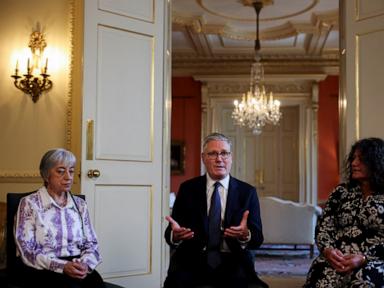
A formal government apology doesn't erase decades of weaponized shame. Prime Minister Keir Starmer stood in Parliament on July 2, 2026, and officially apologized for the state's central role in the forced adoption scandal that tore roughly 185,000 babies away from unmarried mothers between 1949 and 1976.
It's a historic moment. But for the thousands of aging mothers and adult adoptees who survived this system, saying "we are sorry" is just the bare minimum. They don't just want words. They want access to their own histories, real mental health resources, and systemic changes that treat adoption records as human rights rather than state secrets.
If you're trying to understand why this apology took so long—and what actually needs to happen next—you have to look past the political theater.
The Coercive Machine Behind 185,000 Forced Adoptions
For decades, the public narrative spun a convenient lie. It claimed that young, unmarried women voluntarily gave up their children because they couldn't or didn't want to care for them.
The reality was far uglier. A cross-party parliamentary inquiry exposed how successive UK governments actively shaped a punitive, hostile environment. Local authorities, state-funded healthcare workers, and religious institutions worked together to railroad vulnerable women.
Women weren't making a choice. They were bullied, shamed, and systematically stripped of their agency.
- Institutional Pressure: Hospitals and mother-and-baby homes routinely withheld information from young mothers about their legal rights.
- Social Isolation: Society treated pregnancy outside of marriage as a moral failure, leaving women with zero financial or familial safety nets.
- Charity Involvement: Well-known organizations like the Salvation Army and Barnardo's operated alongside churches to manage the pipeline of babies to married couples, often downplaying their own complicity for decades.
This wasn't a collection of individual tragedies. It was a state-sanctioned system that treated unmarried mothers as unfit by default. Campaigner and Labour MP Ann Keen, whose own son was taken for adoption in 1966, noted the immense weight of this narrative. For sixty years, mothers have been accused of giving away their babies. The truth is they didn't give them up; their children were taken.
The Turning Point in Westminster
The road to the 2026 apology highlights a massive divide in British politics. Devolved governments in Scotland and Wales issued their own formal apologies years ago. The Church of England and the Catholic Church followed suit. Yet, Westminster held out.
As recently as 2023, the previous Conservative government flatly refused to issue a formal state apology. Their reasoning? They claimed the British state didn't actively support the practice and blamed the tragedy on shifting historical social norms.
That defense crumbled. The House of Commons Education Committee published a damning report proving that government policy directly enabled and legitimized the infrastructure of forced adoption. Education Secretary Bridget Phillipson labeled the era a "shameful period in our history," paving the way for Starmer's statement.
What the 2026 Redress Package Actually Includes
An apology without resources is just public relations. Alongside the statement in Parliament, the UK government announced a £4 million funding package. While it's a start, survivors argue it's a drop in the bucket compared to the lifelong trauma inflicted.
The funds are earmarked for a few specific areas:
Records and Reconnaissance
The money will help fund testimonial projects and assist survivors in accessing heavily guarded adoption records. For an adoptee, finding out who you are shouldn't require a legal battle. The current system is fragmented, confusing, and expensive.
Specialized Mental Health Pathways
Growing up with a forced adoption background leaves deep psychological scars. Survivors have a significantly higher prevalence of complex PTSD and suicide risk. The new plan promises specialized trauma-informed healthcare pathways, though the rollout details remain vague.
Lived Experience Groups
The government is establishing a reference group made up of birth mothers and adoptees to monitor how these commitments are met.
The Bittersweet Reality for Campaigners
For many, this day arrived too late. The Movement for an Adoption Apology (MAA) fought for decades to see this moment. Co-founder Veronica Smith died two years before she could hear the state admit its guilt.
Current MAA chair Diana Defries, who lost her daughter to forced adoption at age 17, pointed out the immense heartbreak of the timing. So many women who dedicated their final years to this fight died before seeing the government take accountability.
What Needs to Happen Right Now
If you are a survivor, an adult adoptee, or a family member affected by historical forced adoption, the apology doesn't mean your journey is over. The system still makes it incredibly difficult to heal or find closure.
Here are the concrete steps and changes that survivor groups are pushing for next:
- Demand Standardized Record Access: Don't let local authorities stall your search. Campaign groups are pushing for a single, nationally regulated access point for all historical adoption records.
- Access Trauma-Informed Support: Standard therapy often fails to address the unique trauma of forced separation. Look for specialists who explicitly understand adoption-related trauma and complex PTSD.
- Push for Legal Duty on Storage: Many older records are at risk of being lost or destroyed. There needs to be a strict legal obligation on all record-holding institutions to safely digitize and preserve these files.
The state finally admitted it failed to protect its citizens. Now, the real work begins to fix the broken systems left in the wake of that failure.