When Ukrainian drones started slamming into Wildberries warehouses across Russia, a lot of casual observers were genuinely baffled. Why spend high-tech, long-range attack drones on an e-commerce platform? To someone looking in from the outside, it looks like hitting a local Fulfillment by Amazon hub—annoying for consumers expecting their package on Tuesday, but hardly a fatal blow to a military superpower.
That interpretation completely misses how modern, sanctioned economies actually run.
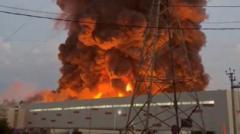
Over the past week, Ukrainian deep-strike operations hit massive Wildberries logistics centers in Elektrostal (near Moscow), Kotovsk (Tambov region), Krasnodar, and Nevinnomyssk. These aren't minor storage units. We're talking about sprawling complexes spanning hundreds of thousands of square meters. The strikes left multiple workers dead, dozens injured, and erased hundreds of millions of dollars in inventory in minutes.
If you think this is just about disrupting package delivery, you haven't been paying attention to how Russia gets its war machine built.
Dual-Use Logistics and the Smuggling Highway
Ukrainian President Volodymyr Zelensky didn't mince words about the rationale behind these strikes. He explicitly stated that these commercial distribution centers were being actively leveraged to move dual-use items, specifically sanctioned electronics, navigation hardware, and drone components.
Since Western sanctions clamped down on direct military imports to Russia, Moscow shifted its supply lines toward parallel imports and grey-market supply chains. Private e-commerce giants and commercial shipping networks became the invisible pipeline. Small tech components, microcontrollers, and optical gear flow right alongside cheap consumer electronics.
When you look at it through that military lens, a 250,000-square-meter warehouse isn't just an e-commerce hub. It's a massive, centralized sorting facility for the Russian defense supply chain. Knocking out 7% to 9% of Wildberries' entire national logistics capacity in a few days creates an immediate, agonizing bottleneck.
Shattering the Illusion of Normalcy
There's a brutal psychological reality at play here, too. Robert "Madyar" Brovdi, commander of Ukraine's Unmanned Systems Forces, hinted at another goal: shattering the "illusion of a comfortable peacetime life" inside Russia.
For years, the Kremlin worked hard to keep the war away from average citizens in major metropolitan areas like Moscow. If you live in Russia, as long as your daily routine remains untouched—your groceries arrive, your online shopping works, your favorite brands are accessible through grey imports—the conflict feels abstract.
Hitting Wildberries hits home. It's Russia’s largest marketplace, founded by Tatyana Kim, the country's wealthiest woman. Millions of Russians rely on it daily. When multi-billion-ruble hubs catch fire and smoke towers over the Moscow suburbs, the war is no longer a distant television broadcast. It’s sitting right in their living room.
The Devastating Economic Aftershocks for Small Businesses
While the military impact gets the headlines, the domestic financial fallout is where the real destruction lies.
Estimated damages from the strikes have already ballooned into hundreds of billions of rubles—potentially topping $1.3 billion when accounting for destroyed inventory, physical rebuilding costs, and structural downtime.
The hardest hit aren't actually the corporate executives in Moscow. They're the thousands of small and medium-sized merchants who stored their entire product lines in these hubs.
Here is where the business side turns vicious:
- The "Force Majeure" Clause: Just weeks before these strikes, Wildberries quietly updated its seller agreement, explicitly stating the company has no obligation to compensate sellers for goods lost to drone strikes or military actions.
- Instant Bankruptcy: Russian entrepreneurs woke up to find millions of rubles in inventory literally reduced to ash, while still holding massive debts to manufacturers, employees, and tax authorities.
- No Insurance Safety Net: Standard commercial insurance policies in Russia routinely exclude acts of war and military drone strikes, leaving small business owners entirely on the hook.
Social media channels across Russia flooded with frantic posts from small business owners who realized they lost their livelihoods overnight. They invested capital into raw materials, built inventory for the season, shipped it to a central hub, and watched it burn without any safety net or financial recourse.
A Permanent Shift in Long-Range Warfare
This campaign against commercial fulfillment hubs marks a clear evolution in modern conflict. Long-range drone strikes are no longer restricted to traditional military targets like ammunition dumps, airfields, and oil refineries.
When a war relies on high-tech component smuggling and decentralized assembly, commercial supply chains become legitimate tactical targets. Ukraine is proving that disabling the infrastructure of civilian commerce can paralyze military logistics faster than trying to hunt individual supply trucks on the road.
If you run a business or track supply chain security in high-risk zones, here are the immediate takeaways you need to act on:
- Audit Force Majeure Contracts: Never assume marketplace platforms or logistics providers will cover inventory lost to geopolitical conflicts or military events. Check the fine print on liability waivers today.
- Diversify Storage Hubs: Storing 100% of your inventory in a single mega-hub creates a single point of failure. Spreading goods across regional, smaller facilities mitigates catastrophic loss.
- Re-evaluate Commercial Threat Models: Facilities that handle dual-use goods or sit near energy and defense infrastructure face elevated risks in modern proxy or direct warfare scenarios. Plan logistics routes accordingly.