The illusion of peace in the Middle East didn't even last a month. If you thought the June 17 memorandum of understanding between Washington and Tehran was going to permanently halt the war that ignited back in February, the last 72 hours just offered a violent reality check.
US and Iranian forces are currently locked in an intense, tit-for-tat exchange of heavy missile and drone strikes. It's the most severe escalation since the conflict began with the assassination of Ayatollah Ali Khamenei. The fragile 60-day interim ceasefire hasn't just hit a speed bump; it's on the absolute brink of total collapse.
The core issue comes down to a single, hyper-critical chokepoint: the Strait of Hormuz.
If you want to understand why bombs are falling again, you have to look at what's actually happening on the water, how both sides completely misread the June truce, and what this means for global oil prices.
The Catalyst: A Broken Deal and Burning Ships
The current flare-up didn't happen in a vacuum. It started when Iran's Islamic Revolutionary Guard Corps (IRGC) asserted that the June interim deal effectively granted Tehran full sovereignty and maritime authority over the Strait of Hormuz. Iran wanted to manage transit routes and, crucially, start charging transit fees to commercial ships.
The Trump administration flatly rejected this, viewing the strait as an international waterway that must remain entirely free of tolls. To bypass Iranian waters, the US began encouraging commercial vessels to hug the coast of Oman.
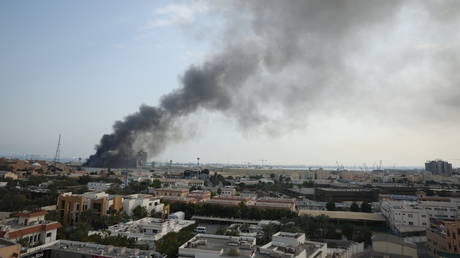
Tehran saw this as a direct violation of the deal. Over the weekend, the IRGC intercepted and struck a Cypriot-flagged commercial ship, setting it ablaze, and declared the Strait of Hormuz closed until "US interference" ends.
The American response was swift and massive. President Donald Trump declared the ceasefire dead, stating the US was going to hit Iran "very hard".
Inside the Strikes: What Has Been Hit So Far
This isn't a minor border skirmish. The geographic scale of the strikes has expanded rapidly over three consecutive nights, turning into a multi-nation regional shootout.
The US Offensive Inside Iran
US Central Command (CENTCOM) launched multiple waves of airstrikes, hitting more than 300 military targets across Iran.
- Coastal Infrastructure: CENTCOM targeted IRGC naval assets, knocking out coastal radar sites, air-defense networks, and destroying over 60 small attack boats used to harass shipping.
- The Nuclear Perimeter: Iranian officials reported explosions in Bushehr province, accusing the US of striking targets right along the perimeter of Iran's lone civilian nuclear power plant.
- Logistics and Supply Lines: For the first time, US strikes deliberately hit critical transit infrastructure, including a railway bridge in Golestan province and bridges on the route to Mashhad.
Iran's Regional Retaliation
Instead of just taking the hits, the IRGC launched a coordinated counter-offensive, treating US regional allies as active combatants. They aren't just aiming at American bases; they're trying to make the entire neighborhood pay a price.
- Kuwait: The IRGC hit a US surface-to-surface missile base in Kuwait, using drones and missiles to destroy two HIMARS launchers and multiple ammunition bunkers.
- Bahrain: Home to the US Navy’s 5th Fleet, Bahrain saw its air defenses engaged as Iran targeted a helicopter facility and drone command centers.
- The UAE and Oman: Two Emirati oil tankers were struck by Iranian cruise missiles while transiting Omani waters, resulting in the death of an Indian crew member.
- Jordan and Qatar: Longtime regional mediators weren't spared either. Air raid sirens sounded over Doha as Qatari air defenses intercepted incoming projectiles.
What Most People Get Wrong About the Timing
It's easy to look at the map and see pure chaos, but the timing of these strikes carries heavy symbolic and political weight.
The renewed American strikes hit exactly as Iran was concluding a massive, days-long public funeral procession for the late Ayatollah Ali Khamenei in Mashhad. To strike key bridges on the funeral route while tens of thousands of mourners filled the streets was an intentional display of leverage.
On the flip side, Trump faces intense domestic pressure back home. The initial outbreak of the war in February sent massive shockwaves through the global economy. This latest round of fighting instantly pushed international Brent crude prices back up over 3% to $83 a barrel.
With congressional elections looming in November, sustained high petrol prices are a massive political liability for the White House. Trump wants to project absolute strength by "beating up" Iran, but a prolonged disruption to a waterway that handles 20% of the world's energy is a dangerous gamble.
The Real Impact: What Happens Next?
Don't expect either side to back down over coffee anytime soon. The underlying issue is that both countries are using military action to build leverage for a negotiation that neither actually trusts. Iran's top negotiator, Mohammad Bagher Ghalibaf, made it clear on social media: "The era of one-sided deals is OVER... keep your word or pay the price."
If you're tracking this situation, keep your eyes on these three critical areas over the next few days:
- Shipping Insurance and Transits: Watch maritime data from trackers like Lloyd's List Intelligence. June saw a brief surge in ships trying to clear the strait under the safety of the interim deal. If commercial fleets start diverting around Africa again due to rising insurance premiums, the global supply chain will freeze up.
- The Tanker War Escalation: Keep a close eye on whether Iran escalates from targeting small naval targets to launching sustained drone swarms against civilian oil infrastructure in Saudi Arabia or the UAE.
- The Nuclear Red Line: Trump has already dropped hints about targeting "Pickaxe Mountain," a heavily fortified underground Iranian nuclear site. If US strikes shift from coastal radar stations to active nuclear infrastructure, any hope of a diplomatic off-ramp is officially gone.
The interim deal was supposed to buy 60 days of breathing room for a permanent truce. Instead, it has only exposed how fundamentally incompatible the two sides really are when it comes to controlling the world's most vital energy corridor.