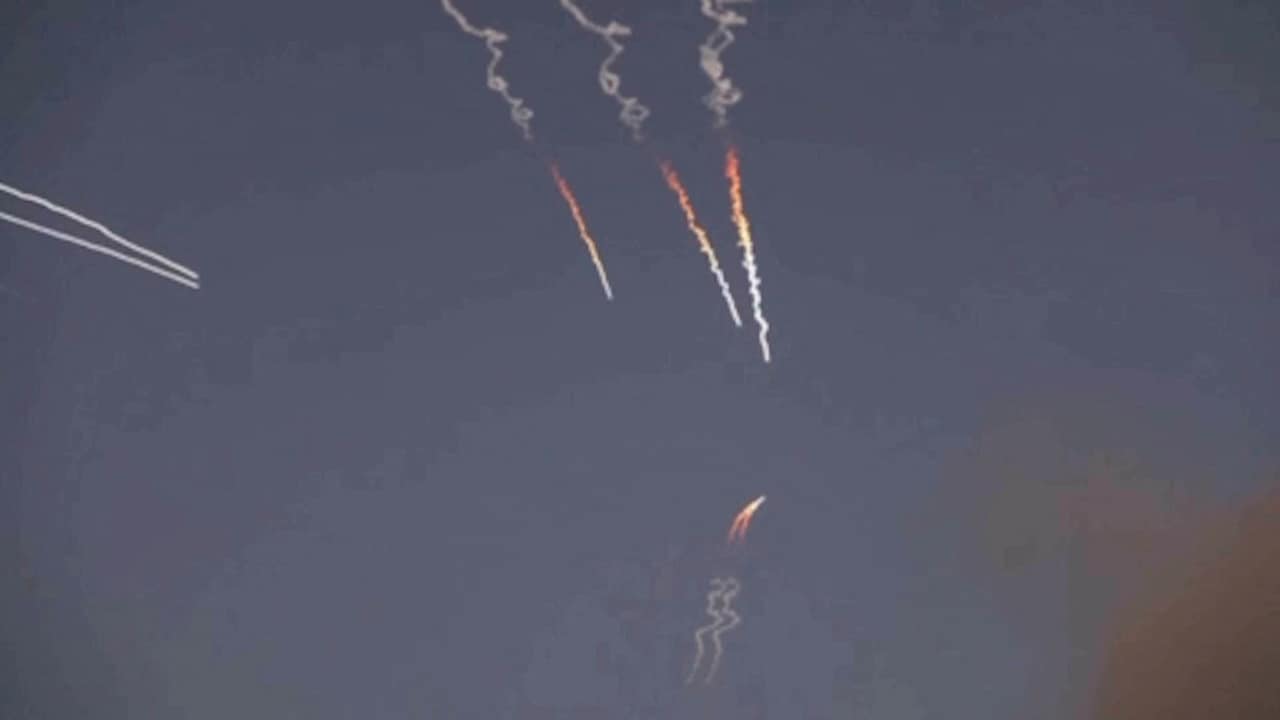
The concept of a controlled conflict in the Middle East has completely evaporated. If you've been following the news cycle, you're probably seeing headlines about the eighth consecutive night of American airstrikes on Iran as some sort of decisive, strategic operation. The official line from Washington is that these strikes are meant to swiftly punish Iran and establish deterrence. But let's look at the reality on the ground. We aren't watching a tactical disciplinary action anymore. This is a full-scale regional war that is quickly sliding past the point of no return.
The immediate catalyst for this latest round of escalation was a devastating drone and ballistic missile attack on Friday at the Muwaffaq Salti Air Base in Jordan. The attack killed two American service members, left another missing in action, and sent four more to the hospital. For a White House that promised swift resolution and decisive strength, this was a massive blow. The total American casualty count since this conflict ignited on February 28 has climbed to 16 dead and more than 430 wounded. The illusion that the U.S. could launch precision strikes from a safe distance without taking heavy losses is gone. You might also find this related coverage interesting: Why Freedom Of Expression In Gabon Still Matters In 2026.
The Illusion of the 60-Day Peace Deal
Just a month ago, diplomats were celebrating a preliminary 60-day interim agreement that was supposed to freeze the fighting and open a path toward long-term negotiations. It didn't take long for that paper promise to turn into ash. Iran has officially suspended all its commitments under that deal. Kazem Gharibabadi, Iran's deputy foreign minister, made it clear on state television that because Washington violated its core promises, Tehran is no longer playing along.
This is the fatal flaw of modern Middle Eastern diplomacy. You can't sign a ceasefire agreement while simultaneously building leverage through shadow blockades and targeted assassinations. The U.S. military recently carried out aggressive ship boarding operations in the Gulf of Oman as part of a renewed blockade on Iranian ports. To think that Iran would sit quietly under economic strangulation while honoring a diplomatic framework is pure fantasy. The interim agreement wasn't a bridge to peace. It was a tactical pause that both sides used to rearm and re-evaluate their targets. As reported in latest articles by The New York Times, the results are notable.
Behind the Lines in Tehran and Washington
The leadership dynamics on both sides are making a diplomatic off-ramp almost impossible. President Donald Trump has taken a characteristically aggressive public stance, bragging on television that the Iranian military is effectively crippled. He claimed their navy, air force, and air defenses have been completely wiped out. He even claimed that Iran's new Supreme Leader, Mojtaba Khamenei, is "90% gone" after dropping out of the public eye following his father Ali Khamenei's death earlier in the conflict.
But bravado doesn't match the strategic reality. Mojtaba Khamenei might be hiding in a bunker for obvious security reasons, but his administration is still fully capable of projecting power. He released a fiery statement through state media, mocking President Trump's signature as utterly worthless and invalid. He warned that the Iranian nation and its broader regional network have unforgettable lessons to teach Washington.
We are dealing with a cornered regime that feels it has nothing left to lose. Major General Mohsen Rezaei, a senior military adviser to Khamenei, openly warned that Tehran is moving toward full-scale offensive operations. He stated plainly that Iran will no longer limit itself to symmetrical, like-for-like retaliations. When a state actor explicitly tells you they are throwing out the old rulebook of proportional response, you should believe them.
Collateral Damage and the Economic Shockwave
The war is rapidly bleeding into neighboring countries that wanted no part in this fight. Kuwait has found itself in the direct line of fire. Iranian strikes recently slammed into a vital oil facility and a major water desalination plant in the small desert nation. This wasn't an accident. Kuwait relies on desalination for roughly 90% of its drinking water, and targeting that infrastructure is a deliberate attempt to pressure U.S. allies in the region.
The geographic footprint of this conflict is expanding by the hour:
- In Kuwait, Iranian kamikaze drones targeted the American ammunition depot at Camp Udairi and air surveillance radars at the Ali Al Salem Air Base.
- In Iraq, local forces are busy shooting down attack drones over the city of Irbil.
- In Jordan, the air defense systems are actively intercepting incoming Iranian ballistic missiles.
- In Bahrain and Saudi Arabia, air raid sirens are becoming a regular part of daily life as regional air defenses scramble to counter incoming threats.
Then there's the Strait of Hormuz. Before this war broke out, this narrow waterway handled nearly 20% of the entire world's petroleum and liquefied natural gas supplies. Today, it's a militarized shooting gallery. The U.S. military's eighth night of strikes targeted coastal surveillance installations, anti-ship missile storage sites, and radar hubs specifically to keep the strait open. Yet, commercial shipping companies are refusing to transit the area, forcing global supply chains to reroute thousands of miles around Africa. The resulting spike in energy costs and insurance premiums is a hidden tax that consumers worldwide are already paying.
The Strategic Failure of Punitive Airstrikes
The fundamental mistake Washington keeps repeating is the belief that drop-and-forget aerial campaigns can solve complex geopolitical problems. Airpower can break things and kill people, but it rarely forces a highly ideological regime to surrender. Every time U.S. Central Command announces it has degraded Iranian capabilities, Tehran responds with a fresh swarm of low-cost, asymmetrical drones that penetrate multi-million dollar air defense umbrellas.
The economic asymmetry of this war is entirely unsustainable for the United States. It costs a fraction of the price for the Islamic Revolutionary Guard Corps to build and launch a one-way attack drone compared to the cost of an American Patriot or SM-2 interceptor missile used to shoot it down. You can't win a war of attrition when your defensive ammunition costs a hundred times more than the weapon it's neutralizing. Eventually, the math catches up with you.
The State Department has already issued an urgent global travel advisory, warning American citizens worldwide to increase their caution due to the high risk of retaliatory terrorist attacks and sudden airspace closures. This isn't just a military conflict contained to the deserts of Mesopotamia and the waters of the Persian Gulf anymore. It's a systemic crisis affecting international stability, global trade, and domestic security.
What Happens Next
The immediate priority for anyone with assets, family, or business interests tied to global supply chains is to prepare for sustained instability. Do not assume the current escalation will peak and subside. The rhetoric coming out of both Washington and Tehran indicates that both leadership structures believe retreat is political suicide.
If you are managing operations vulnerable to energy price shocks or maritime logistics delays, you need to diversify your routing immediately. The Strait of Hormuz is functionally closed to normal commercial traffic, and it will remain that way for the foreseeable future. Additionally, watch the diplomatic positions of regional mediators like the UAE, which has expressed deep panic over the escalating violence and called for an immediate halt to hostilities. If local players start closing their airspaces to Western military aircraft to avoid Iranian retaliation, the U.S. operational framework in the region will face severe logistics bottlenecks. Prepare for a prolonged conflict that will reshape the political map of the Middle East.