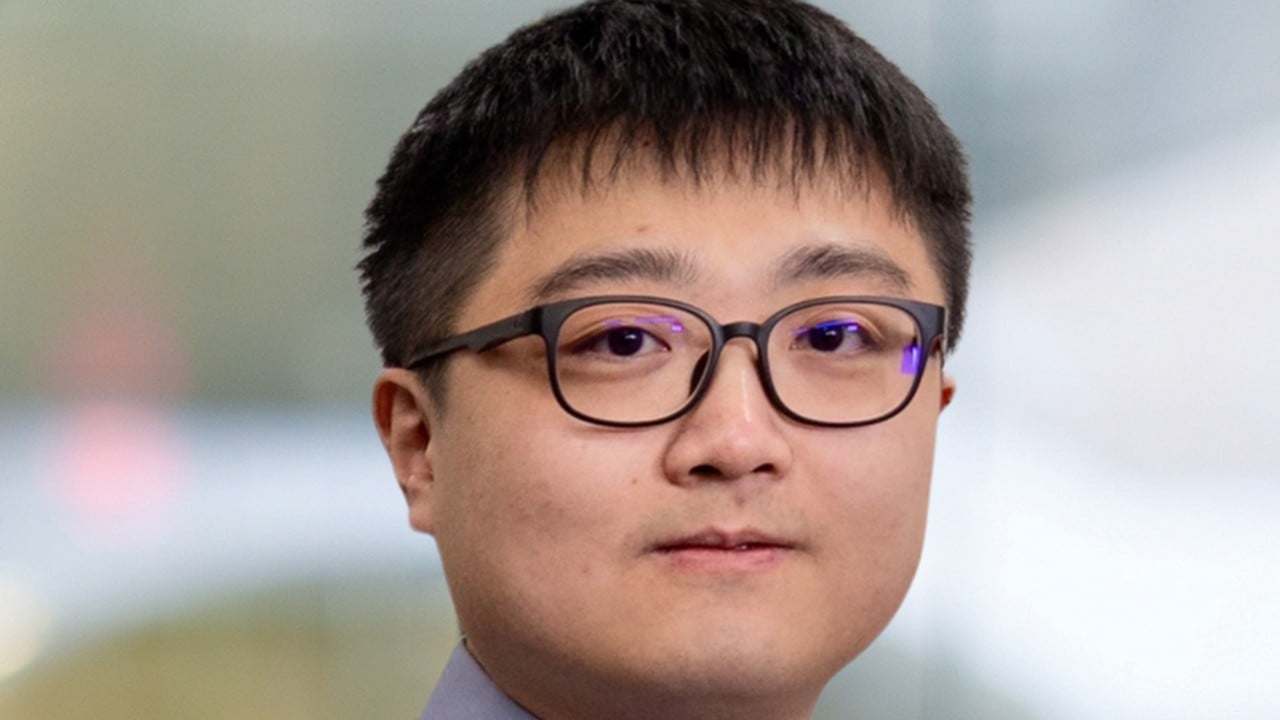
When the news broke in July 2026 that a group led by Vinod Khosla had agreed to buy the Seattle Seahawks for a record $9.6 billion, the sports world reacted with predictable astonishment. Modern sports commentary immediately shifted to asset valuations, stadium upgrades for the upcoming World Cup matches, and the massive financial transition from the estate of Paul Allen. Most observers missed the underlying irony of the transaction. The conventional consensus views this massive purchase as the crowning achievement of a classic, risk-averse billionaire looking for a stable trophy asset to anchor his legacy. They couldn't be more wrong. This sports acquisition isn't a retreat into the comfortable world of predictable institutional wealth. It's a continuation of a brutal, lifelong thesis that flies in the face of everything taught in modern business schools.
The primary misunderstanding surrounding this veteran investor stems from how the public conceptualizes venture capital. You're told that successful investing is about mitigation. You're taught that the best tech investors are master calculators who minimize their probability of failure by analyzing historical data and building pristine spreadsheets. I've spent years watching the mechanics of Silicon Valley, and I can tell you that the spreadsheet model is a comfortable lie designed to make wealthy people feel secure. The real drivers of tectonic economic shifts don't look to reduce risk because they understand that reducing risk inevitably castrates the magnitude of success. If you want to build something that fundamentally reshapes human infrastructure, you have to be willing to look completely foolish to your peers for years at a time.
The Billion-Dollar Fallacy of Reducing Startup Risk
Most investment firms operate like glorified insurance companies. They look at past performance, run regression models, and try to predict the future based on a linear progression of the present. They want a safe fifteen percent return year over year. That strategy works beautifully if you want to manage wealth that already exists. It fails spectacularly if your goal is to invent entirely new industries from scratch. The traditional financial sector hates uncertainty because uncertainty ruins quarterly projections. They confuse probability with consequence.
When you examine the historical trajectory of major technological breakthroughs, you quickly realize that every single one of them looked highly improbable at the starting line. Think about the early days of personal computing or the internet. The experts laughed at the initial iterations. They pointed out every technical limitation and every market obstacle. The people who eventually won weren't the ones who calculated the lowest risk. They were the ones who realized that if an improbable idea succeeds, the consequences are so massive that they render all previous failures irrelevant.
This is the core philosophical divide that separates true creators from mere asset managers. The typical money manager wants to be right eighty percent of the time, even if being right only yields a modest return. The alternative approach accepts a ninety percent failure rate, provided that the remaining ten percent yields a thousand-fold return. It's an uncomfortable way to live. It requires a psychological resilience that most corporate executives simply don't possess. They'd rather fail conventionally than succeed unconventionally. If you fail like everyone else, you keep your job. If you try something radical and fail, you get exiled.
Why the Smart Money Misunderstands Vinod Khosla
The institutional crowd in New York looks at the tech world and sees an chaotic casino. They look at someone like Vinod Khosla and assume the massive wins are simply the result of rolling the dice enough times. They call it luck. This critique is the ultimate coping mechanism for the safely mediocre. By labeling extreme success as a statistical anomaly, traditional analysts excuse their own inability to identify generational shifts before they happen. They don't see the rigorous, first-principles thinking that underpins these seemingly wild bets.
True expertise in this arena isn't about guessing which way the wind blows tomorrow. It's about understanding the fundamental laws of physics and computing well enough to know where technology must inevitably land a decade from now. When this specific investor put fifty million dollars into an unproven non-profit called OpenAI in 2019, the institutional smart money called it reckless. The company had no product. It had no revenue model. It didn't even have a traditional corporate structure. To a traditional accountant, it looked like a financial black hole.
What the accountants missed was the underlying velocity of the technology. They didn't understand the exponential nature of compute scaling. They looked at the immediate costs and the lack of a business plan, while the actual bet was placed on the long-term upside of artificial intelligence. It wasn't a reckless gamble. It was an unhedged, highly calculated position on the future of human cognitive labor. When you operate with that level of conviction, you don't need a hundred-page business plan. You just need a team with an exceptional learning rate and a technology that obeys the laws of exponential growth.
The Deflationary Realities of the Automated Decade
We're currently entering a period that will fundamentally break traditional macroeconomic models. The mainstream economic commentary focuses heavily on inflation, interest rates, and employment percentages. These metrics are completely unsuited for what's coming over the next ten years. The accelerating capability of artificial intelligence is about to introduce a massive, permanent deflationary shock to the global economy.
Consider how businesses traditionally scale. If you want to double your revenue, you usually have to significantly increase your headcount, your office space, and your operational overhead. The relationship between growth and cost has always been largely linear. AI completely severs that link. We're already seeing early-stage companies generating significant revenue while replacing entire departments with automated systems. An enterprise resource planning system driven by intelligent agents can now manage accounting tasks that used to require dozens of trained professionals.
By the time we reach 2030, the marginal cost of producing goods and services will drop toward zero. This sounds like an era of pure abundance, and it can be, but the transition will be remarkably painful. The outsourcing industries and business process firms that have driven economic growth in developing nations like India for decades are facing an existential crisis. Those jobs won't just move to cheaper regions. They'll disappear entirely within the next five to ten years. If your entire economic model relies on selling human time for routine cognitive tasks, your model is obsolete.
This technological trajectory challenges the very concept of traditional employment. Mainstream politicians are still promising to bring back industrial manufacturing jobs and protect administrative clerk positions. They're fighting the last war. We need to start preparing for a society where the traditional forty-hour work week isn't the primary mechanism for distributing wealth. It's a terrifying prospect for policymakers because it requires rewriting the social contract from scratch. The current corporate infrastructure won't survive this shift. The rate of extinction for legacy enterprises will skyrocket because they don't have the structural flexibility to adapt to an automated economy.
The Sovereign Imperative of Closed Source Technology
The debate over open-source versus closed-source artificial intelligence has become increasingly ideological. Silicon Valley purists argue that all code should be free, claiming that open access is the only way to democratize technology and prevent corporate monopolies. It's a noble sentiment that ignores the harsh realities of geopolitical competition. We aren't living in a peaceful global village where everyone plays by the same rules. We're in the middle of a brutal, protracted techno-economic conflict with rival superpowers.
When you open-source an advanced foundational model, you aren't just sharing it with independent developers in California. You're handing it directly to state-sponsored cyber warfare units and autocratic regimes. They don't use these tools to build creative art projects or help small businesses optimize their marketing. They use them to automate disinformation campaigns, develop autonomous weapons systems, and map out vulnerabilities in Western critical infrastructure. Treating advanced AI like a standard open-source web framework is an act of profound strategic naivety.
Developing artificial general intelligence is much closer to the Manhattan Project than it is to building a new operating system. It requires the same level of national security, strict access controls, and sovereign oversight. The argument that open-source models will naturally catch up and provide a decentralized defense system misses the point of exponential scale. The nation that secures a definitive lead in closed, proprietary frontier models will possess an overwhelming economic and strategic advantage. If we sacrifice that lead on the altar of open-source idealism, we won't get a second chance to correct the mistake.
Changing the Definition of Success
The real lesson of this long career isn't found in the net worth statistics or the high-profile sports acquisitions. It's found in the total rejection of safe compromises. The business world is full of people who spend their lives trying to avoid making mistakes, and as a result, they never make anything of lasting value. They build careers out of managing decline and polishing the status quo.
You don't achieve historic breakthroughs by being reasonable. You achieve them by refusing to let the fears of the crowd dictate your long-term strategy. The next few decades will belong to the entities that embrace high-consequence risks while the rest of the world scrambles to protect their dying business models. If you're still looking for safety in a world defined by exponential technological disruption, you're already losing.