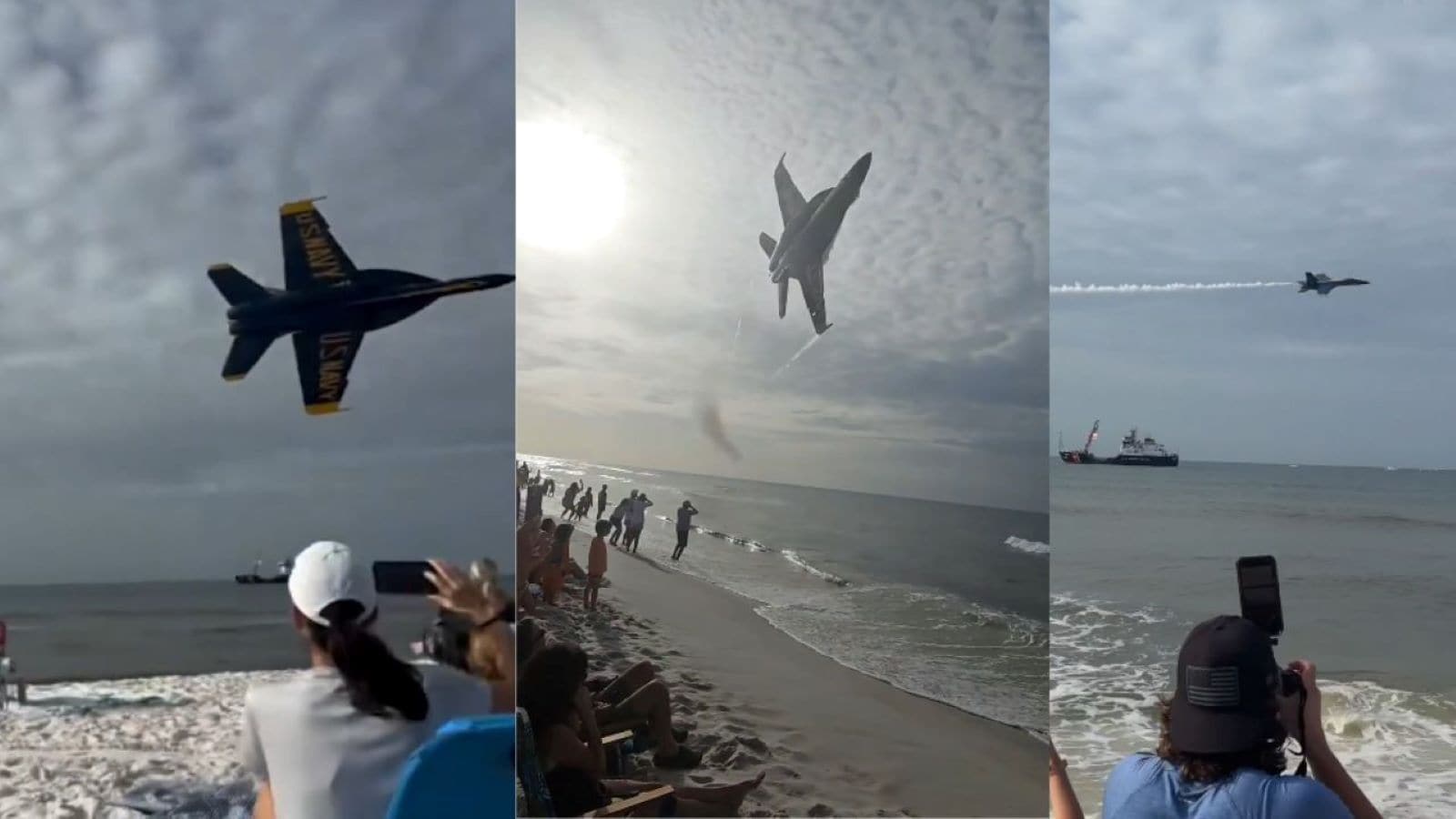
You expect noise, heat, and a bit of drama when the U.S. Navy Blue Angels show up in Florida. It's Pensacola, after all—their backyard. But during the annual "Breakfast with the Blues" event, things went from a thrilling military demonstration to an absolute beachside sandstorm in a matter of seconds.
An F/A-18 Super Hornet tore down the shoreline at an incredibly low altitude. The jet's violent wake turbulence acted like a localized hurricane, lifting heavy beach tents, metal-framed chairs, and umbrellas straight into the air and tossing them across the sand.
Spectators ducked, gear was destroyed, and while many in the crowd loved the sheer intensity, the Navy wasn't laughing. The elite demonstration squadron quickly launched an official investigation into why one of its pilots busted standard flight protocols.
When the Thrill Crosses the Line
The Blue Angels exist to showcase the precision and power of naval aviation, pushing both human and machine to the absolute limit. But there's a razor-thin margin between a breathtaking maneuver and a dangerous safety hazard.
During the Wednesday morning arrival flight—meant for the pilots to familiarize themselves with local landmarks—one of the Boeing F/A-18E jets dropped well below its standard arrival profile.
If you've ever stood on a beach, you know a standard umbrella is basically a sail waiting for a gust of wind. When you introduce the downforce and jet wash of a massive military fighter jet flying just feet above the coastline, that gear becomes flying shrapnel.
The resulting scene was chaotic:
- Heavy metal-framed canopies buckled and bent.
- Umbrellas were ripped out of the deep sand and launched toward the crowds.
- Startled beachgoers scrambled for cover as debris rained down around them.
One witness, Ashley Korn, remarked that she had been attending the Pensacola events for a decade and had never seen a pass so low. "I literally thought we were going to be taken out," she said, though she admitted the sheer adrenaline of the moment was unforgettable. Another spectator mentioned that the jet looked so massive up close they initially mistook it for "Fat Albert," the team's C-130 transport plane.
The Physics of Flight: Why Low Passes Are So Destructive
It isn't just the noise that knocks things over. It's the physics of displacement and aerodynamic wake.
When a multi-ton fighter jet travels at high speeds close to the ground, it pushes an immense volume of air out of its way. This creates a high-pressure wave in front of it and a powerful low-pressure pocket behind it.
As the air rushes to fill the void left by the passing jet, it generates violent, swirling winds known as wake turbulence. When this wake hits the ground, it behaves like an invisible broom, sweeping up anything not bolted down.
At higher altitudes, this turbulence dissipates safely into the atmosphere. But when a pilot dips below the safety envelope, that energy hits the ground with concentrated force.
The Navy Safety Review: What Happens Next?
The Blue Angels command didn't try to handwave the incident. They immediately released a statement acknowledging that an aircraft had flown lower than standard profiles.
The team is now conducting a thorough safety review to figure out exactly what happened. In naval aviation, deviating from a planned flight profile is a serious issue. Every second of a Blue Angels flight is choreographed to the millimeter.
The investigation will look into:
- Telemetry and Flight Data: Investigators will analyze the jet’s flight data recorder to determine exactly how low the aircraft was flying and its precise speed.
- Pilot Decision-Making: They will evaluate whether the low pass was a deliberate choice, a misjudgment of altitude over the flat, featureless water, or a response to an unexpected environmental factor.
- Environmental Variables: Wind shear, air density, and visibility can all affect how a jet handles close to the ground.
While the official Pensacola Beach Air Show will proceed, you can bet the flight leads will enforce strict altitude floors for the rest of the week's events.
How to Stay Safe at an Air Show
If you're planning to watch high-performance military jets perform close to the ground, you need to take basic precautions. You can't control what the pilots do, but you can control your immediate environment.
- Secure Your Gear: If the jets are flying, drop your umbrellas and collapse your pop-up tents. Don't rely on sandbags or light stakes to hold them down when a fighter jet is roaring overhead.
- Protect Your Hearing: Keep high-quality ear protection on hand, especially for young children. A low-altitude pass can easily exceed 120 decibels, which is enough to cause immediate hearing damage.
- Watch for Flying Debris: If a jet approaches unexpectedly low, turn away from the water, protect your face, and watch out for loose items blowing from adjacent beach setups.
If you want to see what this wild low pass looked like from the sand, check out this spectator's footage of the Pensacola Beach flyover which captures the exact moment the beach gear took flight. It shows the incredible power of these machines up close and explains why the Navy is taking the incident so seriously.