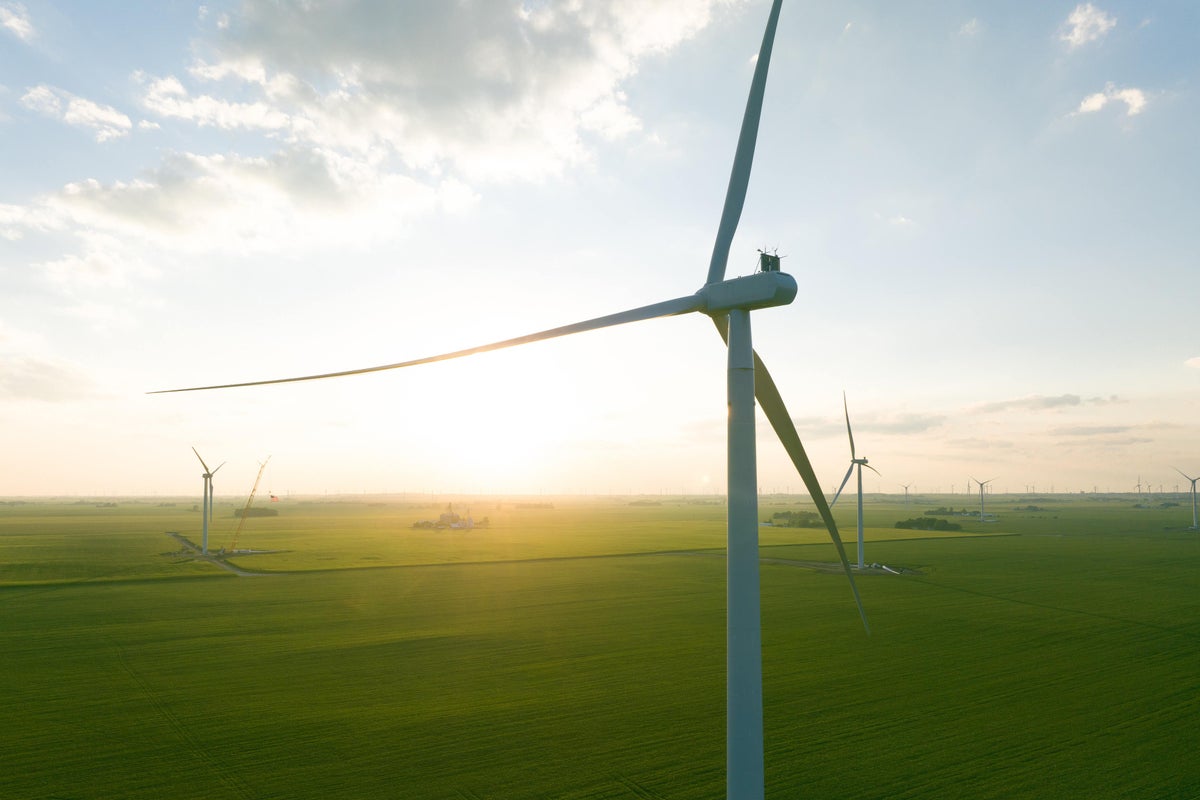
Taxpayer money is flowing into corporate coffers at a staggering rate, but the government isn't buying new roads, bridges, or power lines. It's paying companies to completely abandon clean energy infrastructure. The latest casualty is a massive clean energy development off the coast of North Carolina, where the federal government just finalized a deal to wipe a major offshore wind farm project off the map.
Duke Energy agreed to give up its federal lease in the Carolina Long Bay area. In return, the Department of the Interior is handing the utility a $129 million payout. This specific patch of ocean, located roughly 22 miles south of Bald Head Island, was slated to generate up to 1.6 gigawatts of clean electricity. That is enough to supply power to over 300,000 homes. Now, those turbines will never be built. You might also find this connected story interesting: Why China's Extreme Floods Are Pushing Infrastructure To The Brink.
This isn't a one-off corporate disagreement. It is part of a deliberate, highly aggressive strategy by the Trump administration to systematically dismantle the American offshore wind sector. Because the White House repeatedly ran into legal roadblocks when attempting to freeze wind permits by executive decree, they shifted to a fallback plan. They are using federal funds to buy out the developers instead.
The Legal Shell Game Fueling Lease Buyouts
To understand why the government is spending $129 million to stop an energy project, you have to look at what happened in the federal court system over the last year. The administration initially attempted to halt offshore wind development by implementing a blanket freeze on federal permits. Clean energy advocates and state attorneys general sued immediately. As extensively documented in latest coverage by Associated Press, the effects are worth noting.
The administration went zero for five in federal court. Judges consistently ruled that the executive branch overstepped its legal authority by trying to unilaterally cancel valid, legally binding offshore leases that companies had already purchased.
Faced with an unbreakable legal wall, the administration pivoted. If you can't legally force a company to stop building, you can offer them enough taxpayer cash to make them walk away voluntarily. Interior Secretary Doug Burgum defended the buyout by framing it as a national security win that lowers consumer costs, though critics argue the administration is simply burning public money to satisfy a political vendetta against renewable energy.
This North Carolina buyout marks the ninth offshore wind project to be shut down through these federal buyback agreements since the start of the current presidential term.
A Two Billion Dollar Campaign Against Clean Energy
The $129 million handed to Duke Energy looks like pocket change when you look at the broader campaign. The administration has quietly committed more than $2.7 billion to clear corporate wind developers out of US waters.
The spending spree started in March with a massive $928 million settlement paid to French energy giant TotalEnergies. That single agreement terminated two separate offshore wind arrays, one in the New York Bight and another in the exact same Carolina Long Bay zone where Duke was planning to build.
Shortly after the TotalEnergies deal, the federal government cut an $885 million check to Ocean Winds, a joint venture that surrendered its development rights off the coasts of New York and California. Weeks later, Invenergy walked away from four separate offshore leases across the Atlantic coast and the Gulf of Maine after securing a $765 million federal reimbursement.
Look at the staggering sums involved here.
- TotalEnergies received $928 million to cancel two projects.
- Ocean Winds accepted $885 million to abandon coastal leases.
- Invenergy took $765 million to exit four Atlantic and Pacific sites.
- Duke Energy is getting $129 million to kill its North Carolina footprint.
This is a massive reallocation of public money. The federal government is actively shrinking the nation's future energy supply during a period of rapidly growing electricity demand.
Why Duke Energy Decided to Take the Cash
Duke Energy didn't get a full refund. The utility originally shelled out $155 million for the Carolina Long Bay lease during a competitive federal auction in 2022. By accepting $129 million, they are taking a literal $26 million haircut on the raw lease price alone, before counting the millions they already spent on early-stage engineering and environmental assessments.
So why did they sign the paperwork?
The reality on the ground is that Duke Energy is facing immense financial and regulatory pressure within North Carolina. The utility is currently locked in a fierce public battle over its proposed consumer electricity rates. Duke initially demanded an 18% rate hike over the next two years to fund infrastructure upgrades. After intense pushback from customers and North Carolina Attorney General Jeff Jackson, the company had to scale that request back to an 11.6% increase.
At the same time, offshore wind has become a risky bet for regulated utilities. Supply chain snarls, high interest rates, and lengthy structural timelines have driven up project costs across the Atlantic seaboard.
By taking the $129 million settlement, Duke can completely eliminate a politically toxic project while immediately recouping a massive chunk of capital. Kodwo Ghartey-Tagoe, the chief executive of Duke Energy Carolinas, stated that the company will reallocate that $129 million by the end of the year. Instead of building turbines at sea, they plan to dump that money into expanding natural gas generation, building advanced nuclear facilities, and upgrading the existing onshore power grid.
The Growing Economic and Legal Backlash
While Duke Energy and the federal government are celebrating the settlement as a mutual victory, coastal states and environmental organizations are furious. The economic fallout from these cancellations is hitting local communities that spent years preparing for a clean energy manufacturing boom.
The Southeastern Wind Coalition estimated that fully developing North Carolina's offshore wind capacity would have injected $44 billion in capital investment into the region. It was projected to create 37,000 local jobs and generate $233 million in state tax revenue. Those factory jobs, port upgrades, and supply chain positions are now gone.
The political counterattack has already moved into the courts. A coalition of seven states—including New York, New Jersey, California, Massachusetts, Connecticut, Rhode Island, and Vermont—filed sweeping lawsuits against the federal government.
These states argue that the federal buyouts are a backdoor violation of the Outer Continental Shelf Lands Act. They claim the Trump administration is actively sabotaging state-mandated climate goals and destroying regional economic plans. If these lawsuits succeed, the federal government could find its expensive buyback strategy tied up in legal chaos for years.
What Happens to Your Electricity Bill Next
If you live in the Carolinas or any other state affected by these cancellations, you shouldn't expect your power bill to drop anytime soon. The administration claims that shifting away from expensive offshore wind will protect ratepayers from skyrocketing costs. Local consumer advocates see it differently.
By killing offshore wind farms, utilities are forced to double down on natural gas. While natural gas is currently abundant, its price is notoriously volatile. Building more gas-fired power plants tethers consumer electricity bills directly to global commodity markets for the next thirty years.
Furthermore, Duke's own updated resource plan indicates the company is drastically cutting its overall renewable energy targets for the next decade. They are planning to build half as much solar and wind capacity as they originally promised.
Real Actions to Take Right Now
The sudden collapse of these major energy projects means the landscape of regional power generation is shifting rapidly. Here is how you can protect your wallet and monitor the fallout.
Track local utility commission filings. If you are a Duke Energy customer in North Carolina, keep a close eye on the upcoming public hearings regarding the company's revised resource plan. The utility must formally explain how it will replace the 1.6 gigawatts of lost wind capacity.
Audit your home energy consumption. With large-scale clean energy projects falling off the grid, regional power reliability will face tighter strains during peak summer and winter months. Investing in residential solar, heat pumps, or basic energy efficiency upgrades is the best way to insulate your household from unpredictable grid pricing.
Monitor the multi-state lease litigation. The outcome of the lawsuits filed by the seven state attorneys general will dictate whether the federal government can continue using public funds to buy out energy developers. A victory for the states could freeze future payouts and force a rewrite of federal energy policy.