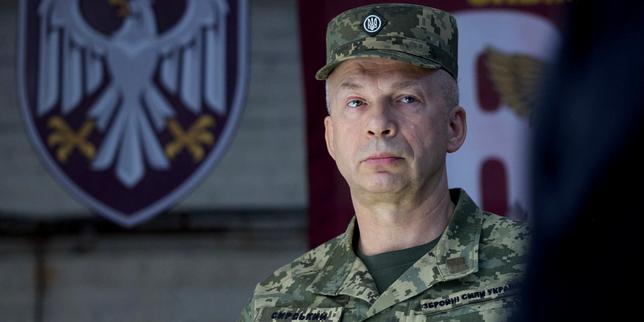
Volodymyr Zelensky just made the biggest military gamble of his presidency since replacing Valery Zaluzhny in early 2024.
General Oleksandr Syrsky is out.
Replacing the 60-year-old Soviet-trained army chief is 43-year-old Major General Mykhailo Drapatyi, a battle-tested frontline officer who represents a radically different generation of Ukrainian military leadership.
If you've been following the news out of Kyiv over the past week, this wasn't a sudden whim. It was the explosive climax of a high-stakes internal war between old-school military bureaucracy and tech-first modern warfare. The firing of defense minister Mykhailo Fedorov days earlier set off public protests, exposing deep fractures inside Ukraine's high command. Zelensky had to make a choice: preserve the rigid top-down command structure or embrace rapid technological adaptation.
He chose adaptation.
The Breaking Point Behind Ukraine Top Military Shakeup
To understand why Syrsky was ousted, you have to look back at what happened just days before.
When Zelensky removed 35-year-old Defense Minister Mykhailo Fedorov, the political fallout was immediate. Fedorov, the former digital transformation minister who spearheaded Ukraine's devastating long-range drone program, didn't leave quietly. He publicly called out Syrsky for blocking critical reforms, choking off innovation, and refusing to update battlefield tactics.
Fedorov put the core issue bluntly: drone warfare changes every three to four months, but the Ukrainian high command was operating on doctrine written decades ago.
Protests erupted on the streets of Kyiv and other major cities. Demonstrators weren't just protesting Fedorov's removal; they were demanding Syrsky's head. For months, frontline soldiers and junior commanders complained about top-heavy decision-making, high casualty rates under Syrsky's traditional attrition warfare tactics, and a stubborn refusal to decentralize command.
Syrsky was the man who saved Kyiv in 2022 and executed the brilliant Kharkiv counteroffensive. Nobody denies his historical achievements. But military history is full of generals who win the last war while losing the current one. The operational realities on the front line in 2026 simply outpaced Syrsky's style of leadership.
Who Is Mykhailo Drapatyi and What Changes Now
Major General Mykhailo Drapatyi isn't a desk officer or a political appointee.
Ukrainians know him best from a legendary piece of footage from 2014, when he drove an armored vehicle straight through a pro-Russian separatist barricade in Mariupol. Since then, Drapatyi built a reputation across the army as a pragmatic, highly adaptable commander. He commanded Ukraine's Land Forces and Joint Forces, working closely with frontline drone units and younger field officers.
Crucially, when Fedorov was ousted last week, Drapatyi didn't hide behind diplomatic protocol. He publicly stated that military changes mean nothing without justice for the soldiers carrying the war on their shoulders. That single statement won him immense respect among the troops and political reformers alike.
Drapatyi represents a structural shift toward:
- Decentralized Command: Giving tactical autonomy to brigade commanders on the ground rather than waiting for heavy-handed approval from Kyiv generals.
- Rapid Tech Integration: Streamlining procurement so new drone models, electronic warfare systems, and AI-driven targeting software reach the front lines in weeks, not years.
- Human-Centric Strategy: Moving away from Soviet-style territorial preservation at all costs to prioritize troop retention and smart defensive positions.
Fedorov immediately praised Drapatyi's appointment as "a breath of fresh air and a new hope". That alignment between the tech sector, defense ministry reformers, and the new commander-in-chief signals a unified front that Ukraine desperately needed after weeks of internal friction.
Generational Divide in Ukraine Armed Forces
This military shakeup reflects a much broader issue facing modern militaries around the globe: the collision between traditional military hierarchy and rapid-cycle technological warfare.
Syrsky, trained in Soviet military academies, operated under a centralized command philosophy. Orders flow down, reports flow up, and doctrine changes slowly. That approach worked when mass artillery and conventional troop movements dictated the front line.
It fails when autonomous drone swarms, satellite intelligence, and electronic counter-measures redefine the tactical picture every few weeks.
Younger officers like Drapatyi and civilian tech leaders like Fedorov grew up in a digital environment. They view the battlefield as an interconnected network rather than a fixed tactical grid. When Fedorov pointed out that drone architectures evolve four times a year, he exposed the fatal weakness of traditional military bureaucracy. A command structure that takes six months to approve software updates for unmanned aerial vehicles cannot defeat an adaptable enemy.
Zelensky resisted this change for a long time. He preferred loyal, predictable career generals who didn't harbor political ambitions. But public pressure, battlefield necessity, and the risk of losing his army's trust forced his hand.
What This Leadership Shift Means for the Front Lines
Don't expect the front lines to transform overnight. Military handovers during active operations are complex and dangerous.
Russian forces will almost certainly test Drapatyi's command in the coming days, searching for temporary gaps in coordination while staff positions shift in Kyiv. But over the next three to six months, this change will reshape Ukrainian warfighting in three concrete ways.
First, expect a massive acceleration of Ukraine's long-range strike campaign against Russian industrial and logistics targets. With the strategic alignment restored between military command and tech procurement, deep-strike drone units will operate with far fewer bureaucratic roadblocks.
Second, expect significant staff turn-over within the General Staff. Drapatyi will likely bring in younger officers from active front-line brigades who understand real-time drone integration, electronic warfare, and decentralized logistics.
Third, troop morale on the front lines should stabilize. Sacking Syrsky directly answers a growing wave of dissatisfaction among soldiers who felt their lives were being spent on outdated battlefield tactics.
Practical Lessons for Following the Conflict
If you're tracking Ukraine's military trajectory following this shakeup, ignore the superficial headline noise and focus on these critical operational indicators over the next 30 days:
- Watch General Staff Appointees: Monitor who Drapatyi selects for key deputy positions in the General Staff. If he brings in drone unit commanders and young brigade leaders, the reform is real.
- Track Long-Range Strike Volume: Pay attention to the frequency and coordination of Ukrainian deep strikes against Russian oil, ammunition, and logistics infrastructure.
- Monitor Defense Ministry Reconciliation: Watch whether Fedorov or his team of tech reformers accept Zelensky's new roles in government, signaling an end to the political crisis in Kyiv.
- Observe Tactical Adaptations: Look for changes in how Ukrainian forces manage defensive operations in heavy contest zones like the East—specifically whether they prioritize mobile defense over static holding tactics.
Zelensky took a massive political risk by sacking Syrsky. Now the burden falls squarely on Drapatyi to prove that a modern, tech-driven military leadership can deliver victory on the battlefield.