Look at a map of the Indo-Pacific, and you'll spot something striking. Two vast democracies anchor opposite ends of a vital maritime corridor.
For decades, Canberra and New Delhi treated each other with polite indifference. They shared cricket and a British colonial past, but not much else. Today, that old dynamic is completely dead.
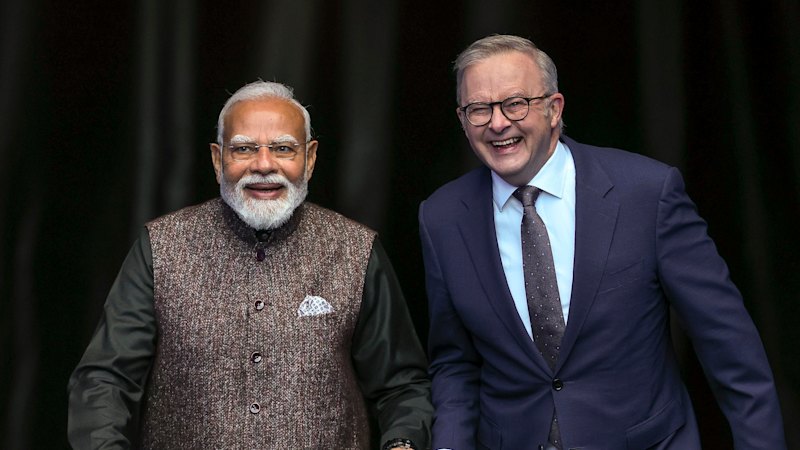
Australia’s relationship with India is expanding faster than almost any other foreign partnership in Canberra's portfolio. Prime Minister Narendra Modi’s visit to Melbourne highlighted how deep these ties have become. We're seeing new bilateral deals on critical minerals, joint defense operations, intelligence sharing, and green energy technology.
Yet, under the friendly photos and joint press statements, a major friction point remains.
When it comes to Russia, Ukraine, and non-alignment, Australia and India sit in totally different strategic camps. Canberra aligns closely with Washington and European allies. India, meanwhile, guards its strategic autonomy fiercely, continuing to buy Russian oil and maintain long-standing ties with Moscow.
How can two countries build an intimate security and trade partnership while holding opposite views on global conflict? It turns out that shared fears about regional stability outweigh their ideological differences.
The Real Drivers Behind the Deepening Partnership
To understand why this relationship works, you have to look beyond diplomacy. It comes down to hard economic facts and national security.
Australia has spent the last few years attempting to diversify its export markets away from heavy single-country dependencies. India offers a consumer base of over 1.4 billion people with a rapidly expanding middle class. The economic logic is inescapable.
Critical Minerals and Clean Energy
India needs resources to fuel its clean energy transition and high-tech manufacturing push. Australia holds some of the world's largest reserves of lithium, cobalt, and rare earth elements.
Under the recent agreements signed between Prime Minister Anthony Albanese and Prime Minister Modi, Australian mining firms are opening direct supply lines to Indian manufacturers. This isn't just basic trading. It's an effort to build supply chains that bypass authoritarian bottlenecks.
Maritime Defense Integration
The security side is moving even faster. Under Australia's National Defence Strategy, India has quietly risen to top-tier status.
Military cooperation is no longer restricted to symbolic exercises. Australia and India now share real-time operational data across the Indian Ocean. They've established formal agreements for submarine search and rescue, logistics sharing, and maritime patrol coordination. Deputy Prime Minister Richard Marles has pointed to this operational alignment as a historical high point in bilateral security.
Both nations view the Indian Ocean as a primary security zone where freedom of navigation must be maintained. That shared priority overrides minor policy squabbles.
Understanding the Fundamental Divergence
So, what is the wedge that keeps diplomat watchers up at night? It’s India's insistence on multi-alignment versus Australia's traditional alliance commitment.
Australia views international diplomacy through clear structures. It relies on treaty alliances like ANZUS, security pacts like AUKUS, and tight coordination with Western nations. When major global conflicts break out, Canberra expects democratic nations to line up together.
India doesn't operate that way. New Delhi practices what Indian diplomats call "strategic autonomy."
The Russian Factor
When sanctions hit Moscow, Australia immediately enforced tough restrictions and provided military aid to Kyiv. India took the opposite path. New Delhi dramatically increased its imports of discounted Russian crude oil, helping fund its domestic energy needs while keeping its historic relationship with Moscow intact.
Australian officials originally hoped India would shift its stance over time. That hasn't happened. India views its relationship with Moscow as essential for its national interest, particularly for maintaining its defense equipment stock and geopolitical leverage.
Different Views on Global Power Blocs
Australia wants a clear rules-based order backed by Western alliances. India wants a multipolar world where no single bloc calls the shots.
For New Delhi, participating in the Quad alongside Australia, Japan, and the United States is about balancing power in Asia, not joining a Western military alliance. India refuses to be drawn into foreign proxy battles that don't directly touch its borders.
How Canberra and New Delhi Manage Their Differences
In previous decades, a rift this significant over international strategy might have stalled bilateral progress. Today, both capitals simply agree to disagree.
They've learned to compartmentalize.
When foreign ministers meet for 2+2 dialogues, they spend ten minutes addressing global points of disagreement, then spend hours working on tangible cooperation. They focus on practical outcomes like trade deals, higher education credit recognition, joint naval drills, and visa processing improvements.
Practical Pragmatism Over Ideology
Both governments recognize that waiting for total alignment is a fool's errand. Perfect agreement doesn't exist between sovereign nations with different geographic realities.
Australia sits safely in the South Pacific, surrounded by oceans. India shares long, tense land borders with nuclear-armed neighbors. Naturally, their immediate security calculations differ.
By accepting these differences openly, Canberra and New Delhi have created a resilient framework. They don't demand total ideological conformity. They demand reliability on specific, shared interests.
Domestic Pressures and Diaspora Realities
Economic and security deals aren't happening in a vacuum. The human connection between the two nations is exploding.
More than one million people living in Australia now claim Indian heritage. Indian students make up one of the largest foreign student populations in Australian universities. This growing diaspora creates massive cultural momentum, but it also brings local political friction.
Australian political leaders must balance welcoming Indian investment with managing community concerns over migration levels, housing availability, and foreign political influence. During high-profile diplomatic visits, protests over human rights and domestic politics in South Asia frequently flare up outside venues.
Managing these domestic pressures requires careful political footwork from Canberra. Ignoring community voices risks political backlash at home, while lecturing foreign leaders risks damaging key trade negotiations.
Actionable Steps for Businesses and Policymakers
If you're operating in trade, higher education, or technology, this evolving relationship creates direct opportunities and specific risks. Here's how to navigate them effectively.
Focus on Supply Chain Complementarity
Don't try to sell finished consumer goods where domestic competition is fierce. Focus on raw materials, critical minerals, clean tech components, and agricultural exports where Australia holds a natural advantage.Account for Regulatory Patience
Navigating Indian trade frameworks takes time. While the Australia-India Economic Cooperation and Trade Agreement reduced tariffs, local regulatory hurdles remain. Build long timelines into your commercial strategy.Separate Bilateral Trade from Global Headlines
Geopolitical headlines about sanctions or international voting patterns won't derail bilateral commercial contracts. Focus on direct economic value rather than diplomatic noise.Invest in Local Strategic Knowledge
Understanding Indian state-level regulations is crucial. Working with local partners on the ground in India yields far better results than relying solely on high-level government memos.
The trajectory of Australia-India relations proves that nations don't need identical worldviews to build a powerful alliance. By choosing practical progress over ideological purity, both countries are shaping the future of the Indo-Pacific on their own terms.