Imagine finding out you are expecting a child after the devastating heartbreak of a miscarriage. You are finally happy, planning a nursery, and counting down the weeks. Then your body betrays you. Your limbs twitch uncontrollably. Your foot drags on the floor when you walk. You think it is just normal pregnancy weirdness, but a sudden phone call from your doctor changes everything. You have a massive tumor growing in your skull.
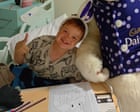
This nightmare became reality for Melody LaTorre, a 34-year-old mother from South Pasadena. Her terrifying ordeal and ultimate triumph showcase the terrifying intersection of a high-risk pregnancy and a aggressive neurological malignancy. It is a story that went viral when she named her newborn baby Gabriel after the neurosurgeon who saved her life, Dr. Gabriel Zada. But the viral headlines only scratch the surface of what it takes to survive a brain cancer pregnancy.
When you look past the heartwarming news clips, you find a masterclass in modern medicine, rapid decision-making, and immense psychological grit. This case forces us to look closely at how the medical community handles situations where two lives hang in the balance, and why traditional oncology playbooks must be completely thrown out the window when a patient is carrying a child.
The Shocking Reality of a Brain Cancer Pregnancy Diagnosis
People often dismiss early neurological symptoms in pregnant women as basic fatigue or prenatal stress. When Melody LaTorre started experiencing involuntary limb twitching and her head began turning side to side on its own during her second trimester, it looked bizarre but could easily have been misdiagnosed. By week 20, she developed foot drop, a distinct condition where the front part of the foot fails to lift properly while walking.
Her chiropractor recognized the neurological red flag and insisted she see a specialist. An urgent MRI scan revealed a mass growing directly in her brain.
Discovering a brain tumor during pregnancy is exceptionally rare, happening in just a few cases per hundred thousand pregnancies. The standard medical protocol for a fast-growing brain tumor involves immediate surgical removal, followed closely by aggressive chemotherapy or radiation. But when a patient is pregnant, every single drug, anesthetic, and surgical position poses a direct threat to the fetus.
Doctors face a delicate balancing act. They must protect the mother's life while keeping the baby in the womb long enough to survive delivery. The physiological changes of pregnancy complicate things further. Increased blood volume, altered immune responses, and shifting hormone levels can cause certain types of brain tumors to grow at an accelerated rate or bleed unexpectedly, turning a stable situation into an emergency within hours.
Deciphering the Hidden Mass
Melody was referred to Dr. Gabriel Zada, the director of the USC Brain Tumor Center at Keck Medicine of USC. The initial MRI images lacked the clarity needed for a definitive diagnosis. To figure out what they were dealing with, Dr. Zada utilized advanced imaging facilities under Dr. Arthur W. Toga.
The high-resolution scans showed the mass was either a benign meningioma or a highly dangerous cancerous glioma. There was only one way to know for sure. They had to cut open her skull and extract it.
This is where the medical team had to make hard choices. In a typical brain cancer scenario, the surgeon operates with a single focus: clear out the malignancy as fast and safely as possible. With a pregnant patient, the entire operating room changes. You need an assembly of specialists who normally operate in entirely different wings of the hospital.
Walking a High Wire in the Operating Room
To pull off a successful craniotomy on a pregnant woman, Dr. Zada brought in Dr. Marc Incerpi, a high-risk maternal-fetal medicine specialist. This kind of cross-departmental collaboration is what keeps patients alive, yet it is incredibly difficult to coordinate under intense time pressure.
The surgery was a terrifying game of millimeters. Dr. Zada later noted that the tumor sat within a single millimeter of Melody’s vital motor fibers. One tiny slip of the scalpel or a fraction of an error with the surgical tools would have caused permanent, irreversible paralysis.
Surgical Risk Profile:
- Tumor Distance to Motor Fibers: 1 millimeter
- Primary Risk: Permanent maternal paralysis
- Secondary Risk: Fetal distress from anesthesia or blood pressure drops
During a multi-hour brain surgery, the patient’s blood pressure must be kept perfectly stable. If the mother's blood pressure drops even slightly, blood flow to the placenta plummets, starving the baby of vital oxygen. The anesthesia team must carefully balance heavy drugs to keep the mother completely still during brain mapping while ensuring those same drugs do not stop the baby's heart.
Melody's surgery was successful thanks to incredible surgical precision. She spent three days recovering in the intensive care unit, but the battle was far from over.
The pathology report brought devastating news. The mass was a malignant glioma. It required immediate chemotherapy to stop it from returning and claiming her life.
The Agonizing Choice Between Mother and Child
This is the exact moment where the reality of a brain cancer pregnancy hits a wall. You cannot give aggressive oncology drugs to a pregnant woman without causing severe birth defects or ending the pregnancy entirely. The medical team faced a grueling dilemma: delay the mother's life-saving cancer treatment, or deliver the baby far too early, risking severe developmental delays or death for the child.
Drs. Zada and Incerpi worked closely with her delivery OB/GYN to calculate the precise intersection of mathematical survival probabilities. They chose to deliver the baby via emergency C-section at just 27 weeks of pregnancy.
A baby born at 27 weeks is profoundly premature. The lungs are unformed, the brain is fragile, and the immune system is practically nonexistent. But waiting any longer would have given the remaining glioma cells in Melody’s brain the chance to multiply and spread, rendering her cancer untreatable.
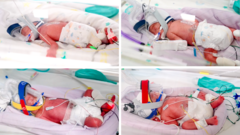
The delivery went smoothly, and the baby boy was rushed immediately to the Neonatal Intensive Care Unit (NICU). Exhausted, terrified, and facing an impending round of harsh oncology treatments, Melody and her husband Alberto made the decision to name their son Gabriel. It was an emotional tribute to the neurosurgeon who gave them both a fighting chance.
What Most Media Outlets Leave Out of the Story
When this story made the rounds on major news sites, it was framed as a simple, heartwarming miracle. The headlines focused heavily on the beautiful gesture of naming the baby after the surgeon. While that gratitude is profoundly real, framing complex medical emergencies purely as feel-good human interest pieces does a disservice to the harsh realities of cancer care.
The media rarely talks about the brutal weeks that follow this kind of ordeal. Melody had to transition directly from recovering from a major craniotomy and a premature birth straight into intense chemotherapy. She had to fight for her own life while her newborn son fought for his in a plastic incubator down the hall.
We also need to talk about the long-term reality of malignant gliomas. In the world of neuro-oncology, doctors rarely use the word "cured." Brain cancer is an ongoing, shifting adversary.
According to Dr. Frances Chow, who managed Melody's subsequent oncology care, she has recovered remarkably well and currently shows no active evidence of disease. But surviving brain cancer means living with the permanent shadow of routine follow-up MRIs, constant anxiety over every minor headache, and the enduring psychological trauma of having your life threatened at what should have been your happiest moment.
Navigating a High-Stakes Health Crisis
If you or someone you love ever faces a complex, terrifying diagnosis like a brain tumor during pregnancy, you cannot afford to be a passive patient. You have to actively command your medical care. Based on what worked in Melody's life-saving journey, here are the essential steps you must take.
Demand a Unified Multidisciplinary Board
Do not let your neurosurgeon and your obstetrician operate in separate silos. Insist that your care team includes a neurosurgeon, a neuro-oncologist, a maternal-fetal medicine specialist, and an obstetric anesthesiologist. They must meet regularly to coordinate your surgical timing, medication dosages, and delivery plans.
Seek Care at a Major Academic Research Hospital
A local community hospital is great for standard medical needs, but it is completely unequipped to handle a brain cancer pregnancy. You need an institution like Keck Medicine of USC, Mayo Clinic, or Cleveland Clinic. These academic centers possess specialized high-resolution neuroimaging tools, dedicated neuro-ICUs, and advanced level-IV NICU facilities capable of keeping a 27-week micro-preemie alive.
Push for Early Neurological Scans
If you are pregnant and experiencing persistent, strange physical symptoms like localized weakness, frequent numbness, or unusual twitching, do not let anyone dismiss it as standard pregnancy complaints. Demand a neurological evaluation. Catching a mass at week 15 gives you vastly more clinical options than discovering it during an emergency in week 28.
Prepare for the Post-Surgical Mental Toll
Surviving the operating room is only half the battle. The combination of postpartum hormonal drops, cancer diagnoses, and the stress of a NICU stay creates a perfect storm for severe depression and PTSD. Lock in professional psychological support, oncology social workers, and family care networks before you even head into surgery. You will need them for the long road ahead.