Imagine stepping onto a plane to fly home to Boston after a routine family visit and university lecture tour. You have your ticket, your bags are checked, and you're ready to head back to your normal life. Instead, plainclothes state security officers intercept you. They pull you out of the crowd.
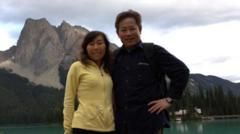
That's exactly what happened to Dr. Youlin Chen, a 54-year-old Chinese-born American seismologist. On November 5, 2024, Chinese authorities arrested him at Beijing Capital International Airport. He hasn't been home since. For nearly two years, his detention remained a closely guarded state secret on both sides of the Pacific.
Now, the veil is dropping, and the details emerging paint a terrifying picture of how scientific research has become a geopolitical weapon.
The Secret Arrest of Youlin Chen
Chen is not a spy. He doesn't hold a security clearance, and he's never handled classified American intelligence. He's a scientist employed by a US government contractor. His primary focus? Figuring out how to tell the difference between natural earthquakes and underground nuclear test explosions.
Specifically, Chen studied the seismic waves generated by North Korea’s nuclear tests. His work was funded by the US State Department and the Air Force Research Laboratory. Crucially, his research relied entirely on publicly available Chinese scientific data and was co-authored with Chinese academics. It was fully cleared for public release and sat openly on the internet.
Yet, Beijing charged him with espionage on May 1, 2025. He faces a closed-door trial where a conviction is practically guaranteed. Under Chinese law, grave espionage charges can carry life imprisonment or the death penalty.
Why the White House Kept Quiet
You might wonder why we are only hearing about this now in July 2026. Usually, when an American citizen is grabbed by a hostile foreign power, the news breaks quickly.
In this case, the silence was strategic—and highly controversial.
On March 19, Secretary of State Marco Rubio officially designated Chen as "wrongfully detained," which legally bumped his case to a top diplomatic priority. However, the Trump administration chose to keep the designation quiet. According to Chen's wife, Dr. Yufang Rong, US officials believed that low-profile, high-level diplomacy would yield better results than public mudslinging, especially after the bruising trade disputes of 2025.
During a state visit to Beijing in May, President Trump reportedly raised Chen’s detention directly with Chinese leader Xi Jinping. Xi allegedly promised to look into it. But months have passed, no progress has been made, and Chen remains in a Chinese prison. With Xi scheduled to visit Washington in September 2026, the family decided they couldn't afford to wait in the shadows any longer.
The Real Motive: Decoupling and Nuclear Secrets
China claims they are simply executing the rule of law. But security experts suggest a much darker motive.
National security experts believe Beijing is targeting Chen because they want to steal his expertise to improve their own nuclear concealment capabilities.
Specifically, they want to master a technique known as decoupling.
In nuclear testing, decoupling involves detonating a weapon inside a large, hollow underground chamber. The shockwaves of the blast are muffled by the air in the cavity, drastically reducing the seismic signals that escape into the earth. To the outside world, a decoupled nuclear test can look like a minor, natural earthquake, allowing a country to test weapons in secret.
By interrogating Chen—who has been questioned more than 100 times without his lawyer present—China may be trying to reverse-engineer how the US detects these muffled tests. If they know exactly how US monitors distinguish earthquakes from explosions, they can design tests that bypass American detection networks entirely.
Twenty Months of Solitary Misery
While diplomats play chess, Chen is paying the physical price.
According to his wife, Chen’s initial detention conditions were brutal. He was forced to sit on a hard wooden stool all day, forbidden from standing, reading, or exercising. As a diabetic, he was denied his essential medications.
His physical deterioration has been severe:
- Weight Loss: Chen has lost 30 to 40 pounds (13.6 to 18.1 kg) since his arrest.
- Malnutrition: He is fed a low-protein diet almost entirely devoid of fresh fruits or vegetables.
- Medical Neglect: He is only given low-quality, generic local medications that do little to manage his chronic illness.
Consular access has been a farce. While US embassy officials have been allowed to visit him, Chinese state security monitors are always in the room, making it impossible for Chen to speak freely about his treatment or the accusations against him. His Chinese defense attorney was blocked from seeing him for the first 13 months of his imprisonment.
The Rising Risk for Academic Travelers
Chen’s case highlights a massive danger for academic researchers, particularly those of Chinese descent who hold US citizenship.
For years, universities encouraged global collaboration. Scholars routinely shared data, co-authored papers, and gave guest lectures. But China's overly broad anti-espionage laws have effectively criminalized open-source academic work. If you use public Chinese data to study something Beijing deems sensitive—like North Korean nuclear activity—you can be branded an international spy.
Chen is currently the only American in China officially carrying the "wrongfully detained" label, but hostage advocacy groups like the Foley Foundation estimate at least 12 other Americans are unjustly held or trapped under exit bans in the country.
If you are a researcher working on any topic adjacent to national security, defense, or seismology, think twice before booking a flight to China. The boundary between academic collaboration and "espionage" is now entirely defined by the political whims of the Chinese Communist Party.
To learn more about the geopolitics of this arrest, check out this video detailing how China Arrests U.S. Scientist Studying North Korean Nuclear Tests, which highlights the growing risks for academics working in sensitive scientific fields.