If you want to understand how the global geopolitical map is being redrawn, look away from the missile silos and focus on the server farms.
While Washington works behind closed doors to lock down its elite AI models, Beijing is taking the opposite route. They are giving theirs away.
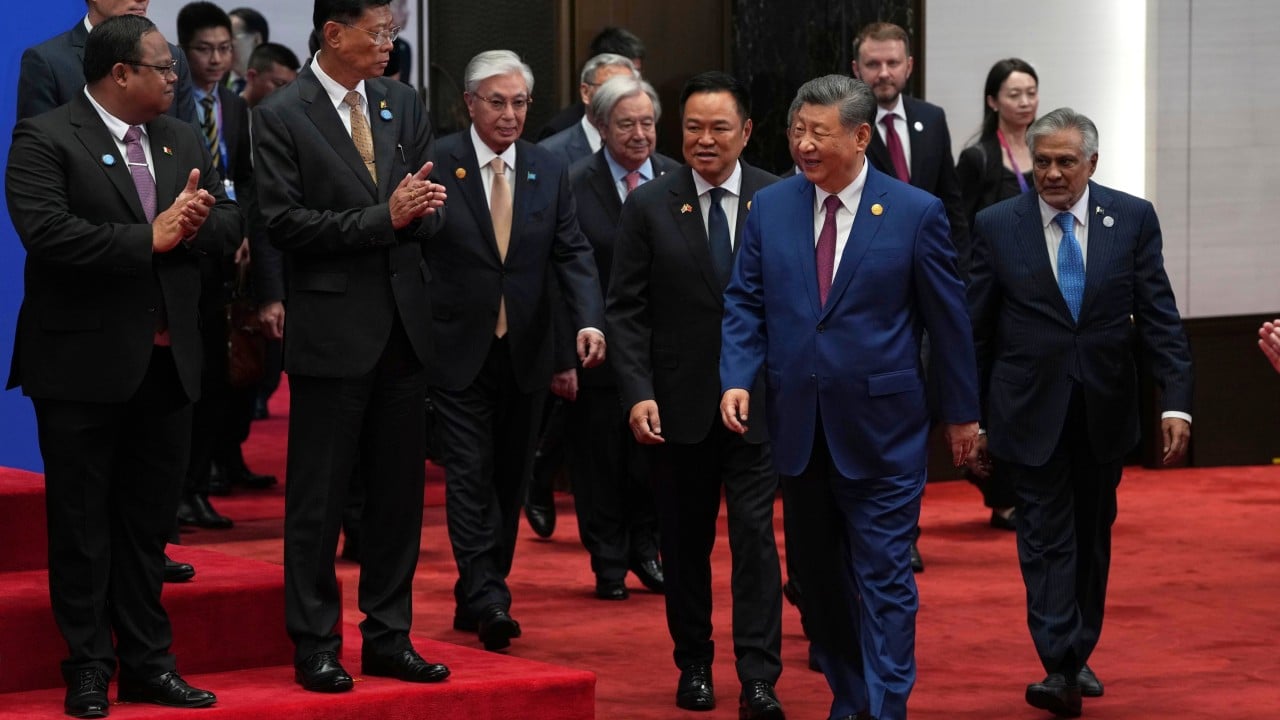
At the World Artificial Intelligence Conference in Shanghai, Chinese President Xi Jinping laid out a vision for a new global AI order. It's a pitch tailored for the Global South, offering cheap, open-source AI as a public good. Xi explicitly warned of "new historical injustices" if a few wealthy nations monopolize the tech.
But this isn't just charity. It's a calculated, brilliantly executed play to bypass Western blockades, build an alternative tech ecosystem, and write the rules for the next century.
The Birth of WAICO and the 29-Nation Coalition
While American tech firms like OpenAI and Anthropic guard their weights like state secrets, China is building an institutional alliance. On the eve of the Shanghai summit, 29 countries signed up to form the World AI Cooperation Organisation. Headquartered in Shanghai, the group includes nations like Brazil, Pakistan, Serbia, and dozens of representatives across Africa and Asia.
This isn't a casual tech club. It is a direct challenge to the U.S.-led "Pax Silica" initiatives.
For developing nations, the choice is becoming stark:
- The U.S. Option: High-cost, heavily restricted, proprietary models hosted on American cloud servers that can be cut off at the whim of Washington.
- The China Option: Low-cost, highly efficient, open-weight models that you can run locally, customize for your own language and culture, and control entirely.
It is a message that resonates deeply in capitals that feel locked out of the Silicon Valley boys' club. To seal the deal, Beijing is offering massive practical incentives. Over the next five years, China will train 5,000 AI specialists from developing nations. They are also building dedicated AI cooperation centers with ASEAN, the African Union, and BRICS, while deploying their MAZU intelligent meteorological early-warning system to 30 countries to handle climate disasters.
The Efficiency Secret of Chinese AI
American tech giants have a massive resource advantage. Meta, Microsoft, and Google are spending an estimated $725 billion this year on AI infrastructure. They are brute-forcing progress by throwing endless electricity and billions of dollars at massive, closed clusters.
China can't do that. Denied access to Nvidia’s premier chips due to U.S. export controls, and operating with a fraction of the data centers that America boasts, Chinese engineers had to get creative. They focused on hyper-efficiency.
+-------------------------------------------------------------------+
|                     TWO PATHS TO AI DOMINANCE                     |
+-------------------------------------------------------------------+
|  U.S. MODEL: "BRUTE FORCE"       |  CHINA MODEL: "EFFICIENCY"     |
|                                  |                                |
|  * Proprietary, closed-source    |  * Open-weight, public goods   |
|  * Extreme capital spend         |  * Lean, highly optimized code |
|  * High energy consumption       |  * Renewable-powered grid      |
|  * Geopolitical gatekeeping      |  * Broad Global South adoption |
+-------------------------------------------------------------------+
Chinese companies are releasing models that run on remarkably modest hardware. A prime example is DeepSeek’s recent release of its "dSpark" paper, which managed to boost model throughput by 600% using the same hardware footprints. Because China invested heavily in its green grid over a decade ago, running these servers on their 60% renewable grid is incredibly cheap.
At the same time, companies like Moonshot AI are releasing massive open models like the Kimi K3, proving that open-weight systems can go toe-to-toe with the best closed systems America has to offer. By open-sourcing these models, Beijing is crowdsourcing their optimization to millions of developers across the globe.
The Safety Narrative as Geopolitical Leverage
Xi didn't just talk about sharing tech. He spent a significant portion of his address warning against "security overreach" and autonomous systems operating without human control. He compared AI to a powerful, fast horse that still needs a rider to steer it.
This dual focus on rapid adoption and strict human control serves two purposes:
- Reassuring the Global South: It frames China as the mature partner that values safety, risk assessment, and early-warning mechanisms over the "move fast and break things" ethos of Silicon Valley.
- Challenging Western Sanctions: By positioning excessive Western restrictions as security overreach, Beijing is arguing that U.S. export controls aren't about safety—they're about preventing global development.
This sets up an intriguing ideological battleground for the upcoming U.S.-China bilateral AI talks. Washington will likely argue that highly capable open-source models present an existential security risk. Beijing will counter that keeping AI under lock and key is a tool of digital colonialism.
What Happens Next
If you are a business leader or policymaker, you can't afford to ignore this shift. The global tech stack is fracturing into two distinct hemispheres.
To navigate this new reality, you need to actively adjust your strategy:
- Audit your dependencies: Evaluate how much of your workflow relies on proprietary, single-point-of-failure U.S. APIs.
- Explore open-weight alternatives: Test-drive high-performing open Chinese models like Qwen or Kimi on your own infrastructure to see if they offer a more cost-effective, sovereign solution.
- Prepare for a multi-polar tech stack: Build your products to be model-agnostic, allowing you to swap backends seamlessly depending on localized regulations and regional availability.
The era of uncontested Silicon Valley dominance is over. The future of AI belongs to whoever makes the technology accessible to the remaining eighty percent of the planet.