Forget Antiques Roadshow. Sometimes the most staggering historical artifacts aren't locked inside temperature-controlled museum cases behind two inches of bulletproof glass.
They're covered in soy sauce stains.
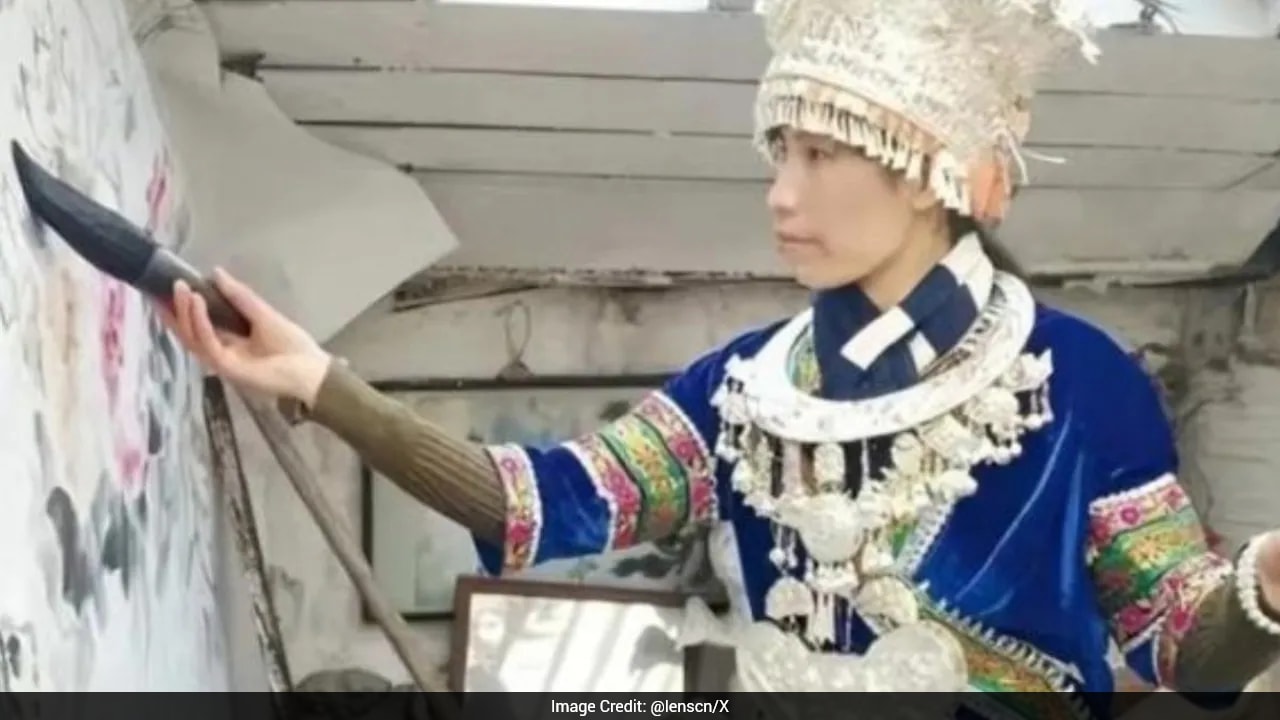
A villager named Xu from Anhui province, eastern China, recently cracked the code on a dark-red wooden table his family had eaten off for generations. The table was battered. The edges were cracked. The surface was heavily faded from decades of hot soup bowls and spilled tea being aggressively wiped away.
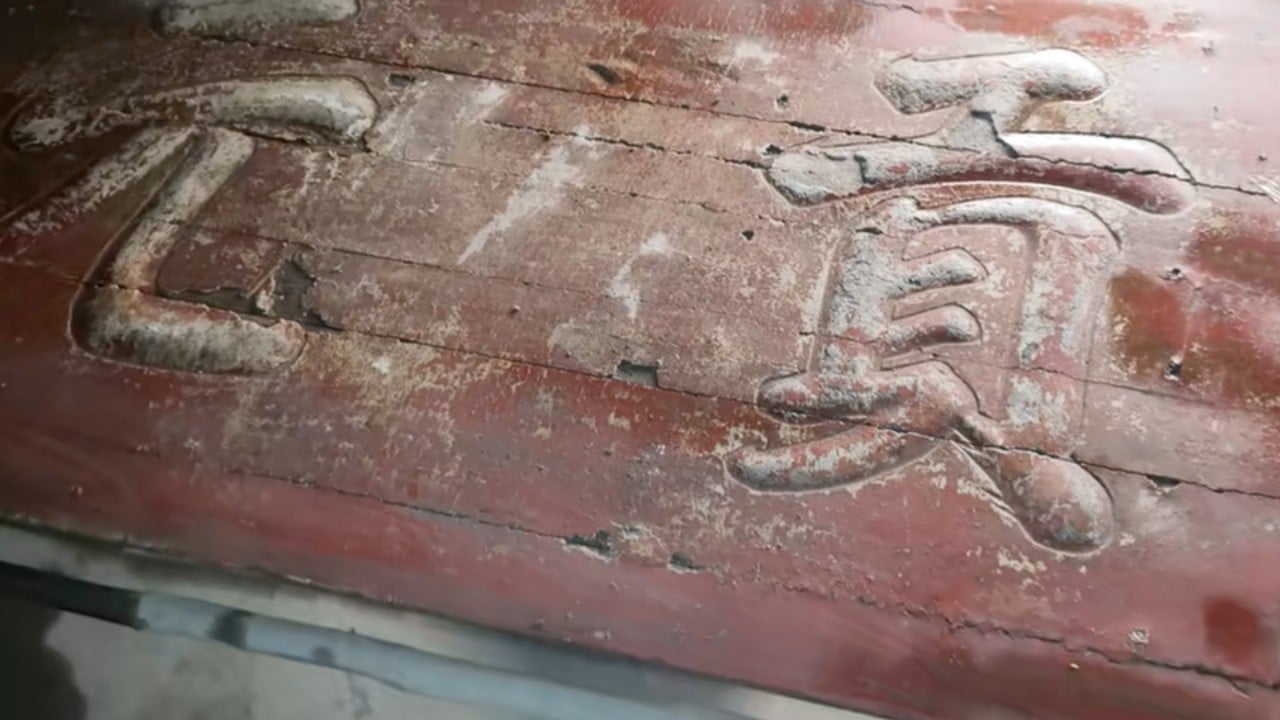
But Xu noticed two faded characters carved deeply into the heavy timber. He grabbed his phone. He typed them in.
The result was staggering. His family hadn't been eating on a normal piece of furniture. They were dining on a 260-year-old Qing dynasty honor board.
The True Weight of the "Gongyuan" Plaque
The characters carved into the scarred wood read "Gongyuan," which roughly translates to "talent presented to the emperor".
This wasn't a generic participation trophy. To understand exactly what Xu was using to hold his dinner plates, you have to look at the sheer brutality of the Chinese civil service examination system, known as the keju. Back in 1761, during Emperor Qianlong's reign, the keju was the only real path to political power.
It was unforgiving. Millions of young men dedicated their entire lives to studying classic Confucian texts. Almost everyone failed. Candidates were locked in tiny, freezing cells for days at a time, writing intense philosophical and political essays that dictated the entire trajectory of their family's lineage.
Xu's ancestor, Xu Yunli, didn't just scrape by with a passing grade. He ranked sixth in the entire provincial examination.
Ranking sixth meant you were an absolute intellectual heavyweight. In today's terms, scholars equate this level of imperial prestige to being a top graduate at Tsinghua University or Harvard. High-achieving candidates like Xu Yunli were often pushed forward to study at the Imperial Academy in the capital.
To commemorate this massive flex, local education officials awarded the family a massive, heavily lacquered wooden plaque. It was designed to hang over a doorway or sit proudly in an ancestral hall. It announced to the entire region that the Xu family possessed elite intellectual talent.
So how did a symbol of ultimate scholarly triumph become a place to set down bowls of rice?
Function Over Form in Rural China
If you spend any time studying antique preservation in rural Asia, you learn one thing very quickly. Practicality wins. Every single time.
Thick, sturdy timber is incredibly valuable. To Xu's older relatives, a giant piece of solid wood was just a massive resource. They didn't care about the faded calligraphy on the bottom. They needed a table. So they flipped it, attached some supports, and repurposed it.
This happens constantly. Look at the reactions on mainland social media after Xu posted his video on July 12, which quickly racked up over 10 million views. Users chimed in with identical stories. One person casually mentioned a family who used a similar Qing dynasty academic plaque to fence in their pigs. They only realized it was an invaluable artifact years later. Another joked that if the Qing dynasty hadn't collapsed, Xu's ancestor would have been a senior government official.
Sometimes, turning an imperial artifact into everyday furniture was actually a brilliant survival mechanism. During the chaotic historical turbulence of the 20th century, displaying explicit symbols of imperial elite status was a quick way to get your house ransacked. Flipping a plaque upside down and using it to chop vegetables kept it hidden in plain sight.
The wood used for these honor boards was usually incredibly dense, old-growth timber. It had to be. These plaques were carved to last for centuries, coated in thick layers of natural lacquer to protect the calligraphy from humidity and insects. That exact same durability is why it survived decades of being scrubbed with harsh rags and exposed to daily family dinners.
The 1761 Context
The timing of Xu Yunli's academic triumph is incredibly specific and historically vital. The year 1761 was massive for the Qing empire.
Emperor Qianlong was celebrating the pacification of the Dzungar and Muslim regions. He hosted a grand victory banquet at the Hall of Purple Splendour. The empire was expanding its borders significantly, and managing that vast new territory required absolute top-tier administrative talent.
The keju system was the engine that found that talent.
When Xu Yunli ranked sixth, he wasn't just passing a test. He was proving his worth to an expanding imperial machine that desperately needed highly educated bureaucrats to manage tax collection, regional disputes, and complex infrastructure projects. The plaque was a literal golden ticket.
The Ancestor Who Chose the Spear
While Xu Yunli chose the brush, the Xu family had other ambitions.
Xu revealed that another ancestor completely ignored the academic route and took the military imperial examination instead.
If you think sitting in a cell writing essays sounds tough, the military exam was a completely different kind of nightmare. Introduced way back during the Tang dynasty under Empress Wu Zetian, the military keju skipped the poetry entirely.
Instead, candidates were thrown into a brutal physical gauntlet. They were graded on heavy weightlifting, which often involved hoisting massive stones that weighed hundreds of pounds. They were tested on archery, frequently while riding a galloping horse. They had to demonstrate elite proficiency in spear fighting. This aggressive physical examination system endured all the way until the final years of the Qing era.
It shows a fascinating duality in Chinese historical lineage. You had one ancestor mastering Confucian philosophy to manage the government, and another mastering the spear to defend it.
Legal Ownership and the Restoration Process
Xu isn't calling an auction house anytime soon. He explicitly stated the plaque will never be sold.
Under Chinese law, cultural relics acquired through lawful family inheritance are legally protected private property. You own it, but you're also the custodian of that history. You can keep it, but you are highly encouraged to protect it.
Xu plans to retire the dining table. He intends to carefully restore the worn lacquer, protecting the "Gongyuan" characters from any further degradation, and preserve the plaque as a true family heirloom.
Artifacts don't always look like treasure. Sometimes they just look like old, heavy wood.
How to Spot Historical Artifacts Hiding in Your Own House
You don't need to live in Anhui province to accidentally own a piece of history. People inherit heavily modified, repurposed antiques all over the world. If you suspect that old piece of furniture in your family's house might be more than just a table, here is exactly what you need to look for.
Check the Joinery
True antiques from the 18th and 19th centuries almost never use modern metal nails. Look closely at how the wood fits together. If you see complex, interlocking wooden joints holding the heavy pieces together, you are looking at serious craftsmanship.
Look Underneath the Grime
Xu found his history because he actually looked closely at the carved characters. Antiques that have been repurposed often have their most ornate sides flipped face down to protect them. Get a flashlight. Look under your heavy tables, examine the bottom of old wooden chests, and check the back panels of inherited bookshelves.
Analyze the Patina
Real age doesn't look perfectly shiny. It looks like patina—a soft, deep sheen built up over centuries of human touch, oxidation, and wear. If you have an inherited piece of heavy furniture that feels incredibly dense and has a surface that looks worn but deeply colored, stop resting hot mugs on it.
The next time you visit your older relatives, take a much closer look at that heavy, oddly-shaped coffee table. Look under the weirdly carved footstool. Run your hands over the edges of that heavy dining table.
You might just be resting your dinner plate on a priceless piece of centuries-old history. Check your attic, inspect your old inherited furniture immediately, and stop taking that old wood for granted.