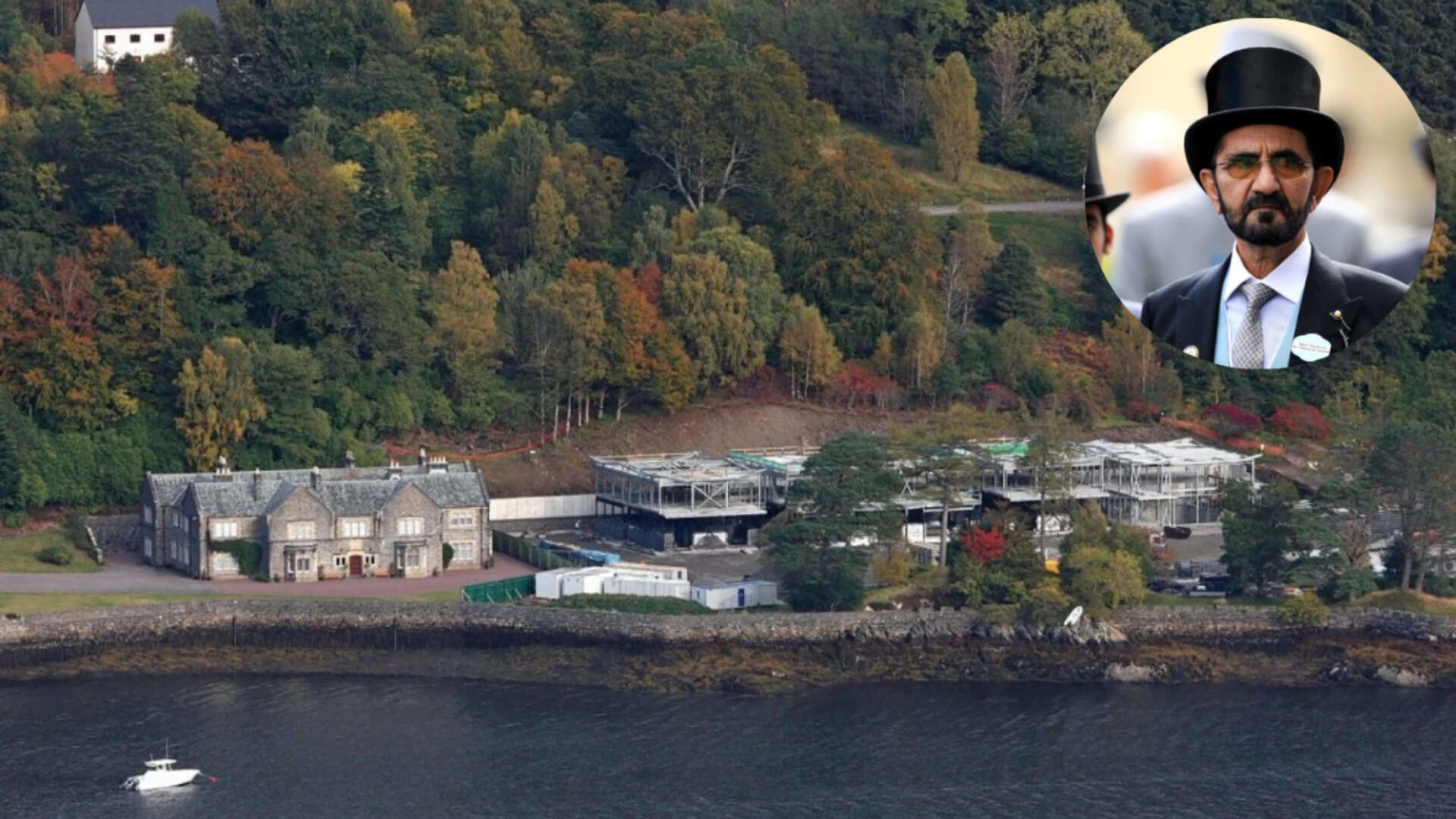
Imagine owning a slice of land so massive it spans across mountains, glens, and coastlines, yet you barely ever sleep there. That is the bizarre reality for Sheikh Mohammed bin Rashid Al Maktoum. The billionaire Dubai Emir owns a 63,000-acre Scotland estate but visited it only 5 times in 20 years because of a logistical nightmare you would not expect a billionaire to face. He simply cannot find enough places to put his guests.
It sounds like a joke. A man worth an estimated $20 billion, who owns luxury superyachts and sprawling palaces worldwide, claims his massive Highland retreat suffers from a severe lack of accommodation. But when you travel with an entourage that resembles a small moving village, standard mansions do not cut it. The ruler of Dubai does not travel light. His inner circle includes multiple wives, 23 children, an extended network of royal cousins, dozens of friends, personal doctors, high-level aides, and a heavily armed security detail. When they arrive, they overwhelm even the most massive luxury compounds.
That is why the Inverinate Estate, located in the cinematic setting of Wester Ross, has become the center of a decades-long construction frenzy. The Sheikh bought this misty empire more than twenty years ago for a modest £2 million. Since then, he has poured millions into expanding the property, attempting to fix a bedroom shortage that keeps preventing his family from escaping the scorching 50°C summer heat of the United Arab Emirates.
The math behind the bedroom crisis at Inverinate Estate
Most people would look at the inventory of the Inverinate Estate and think it offers plenty of space. Before the recent expansions, the property already boasted a 14-bedroom holiday home and a 16-bedroom luxury hunting lodge complete with a private swimming pool and a state-of-the-art gym. There were also separate cottages, extensive staff quarters, and three custom-built helipads designed to receive private flights directly from Inverness Airport.
But do the math. If you have dozens of immediate family members and a staff of bodyguards and assistants numbering in the fifties or hundreds, thirty bedrooms vanish instantly. Local planning documents filed by Inverness-based Colin Armstrong Architects explicitly state that the owner's travel to the Highlands has been strictly limited by this exact bottleneck. The family wants to stay for extended periods, but they refuse to cram their guests or staff into tight spaces.
To solve this, the Sheikh's property management firms, Smech Properties Ltd and Smech Management, have pushed a relentless series of building applications through the Highland Council. They recently secured approval for a massive 15-bedroom guest lodge. This new property features dramatic floor-to-ceiling windows framing Loch Duich, a massive conservatory, a vast dining hall, and a central living space designed specifically to hold dozens of people simultaneously. Following that, plans dropped for an additional 11-bedroom mansion built right next to the 17-bedroom Benula Lodge, which was completed in 2021 at a cost of £2.4 million.
Even with these additions pushing the total bedroom count across the estate well past 58 across ten distinct properties, the building hammer has not stopped. The estate recently applied to build a more modest three-bedroom shepherd's cottage near Leinassie to support the agricultural side of the land. It turns out that managing a 63,000-acre playground requires a massive workforce just to keep the grass cut and the deer managed.
Local backlash and the reality of a Highland playground
Building a miniature Dubai in the middle of a traditional Scottish conservation area does not happen without friction. The local community has mixed feelings about their ultra-wealthy neighbor. On one hand, the Sheikh has been a surprisingly generous benefactor to the isolated region. He funded and built the Inverinate and Loch Duich Community Centre. He donated land for a local day care center, financed sheltered housing for the elderly, and regularly instructs his estate managers to distribute fresh venison to local pensioners.
On the other hand, the sheer scale of the construction has irritated residents who value their privacy and the quiet nature of the Highlands. Many locals feel the estate is turning into an exclusive resort that offers very little long-term economic value to the people who live there permanently.
The planning battles have been intense. A proposed nine-bedroom lodge named Ptarmigan faced fierce objections from neighbors who complained it would ruin their privacy and ruin the landscape. The estate had to withdraw the application and move the site further away from neighboring properties before getting the green light. The Church of Scotland and various conservation groups have also logged formal complaints over the years, arguing that the massive modern lodges clash with the traditional rural architecture of Wester Ross.
Environmental issues have caused headaches too. The estate sits within a special area of conservation that serves as a vital habitat for red deer, otters, harbour seals, bank voles, and rare bats. Just recently, the Sheikh's team landed in hot water after installing an array of solar panels on a property overlooking Loch Duich without obtaining prior planning permission. Because the panels sit right in a protected conservation zone, the estate had to scramble to file for retrospective approval, arguing the panels enhance sustainability with minimal visual impact.
High-flying logistics in the wilderness
Despite the small number of personal visits from the Sheikh himself, the estate stays remarkably busy. Aviation logs from Inverness Airport show that Inverinate is one of the most frequent destinations for private domestic flights in the region. Over a three-year window, records tracked 29 departures and 42 arrivals tied directly to the estate's operations.
Even when the Emir is not there, his global staff uses the property. Corporate executives, pilots, and airline crew members from Emirates use the Highland lodges as a premium retreat. They use the fleet of six 4x4 vehicles to conduct private shooting parties across the mountains, managing the local deer population while experiencing the Scottish wilderness in absolute luxury.
This creates a weird contrast. You have a misty, rain-swept Scottish glen populated by rare wildlife, occasionally interrupted by the roar of private helicopters touching down on triple helipads, carrying guests who just arrived from some of the most opulent skyscrapers on earth.
Next steps for following estate planning trends
If you are tracking how global billionaires manage massive land investments, look closely at the paperwork coming out of the Highland Council. The ongoing developments at Inverinate show a clear shift in how ultra-high-net-worth individuals handle remote properties.
Keep an eye on regional planning portals to see how the estate handles its latest environmental disputes. Watch how they integrate renewable energy like the controversial solar panel array into protected lands. You can also monitor local Scottish estate market reports to see if other wealthy international buyers follow this blueprint of building multi-property compounds rather than single, historic castles. The days of the simple hunting cabin are officially over.