The European Union is no longer a blank-check sanctuary for everyone fleeing Ukraine. In a move that fundamentally rewires the geopolitics of refugee aid, European leaders have decided to turn away newly arriving men of military age.
For years, escaping the front line meant finding safety, work, and a monthly stipend in Berlin, Warsaw, or Prague. That open-door policy is officially shrinking. The EU recently extended its security umbrella for Ukrainian refugees until March 2028, but that extension comes with a massive, controversial catch. Under new rules, Brussels is cutting off temporary protection for draft age Ukrainians who cross the border without legal exemption papers.
If you are a man between 23 and 60 trying to escape the grinding war of attrition, the European border is about to look very different. This is not just a policy tweak. It is a massive shift in how the West balances humanitarian duty with the brutal realities of a prolonged war.
The Reality of the New EU Restrictions
The mechanics of this decision are remarkably blunt.
When Russia invaded in February 2022, the EU triggered its Temporary Protection Directive (TPD) almost immediately. It was a brilliant, fast-acting legal tool. It bypassed the slow, bureaucratic nightmare of national asylum systems, giving millions of Ukrainians instant rights to live, work, and access healthcare.
Now, the Council of the European Union has approved keeping those rights alive until March 2028. But starting in March of next year, any newly arriving Ukrainian who is subject to military mobilization must show physical proof that they either have a legal draft exemption or left the country with official permission.
If you do not have an official mobilization exemption certificate issued by Kyiv, or a passport bearing a legal exit stamp, you will be barred from receiving temporary protection status.
For the first time since the war began, the EU is actively screening refugees based on their military liability to a foreign nation. It is a stark departure from traditional humanitarian principles.
The Pressure From Kyiv Behind the Decisions in Brussels
This policy did not materialize in a European vacuum. It happened because Kyiv demanded it.
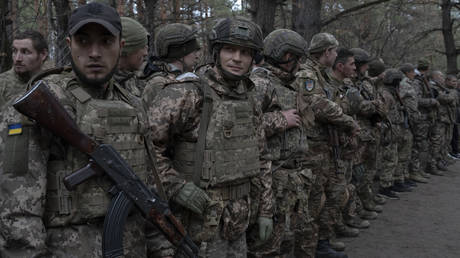
Ukraine is facing a severe, existential crisis on the battlefield, and it is not a lack of weapons. It is a lack of people. As the conflict drags into its fifth year, the Ukrainian military is struggling to rotate tired troops and replace heavy losses. The draft age was lowered from 27 to 25 to widen the net, and mobilization officers have been working overtime.
President Volodymyr Zelenskyy has repeatedly pushed European allies to help bring military-age men back home. Kyiv simply cannot afford to have hundreds of thousands of fighting-age men living comfortably abroad while front-line units run thin.
EU Migration Commissioner Magnus Brunner made no secret of this dynamic, directly stating that the exclusion of newly arriving draft-age men was done at the request of the Ukrainian government.
By complying with this request, Brussels is essentially acting as an external coordinator for Ukraine’s draft efforts. It is a dramatic realignment. Humanitarian policy has been converted into a tool for national defense logistics.
Who Gets to Stay and Who Gets Blocked
Let's clear up the confusion regarding who this actually impacts.
The new restrictions will not apply retroactively. If you are one of the 4.4 million Ukrainians currently holding temporary protection status inside the EU, your status is secure. You will not be stripped of your right to work or live in Germany, Poland, or the Czech Republic.
The hammer falls on those who attempt to leave Ukraine and apply for protection after the new rules take effect.
Consider the scale of the current population in the EU. According to official data, adult men make up roughly 27 percent of the 4.4 million Ukrainians under temporary protection. Women make up 43 percent, and the remaining 30 percent are minors.
Germany currently hosts the lion's share of these refugees with 1.27 million people, followed by Poland with nearly one million, and Czechia with roughly 380,000.
The debate among these host countries has been fierce. Poland and Austria have been vocal supporters of restricting protection for military-age men, arguing that it supports the Ukrainian war effort and respects Kyiv's national sovereignty. On the other hand, countries like France have historically expressed deep hesitation about narrowing the humanitarian scope of the temporary protection program, pointing out the dangerous legal precedents it sets.
Human Rights Backlash and the Legal Battleground
This decision is already triggering alarm bells among legal scholars and human rights advocates.
Michael O’Flaherty, the Council of Europe’s Human Rights Commissioner, has publicly criticized the move, warning that it raises severe humanitarian concerns. Under international law, the fear of military conscription or the desire to avoid being sent into a meat-grinder war zone can, in certain circumstances, form the basis of a legitimate asylum claim.
By denying temporary protection automatically based on draft status, the EU is walking a incredibly thin legal line.
Historically, refugee frameworks were designed to protect individuals from their states, not to assist those states in retrieving their citizens for warfare. Critics argue that the EU is setting a dangerous precedent by prioritizing geopolitical alliance over individual safety.
Furthermore, the implementation of these rules will vary wildly by nation. While some member states might strictly enforce the requirement for exemption certificates, others may offer alternative legal pathways. It creates a fractured, uneven system across Europe, undermining the very idea of a unified EU-wide policy.
What Newly Arrived Ukrainians Must Do Now
If you are a Ukrainian citizen of conscription age planning to seek refuge in the EU, you need to understand your options immediately. The path is no longer simple.
- Secure Legal Exemption Documentation: If you qualify for military exemption due to health, family status, or critical economic work, you must obtain the official certificate from Ukrainian authorities before attempting to register for EU protection. Without this, your application will be rejected.
- Prepare for the General Asylum Track: If you do not qualify for temporary protection, you still have the legal right to apply for traditional asylum. This process is long, complex, and requires individualized assessments where you must prove a personal fear of persecution or human rights violations.
- Understand National Variations: Do not assume every EU country will treat you the same way. Some nations are already looking to transition Ukrainians into more stable, long-term national visas, while others are tightening their domestic benefits to encourage people to return home or join the military. Research the specific legal environment of your destination country before you travel.
The era of easy, automatic refuge for draft-age Ukrainian men is over. The war has entered a phase where manpower is the ultimate currency, and Europe has decided to help Kyiv collect it.