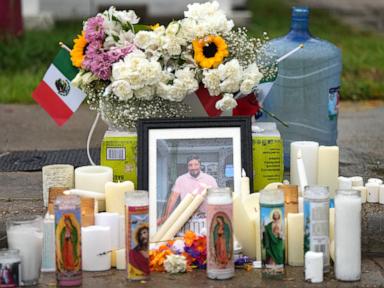
A Tuesday morning run to a gas station should not end in a body bag. Yet, just before 7 a.m. on July 14, 2026, that is exactly what happened in St. Augustine, Florida. A 28-year-old man, panicked and fleeing federal immigration agents, darted across a busy highway and ran directly into the path of a tractor-trailer.
He died on the scene.
This tragedy is not an isolated incident. It is the third death connected to Immigration and Customs Enforcement (ICE) in a single week. Just hours after the Florida crash, under immense pressure, ICE announced a major policy shift. The agency ordered a nationwide temporary pause on most vehicle stops.
It is a sudden, quiet admission that something is going terribly wrong on American streets.
The Morning It All Went Wrong
The details of the St. Augustine encounter are chilling but simple.
A vehicle carrying four people pulled into a Wawa gas station off Florida State Road 16. ICE and Homeland Security Investigations (HSI) agents were waiting. We still do not know exactly what prompted the agents to target this specific car, but as they approached, fear took over. All four occupants scrambled out of the vehicle and fled on foot.
One of those passengers made a split-second decision to run across the busy state road.
He did not make it. A tractor-trailer struck him. The driver of the semi-truck stopped immediately and tried to help, but there was nothing to be done.
Authorities have not released the deceased man's name or nationality. The fate of the other three passengers remains unknown, as federal agencies have stayed largely silent.
For locals and immigration advocates, the silence is deafening. Local Florida Representative Angie Nixon was quick to lay the blame directly on the tactics used by federal agents, calling the agency out-of-control and stating that the death was the direct result of terrorizing communities.
Three Lives Lost in Seven Days
To understand why this Florida death triggered a massive federal policy change, you have to look at the days leading up to it. This was the boiling point.
- July 7, 2026 (Houston, Texas): An ICE agent shot and killed a man who attempted to drive away during an immigration operation.
- July 13, 2026 (Biddeford, Maine): ICE agents shot and killed another man during an early morning operation in a quiet city south of Portland.
- July 14, 2026 (St. Augustine, Florida): The fatal pursuit ends with a 28-year-old crushed by a semi-truck.
Three deaths. One week.
This brings the total number of fatalities linked to immigration enforcement encounters to at least 10 since the launch of the administration's aggressive mass deportation campaign.
When operations move this fast, safety guidelines get pushed aside. The pressure to produce numbers and execute deportations creates high-stress environments. When agents corner individuals in unregulated spaces like gas stations or highway shoulders, panic is the natural human response. And in these moments, panic kills.
A History of Deadly Flights
The Florida crash is part of a growing, dangerous pattern of people dying while trying to escape federal agents.
We have seen this script play out before. Last year, 52-year-old Roberto Carlos Montoya Valdez of Guatemala ran from immigration officers outside a California Home Depot. He ran onto a freeway and was killed by an SUV.
A few months later, in October, 24-year-old Josué Castro Rivera of Honduras was pulled over in a targeted traffic stop in Virginia. He bolted on foot, ran onto a highway, and was hit by a pickup truck.
The government's defense is always the same. They argue that the individual ran, and agents did not physically force them into the road. Technically, that is true. But it ignores the psychological reality. When people believe their lives, families, and futures are about to be ripped away, adrenaline overrides logic. They run.
Why ICE Paused Traffic Stops
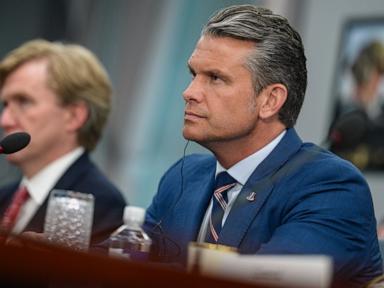
The political fallout from the Maine shooting was immediate. Republican Senator Susan Collins of Maine quickly demanded answers and pushed for a reevaluation of ICE tactics. Following the Florida death just a day later, the agency finally blinked.
ICE ordered its Enforcement and Removal Operations (ERO) division to temporarily halt most traffic-stop arrests.
Under the new guidance, if ICE agents want to stop a vehicle to execute a criminal warrant, they are instructed to work with local partner law enforcement agencies to conduct the stop.
This is a massive shift. ERO agents have long used traffic stops as a primary tool to pick up targeted individuals. But local police departments are often better trained in high-risk vehicle stops, and they operate under stricter public accountability guidelines. By forcing ICE to rely on local partners, the federal government is trying to put a barrier between aggressive agents and fleeing suspects.
Whether this pause lasts or actually changes agent behavior remains to be seen.
Know Your Rights During an Immigration Stop
If you or someone you know is living in an undocumented status, these developments are terrifying. But you are not entirely powerless. Knowing how to handle these encounters can save your life.
Keep Your Cool
Never run. It is the hardest advice to follow when fear kicks in, but running gives agents a reason to pursue you, use force, or, as we have tragically seen, results in fatal traffic accidents.
Understand Your Right to Silence
If you are passenger in a vehicle or walking on the street, you do not have to answer questions about your immigration status or where you were born. You can simply state, "I am choosing to remain silent."
Do Not Consent to Searches
ICE agents cannot search your vehicle or your pockets without your consent or a warrant signed by a judge. If they ask to look in your car or your bags, say clearly, "I do not consent to a search."
Document the Encounter
If it is safe to do so, have a passenger record video of the interaction. Take note of badge numbers, the agency names on the tactical vests, and the license plates of the vehicles.
If you believe your rights have been violated, contact local advocacy groups or the American Civil Liberties Union (ACLU) immediately to report the encounter.