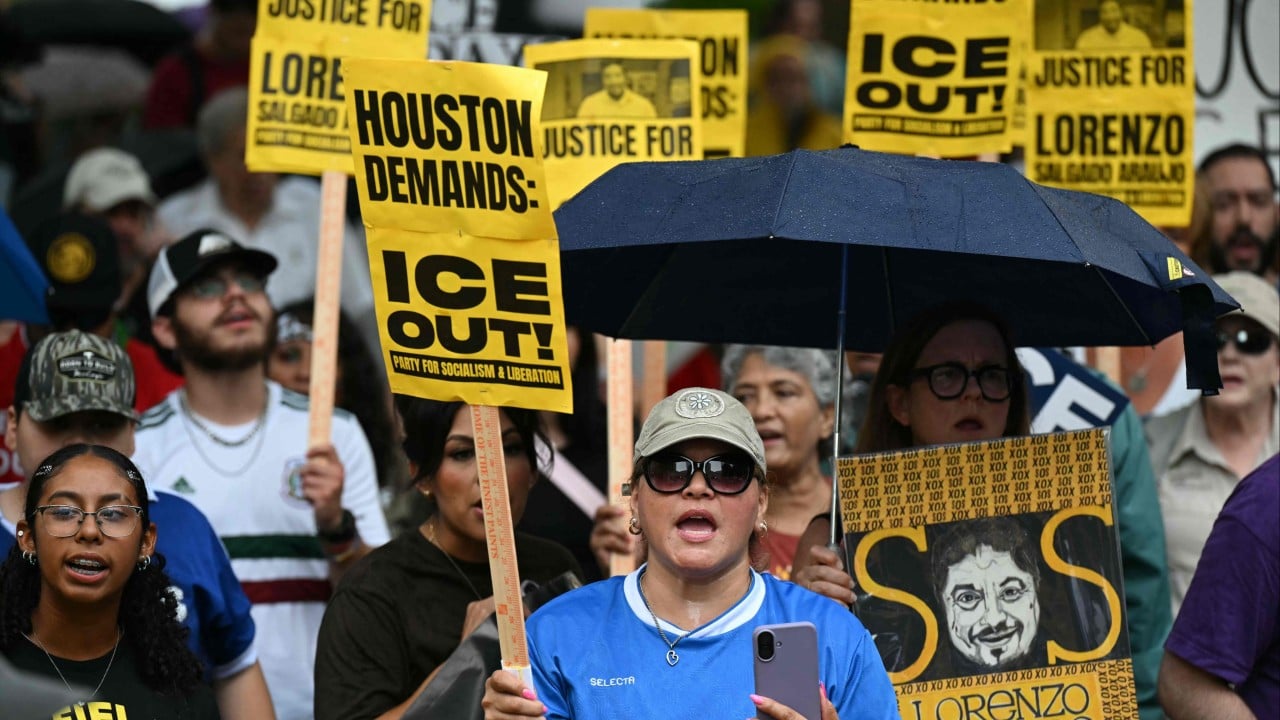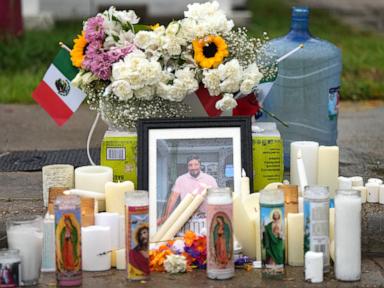
When Lorenzo Salgado Araujo was shot dead by an immigration agent on a Houston street, it wasn't just another tragic headline. It was the spark that blew up decades of polite, behind-the-scenes diplomacy between Mexico and the United States.
The 52-year-old construction worker had no criminal record. He had spent 35 years building a life in the US. Last week, while driving his crew to a job site, his journey ended in a hail of gunfire. The Department of Homeland Security claims Salgado Araujo rammed an immigration vehicle, forcing an agent to shoot in self-defense. Mexican President Claudia Sheinbaum has a very different word for it: murder. Don't forget to check out our previous coverage on this related article.
This single, violent flashpoint triggered an unprecedented legal offensive from Mexico City. The Mexican government formally requested that U.S. state attorneys general criminally investigate 17 migrant deaths in ICE custody and during enforcement operations.
This is a massive shift. Historically, when Mexican citizens died under controversial circumstances in the US, the Mexican Foreign Ministry would issue a strongly worded diplomatic note. They would hold press conferences, express deep regret, and quietly assist the family. To read more about the context of this, The Washington Post offers an in-depth breakdown.
Not anymore.
Mexico is bypassing traditional federal diplomatic channels to go straight to state prosecutors. It's a calculated, high-stakes gamble designed to force accountability in a system that has long shielded itself from foreign scrutiny.
The Breaking Point in Houston
Salgado Araujo's death was the tipping point, but the underlying tension had been building for eighteen months. Since the start of Donald Trump's second presidential term, immigration enforcement has escalated to historic levels. The numbers tell a bleak story. Seventeen Mexican migrants have died in enforcement actions over this period—14 inside Immigration and Customs Enforcement (ICE) detention facilities and three during active agency operations.
The details surrounding these deaths point to systematic failures. Families report a pattern of denied medical care, ignored pleas for help, and excessive force during arrests.
In Houston, the community reacted with immediate fury. Protests erupted outside federal buildings, and local organizers joined Salgado Araujo's family in demanding an independent review. The official DHS narrative—that an undocumented construction worker suddenly decided to ram an unmarked federal vehicle with his work truck—failed to convince local advocates or Mexican officials.
Mexico's Foreign Ministry quickly recognized that waiting for a federal agency to investigate itself would yield nothing. The FBI and local police are technically looking into the Houston shooting. But historically, federal civil rights investigations into immigration agents rarely lead to criminal charges. By targeting state-level prosecutors, Mexico is looking for a completely different legal avenue to achieve justice.
The Strategy Behind Targeting State Attorneys General
Why bypass the Department of Justice to lobby state-level prosecutors? It's a brilliant legal maneuver, albeit one fraught with political hurdles.
Under the US federal system, state attorneys general have broad jurisdiction over crimes committed within their borders. If an ICE agent uses excessive force or if a private prison guard commits involuntary manslaughter through criminal negligence, those actions violate state laws, not just federal ones.
Mexico's Foreign Minister, Roberto Velasco Álvarez, understands this distinction. By submitting formal requests to state attorneys general, Mexico is forcing local prosecutors to make a public choice: protect federal immigration authorities or defend the rule of law on their own turf.
Of course, the United States is under no legal obligation to act on these foreign requests. A state attorney general in Texas or Arizona can easily file Mexico's petition in the wastebasket. But in progressive states, or in counties with reform-minded prosecutors, these requests provide crucial political cover. It gives local authorities the mandate they need to launch independent grand jury investigations into federal facilities operating within their jurisdictions.
Furthermore, these criminal referrals lay the groundwork for civil litigation. Even if a state prosecutor declines to file charges, the evidence gathered during a preliminary inquiry can be subpoenaed. That evidence becomes the fuel for civil wrongful death lawsuits, which Mexican consulates plan to fund and support.
Privatized Prisons and the Fight in California
The battle isn't just taking place in local courtrooms. Mexico is aiming directly at the corporations making billions off migrant detention.
The Mexican government has started sending formal cease-and-desist letters to private detention facilities where its citizens have died. These letters demand an immediate end to practices that deny detainees basic medical care and violate standard correctional guidelines.
The first target on this list is the Adelanto ICE Processing Center in California. Operated by the private prison giant GEO Group, Adelanto has been a lightning rod for human rights complaints for over a decade. Four of the 14 Mexican nationals who died in custody lost their lives inside this single facility.
Migrant Deaths in ICE Custody & Operations (Trump's 2nd Term)
=============================================================
Total Mexican National Deaths: 17
  - Deaths inside ICE Detention Centers: 14
  - Deaths during ICE Field Operations:  3
First Detention Facility Targeted: Adelanto, CA (4 deaths)
By sending these letters, Mexico is formally establishing "notice". In US tort law, if a facility operator is put on formal notice of a life-threatening hazard or systemic medical neglect and fails to correct it, their civil liability skyrockets when the next tragedy occurs. It proves "willful negligence"—a vital threshold for winning massive punitive damages in US courts.
This is where Mexico's legal strategy gets teeth. They aren't just begging for moral decency. They are threatening the profit margins of Wall Street-backed private prison companies. If operating these facilities becomes a massive legal liability, the corporate operators will be forced to change their policies or risk losing their insurance policies and government contracts.
Escalating to the United Nations
Mexico knows that fighting the US legal system on its own territory is an uphill battle. To apply maximum pressure, Foreign Minister Velasco also took the fight to the global stage.
He fired off a letter to Volker Türk, the United Nations High Commissioner for Human Rights. The letter requests that the UN gather independent information on these 17 deaths and analyze whether the actions of US authorities violate international human rights treaties. Specifically, Velasco asked Türk to loop in the UN Human Rights Council to issue formal recommendations to the United States.
On paper, UN recommendations don't carry the force of law inside the United States. The US government routinely ignores international criticism of its immigration and prison systems. However, this move serves a broader strategic purpose.
It internationalizes the issue. It refutes the narrative that immigration enforcement is purely a domestic policy matter. By framing these deaths as potential treaty violations, Mexico is building a global coalition. They want to make the human cost of the US deportation machine impossible to ignore on the world stage.
The Trump-Sheinbaum Clash
You can't separate this legal offensive from the broader political reality. This is a direct clash between two newly elected leaders with completely opposing visions of sovereignty and human rights.
President Donald Trump returned to the White House with a mandate to execute the largest deportation operation in American history. His administration has loosened restrictions on immigration enforcement, fast-tracked deportations, and emboldened ICE field agents.
On the other side of the border, President Claudia Sheinbaum took office with a promise to protect Mexican nationals abroad. During her morning press conference at the National Palace, Sheinbaum made her stance clear: "We cannot turn a blind eye to the Mexicans who have died". She noted that while Mexico will maintain diplomatic relations with its northern neighbor, it will no longer remain silent when its citizens are targeted.
This represents a major shift in tone from her predecessor, Andrés Manuel López Obrador, who often sought to avoid direct confrontations with Trump on immigration to preserve trade agreements. Sheinbaum is signal-boosting a more assertive, protective foreign policy. Her administration has ordered Mexican diplomatic missions across the US to step up in-person visits to detention centers and aggressively monitor detainee conditions.
This is a dangerous geopolitical game. If Mexico pushes too hard, Trump could retaliate with tariffs, border closures, or threats to rewrite trade agreements. But Sheinbaum is betting that the domestic political cost of staying silent is far worse than the risk of angering Washington.
What Happens Next
If you're watching this situation unfold, don't expect immediate indictments of ICE agents or private prison executives. The legal path ahead is incredibly complex and slow.
Here is what to look for in the coming months:
- The DOJ Response: Mexico is sending a parallel request to the US Department of Justice. Watch whether Attorney General Merrick Garland’s successor or the federal civil rights division opens formal investigations into the Houston shooting.
- Blue State Actions: Look closely at California and other states with progressive attorneys general. If California’s Attorney General launches an independent state investigation into the deaths at the Adelanto facility, it will set a massive precedent.
- Civil Lawsuits: Keep an eye on the civil courts. The cease-and-desist letters sent to private prison operators are the opening salvo. Once the notice period expires, expect a wave of high-profile wrongful death lawsuits filed by Mexican consulates on behalf of the victims' families.
- UN Scrutiny: Watch for the UN Human Rights Council's response to Velasco's letter. A formal inquiry or critical report from the UN will give international human rights organizations ammunition to pressure the US government.
The era of quiet Mexican diplomacy is over. By taking the fight directly to state prosecutors and private corporations, Mexico is drawing a line in the sand. They are making it clear that the lives of their citizens cannot be treated as collateral damage in America's domestic political battles.