When federal agencies hand a badge and a semi-automatic weapon to a civilian, you assume a rigorous background check happened first. You assume someone looked into their history, talked to people who know them, and checked for red flags.
But the fatal shooting of 26-year-old Colombian national Johan Sebastián Durán Guerrero in Biddeford, Maine, shatters that assumption completely. The Immigration and Customs Enforcement (ICE) officer who pulled the trigger, identified by family members and family court records as 37-year-old David Michael Brouillette, had a documented trail of domestic violence accusations and severe mental health struggles stretching back to childhood.
His ex-wives tried to warn people. His own family members are now speaking out, openly wondering how a man with such a volatile history kept getting jobs that required him to carry a firearm.
This isn't an isolated case of a bad apple. It's the predictable result of a federal agency rushing its hiring standards to meet political quotas, creating a system where catastrophic blind spots are treated as acceptable risks.
What the System Ignored
If you look into the public court records and the warnings issued by those closest to Brouillette, his hiring by ICE seems less like an oversight and more like a total failure of basic due diligence.
Ashley Brouillette, who divorced him in 2009, detailed years of physical violence. She recounted an incident where he threw boiling water at her while she was holding their infant daughter. When he told her late last year that he had been hired by ICE, she flatly didn't believe him. She thought he was experiencing a psychiatric episode.
"I don't understand how he keeps getting these jobs where there are firearms involved," she told reporters. "He's a danger to society."
Another ex-wife, who chose to remain anonymous out of fear of retaliation, had repeatedly filed for temporary protection orders against him. Her filings painted a terrifying picture of stalking, harassment, and physical abuse directed at both her and her teenage daughter. In one instance, she alleged Brouillette tackled his teenage daughter and smashed food into her hair.
The warning signs didn't stop at family court filings. Just months before his hiring, Brouillette left a voicemail for a relative that was later shared with investigators. In it, he explicitly stated that the women in his family's bloodline should have their throats cut.
Yet, he passed the Department of Homeland Security's vetting process. He was issued a government firearm, granted federal authority, and sent out to conduct enforcement operations.
The Pressure to Hire and the Lowering of Standards
To understand how a candidate with this background gets a federal badge, you have to look at what has been happening inside ICE's recruitment pipeline. Under intense pressure to scale up operations for an aggressive mass deportation agenda, the Department of Homeland Security has scrambled to rapidly expand its workforce.
When agencies need to hire thousands of officers quickly, standard guardrails are often the first things to erode. To attract an influx of new applicants, the agency implemented aggressive recruitment tactics:
- Offering hiring bonuses up to $50,000.
- Dropping the requirement for a college degree.
- Lowering the minimum recruitment age to 18.
Federal law technically bars anyone with a domestic violence conviction from carrying a firearm. But Brouillette’s legal trail consisted of family court battles, protective order filings, and reciprocal harassment claims—not a criminal conviction.
A thorough background check relies on investigators calling former spouses, checking local police logs, and evaluating a candidate's mental fitness. When an agency prioritizes speed and volume over security, these deeper checks get compressed or skipped entirely. Rep. Bennie Thompson, the top Democrat on the House Homeland Security Committee, noted that the incident directly challenges the integrity of ICE's entire recruitment and training pipeline.
Dissecting the Biddeford Encounter
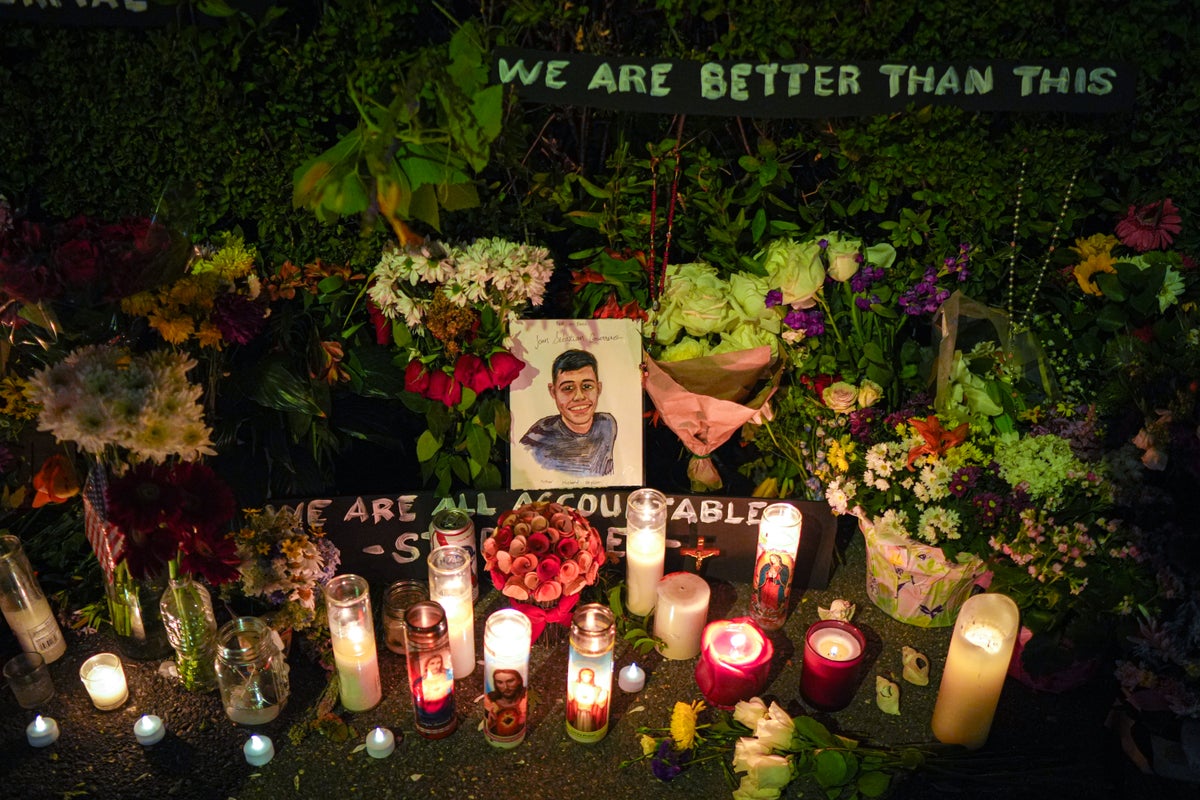
On July 13, Johan Sebastián Durán Guerrero was leaving his home in Biddeford, Maine, driving to work. He was a 26-year-old Colombian national with valid work authorization. According to advocacy groups and early investigative reports, he wasn't even the intended target of the ICE operation.
ICE's initial official narrative followed a familiar script: the officer fired because the driver weaponized the vehicle and attempted to flee, making the officer fear for public safety.
But eyewitness accounts and nearby business security footage quickly complicated that story. Witnesses stated that Durán Guerrero had already been shot before his vehicle spun out—meaning the erratic movement of the car was a consequence of the shooting, not the justification for it.
Compounding the problem is a complete lack of objective federal data. Brouillette wasn't wearing a body camera. Despite millions of dollars allocated by Congress specifically for expanding body-worn camera usage among federal agents, the officer lacked the very equipment designed to provide transparency.
Immediately after the shooting, Brouillette called his ex-wife Ashley. According to her, he was unusually calm and asked her to lie for him to help protect his character. She refused.
What Needs to Change Immediately
The tragedy in Maine proves that the current federal vetting system is fundamentally broken. If family court records, protective orders, and explicit threats of violence aren't enough to trigger a rejection during a background check, the process is nothing more than a rubber-stamp exercise.
Fixing this requires structural changes to how federal law enforcement agencies vet their recruits.
Close the Loophole on Non-Criminal Records
Background checks cannot just look for felony convictions. Investigators must be mandated to pull civil court records, temporary restraining orders, and domestic disturbance call logs from local police departments. A history of violent behavior doesn't need a criminal conviction stamp to make someone unsafe with a weapon.
Mandatory Interventions for Family Warnings
When an applicant's immediate family members or former spouses proactively contact a hiring agency or military superiors to warn of violent instability, those warnings must be formally logged and trigger an automatic independent review. They shouldn't be brushed aside as domestic disputes.
Stop Fast-Tracked Training and Relaxed Qualifications
Lowering the barrier to entry while simultaneously shortening training hours creates dangerous field officers. Congress must tie agency funding to strict adherence to rigorous, uncompromised training protocols and comprehensive psychological evaluations.
Universal Body Camera Mandates
No federal agent should be allowed to conduct field operations or traffic stops without an active, recording body-worn camera. The Department of Homeland Security must enforce immediate penalties for officers who operate in the field without operational recording equipment, eliminating the "he said, she said" dynamic that follows fatal encounters.