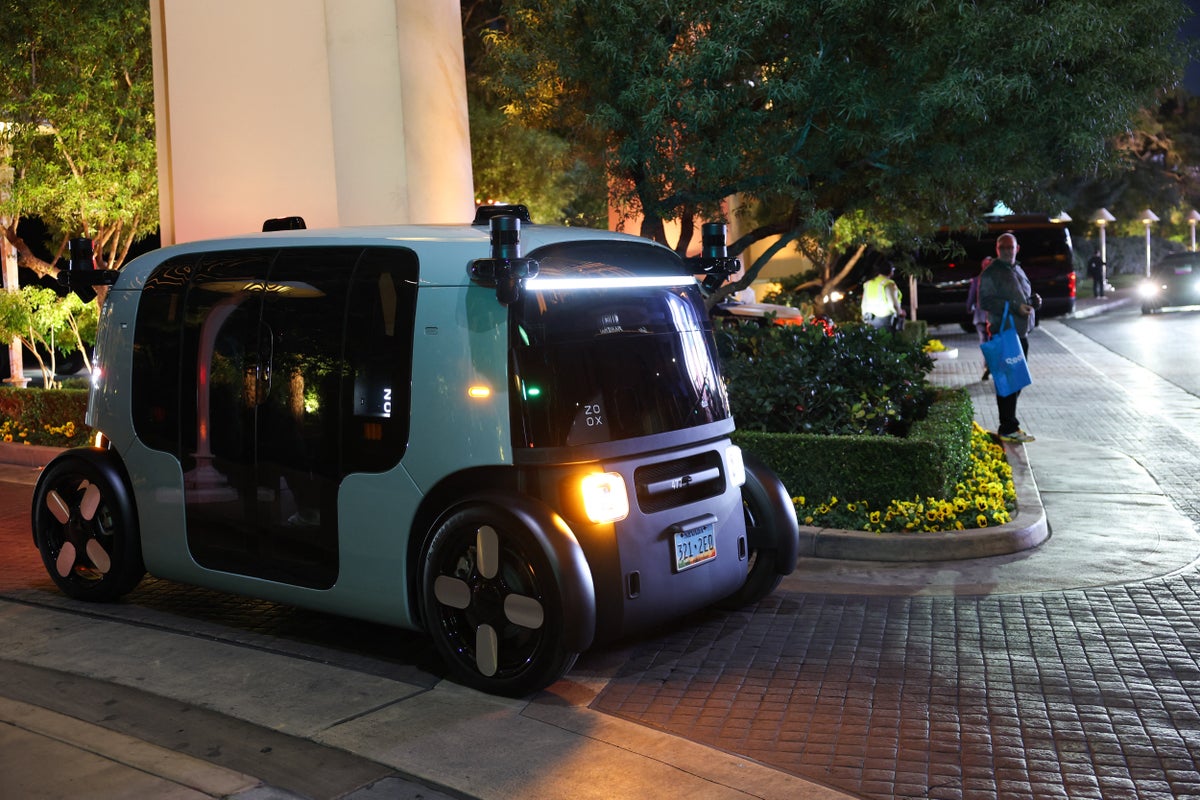
A driverless car rolls down a quiet street in Las Vegas. Up ahead, thick gray smoke pours out from an active fire scene. Emergency crews haven't set up traffic cones yet. Instead of stopping at a safe distance or pulling off to the side, the vehicle drives right toward the haze. It panics. The software slams on the brakes, attempts to turn away, and comes to a complete standstill right in the path of the incident.
That exact scenario happened on June 20, 2026. Amazon-owned Zoox had to call in a teleoperator to guide its custom driverless vehicle in reverse so firefighters could place cones and do their job. For another look, check out: this related article.
Shortly after, Zoox submitted a voluntary recall notice with the National Highway Traffic Safety Administration covering its entire fleet of 105 autonomous vehicles. While nobody got hurt, the incident revealed something major about where autonomous driving tech stands right now. Reading about these fixes on paper makes them sound routine, but they point to a much bigger hurdle for the entire industry.
What Really Went Wrong in Las Vegas
The Las Vegas fire wasn't a standard traffic situation. The street lacked cones, and thick smoke obscured the roadway. Zoox vehicles rely on a custom array of lidar, radar, and cameras to map their surroundings 360 degrees without a driver at the wheel. When light hits heavy smoke, optical sensors struggle. Lidar beams scatter. Cameras see a wall of gray instead of clear lanes. Related analysis on this trend has been published by Engadget.
Instead of recognizing the smoke cloud as a hazard to avoid entirely, the vehicle tried to navigate through it until the obstacle was too close. The car slammed its brakes and attempted a last-second swerve before freezing.
+-------------------------------------------------------------+
|               HOW THE SMOKE INCIDENT UNFOLDED               |
+-------------------------------------------------------------+
| 1. Vehicle approaches active fire scene without cones       |
| 2. Sensors encounter heavy smoke obscuring the roadway      |
| 3. Vehicle enters smoke zone and panics                     |
| 4. System applies hard braking and attempts swerve          |
| 5. Vehicle comes to a complete halt near fire operations    |
| 6. Remote teleoperator takes control and reverses vehicle   |
+-------------------------------------------------------------+
Remote operators had to take over. Zoox uses human operators in a central hub who can step in when the software gets stuck. A teleoperator gave the vehicle instructions to back out of the area. Once the car backed away, first responders blocked off two of the three lanes with orange cones.
The Over the Air Fix and Why Words Matter
When you hear the word recall, you probably think of bringing a car into a dealership to swap out a broken part. That isn't what happened here.
Zoox fixed this issue with a software patch delivered over the air. The update alters how the vehicle's perception system categorizes heavy smoke and environmental hazards, telling the car to keep its distance long before it gets close enough to panic.
"Emergency scenes are not rare or extreme 'edge cases.' To state it bluntly: an AV that cannot safely interact with first responders is a danger to the general public."
— Jonathan Morrison, NHTSA Administrator
Federal safety regulations require companies to file an official recall notice whenever a software update fixes a defect related to motor vehicle safety. Calling these updates recalls causes a lot of confusion, but the legal classification matters. It creates a public record and holds autonomous companies accountable under federal law.
Regulators Are Losing Patience
This incident didn't happen in a vacuum. Federal regulators are cracking down on driverless vehicle developers across the board.
National Highway Traffic Safety Administration Administrator Jonathan Morrison sent a firm warning letter to autonomous developers across the country. He noted a clear pattern of driverless vehicles interfering with police, paramedics, and firefighters.
| Company | Fleet Size | Recent Incident | Cause |
|---|---|---|---|
| Zoox | 105 vehicles | Las Vegas fire scene incursion | Heavy smoke obscuring active emergency zone |
| Waymo | ~4,000 vehicles | Freeway construction zone entries | Closed lane misinterpretation and road barriers |
NHTSA has documented multiple instances where robotaxis:
- Drove directly into active crime or fire scenes
- Blocked lanes needed by ambulances and fire engines
- Failed to recognize emergency strobes, road flares, and hand signals
- Drove past stopped school buses with red lights flashing
NHTSA set a deadline for AV operators to present actionable solutions for emergency scene management. The agency made it clear that if self-driving systems can't figure out how to give emergency crews room to work, they won't stay on public roads.
Why Emergency Scenes Break Autonomous Driving Logic
Self-driving cars excel at predictable conditions. They follow speed limits, track lane markings, stop at red lights, and yield to pedestrians at crosswalks. Algorithms handle routine commuting with high accuracy.
Emergency scenes throw all those standard rules out the window.
Emergency situations are chaotic by nature. Firefighters park trucks sideways across lanes. Police officers use hand gestures that contradict traffic lights. Flares flicker, smoke drifts unpredictably, and first responders walk straight into active traffic lanes.
Humans handle these situations using intuition and context. You see smoke, hear sirens, or spot a firefighter waving a flashlight, and you immediately know to slow down, turn around, or pull over. A computer vision system, on the other hand, tries to parse the world into categorized objects. When faced with dense smoke, the software can mistake a cloud of vapor for a solid object or ignore it entirely until sensor data becomes completely corrupted.
How Zoox Compares to Industry Competitors
Zoox takes a fundamentally different path compared to its biggest rival, Waymo.
Waymo retrofits standard production vehicles like the Jaguar I-PACE with autonomous sensors and controls. They operate roughly 4,000 vehicles in major markets like Phoenix, San Francisco, and Los Angeles. However, Waymo isn't immune to these exact same bugs. Just last month, Waymo issued a recall of roughly 3,900 vehicles after cars drove straight into closed freeway construction zones. Waymo vehicles have also stalled during Fourth of July fireworks displays and blocked emergency access to burning apartment buildings in Texas.
Zoox builds its vehicles from the ground up. Their purpose-built robotaxi has no steering wheel, no pedals, and no driver seat. Passengers sit facing each other in a carriage-style cabin. With a tiny active fleet of 105 vehicles operating mostly in Las Vegas and San Francisco, every single incident draws massive scrutiny.
WAYMO (Retrofitted Fleet)             ZOOX (Custom Robotaxi)
+------------------------+           +------------------------+
| Standard SUV Chassis   |           | Custom Carriage Design |
| Steering Wheel Inside  |           | No Wheels or Pedals    |
| ~4,000 Vehicles Active |           | 105 Vehicles Active    |
+------------------------+           +------------------------+
Amazon spent $1.3 billion buying Zoox in 2020. The company wants to deploy commercial rides in major cities soon, but regulator scrutiny could delay those expansion plans significantly.
What Needs to Change Next
Solving the emergency scene problem requires more than quick software patches after an incident happens. The industry needs systemic changes to make autonomous vehicles safe around first responders:
- Standardized First Responder Beacons: Emergency vehicles should broadcast digital geo-fence signals that automatically notify nearby driverless cars to stay away or yield.
- Better Multi-Sensor Fusion: Perception algorithms must combine thermal imaging, optical cameras, and radar so heavy smoke or steam doesn't blind the vehicle.
- Direct Local Dispatch Integration: Driverless fleets need direct data feeds from 911 dispatch centers to map active fire, police, and medical scenes in real time before the car reaches the block.
- Faster Teleoperation Handoffs: When a vehicle detects unusual hazards like smoke or flashing lights, it should hand off decision-making to a human operator before entering the zone, not after it gets stuck.
If you follow autonomous technology, keep a close eye on NHTSA announcements over the coming months. Regulators are setting the terms, and software developers will have to prove their cars can navigate real-world chaos before getting green-lit for general public deployment.