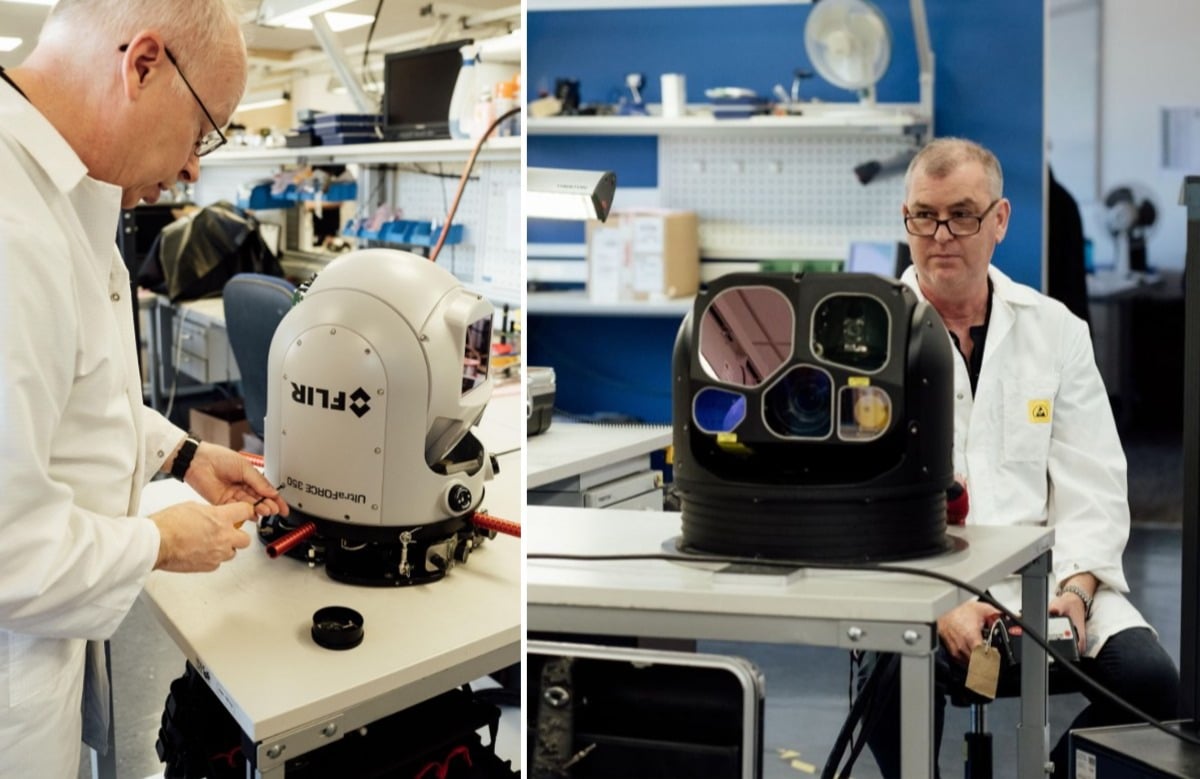
Teledyne FLIR Defense bringing local assembly of its flagship Star SAFIRE thermal imaging systems to the UK isn't just another routine corporate press release. It's a direct response to a painful reality the UK defense establishment has faced for years. Relying on foreign supply chains for mission-critical optical gear during times of global friction creates severe bottlenecks.
When combat platforms wait months for overseas factory repair slots or import approvals, operational readiness plummets. Moving full assembly and servicing of high-definition thermal systems onto British soil solves that bottleneck. It gives the Ministry of Defence (MoD) faster maintenance turnaround and direct access to sovereign technical expertise.
What the Star SAFIRE Tech Brings to British Platforms
To understand why local production matters, you have to look at what these sensor pods actually do in the field.
The Star SAFIRE series—particularly models like the 380-HD and 380-HDc—houses stabilized, multi-spectral imaging payloads. They integrate mid-wave infrared (MWIR) sensors, high-definition short-wave infrared (SWIR) units, and ultra-long-range color optics into a single line-replaceable unit.
+-------------------------------------------------------------+
|               Star SAFIRE Optical Sensor Pod               |
+-------------------------------------------------------------+
|  [MWIR Thermal]  |  [SWIR Sensor]  |  [HD Daylight / Low Light] |
+-------------------------------------------------------------+
|              Tightly Coupled GPS / Inertial Navigation      |
+-------------------------------------------------------------+
                               |
                               v
+-------------------------------------------------------------+
|          Real-Time Geolocation & Laser Target Designation      |
+-------------------------------------------------------------+
Here's why those specific sensor bands matter during actual operational missions:
- MWIR (Mid-Wave Infrared): Pierces through atmospheric haze and thermal glare to detect heat signatures at extreme standoff ranges.
- SWIR (Short-Wave Infrared): Cuts directly through smoke, particulate dust, and thick sea fog where standard daylight sensors blind out completely.
- Tightly Coupled GPS/IMU: Feeds accurate target coordinates straight into tactical networks without extra processing lag.
Pilots and mission crews don't just get a clear video feed. They get embedded metadata that geo-locates ground targets instantly. When you mount these gimbals on rotary aircraft, fixed-wing reconnaissance planes, or crewed maritime patrol vessels, you give commanders immediate target identification without forcing aircraft into dangerous engagement envelopes.
The Sovereign Capability Problem and Why Local Plants Matter
Buying foreign-made defense technology sounds efficient on paper until a diplomatic delay or shipping backlog halts your fleet.
If a sensor gimbal takes a bird strike or suffers electronic wear during operations, sending the unit across an ocean for overhaul can ground an entire squadron for weeks. Setting up onshore manufacturing lines fundamentally shifts that math.
1. Supply Chain Control
Having local engineers assemble and test line-replaceable units means spares stay within national borders. You don't get tied up in foreign export control approvals just to service a blown circuit board.
2. Custom Integration Speed
UK defense integration often requires bespoke modifications for specific radar interfaces or local communication networks. Having domestic assembly engineers makes field modifications fast instead of an international negotiation.
3. Skilled Aerospace Jobs
High-end optronics manufacturing requires specialized workforce skills, including precision optics alignment, cleanroom assembly, and advanced environmental testing under strict military standards.
Sovereign capability isn't a political catchphrase. It means your hardware works when you turn the key, without waiting for permission or shipping containers from another continent.
How Domestic Optronics Fits Into Modern ISR Strategy
Modern intelligence, surveillance, and reconnaissance (ISR) relies heavily on sensor fusion. A single raw video stream isn't enough anymore. Aircrews need integrated map overlays, automated multi-target tracking, and cross-spectral image blending on a single screen.
Systems like the Star SAFIRE 380-HD mix thermal and visible spectrum feeds in real time. If a vehicle tries to hide its engine signature under canopy cover, the blended SWIR and MWIR optics pull the outline out from background noise.
Doing assembly work locally gives British defense suppliers the option to integrate national software overlays directly into the hardware pipeline, tailoring the final sensor output to specific operational needs.
Practical Steps for Defense Procurement and Systems Integrators
If you're managing defense technology integration or fleet maintenance budgets, this shift requires a few clear operational moves:
- Audit your current repair turnarounds. Compare the downtime of units serviced domestically against those sent offshore. The data usually shows local support cuts turnaround times by more than half.
- Standardize mounting interfaces. The SAFIRE lineup uses common mechanical and electrical interfaces across multiple model sizes. Standardizing your fleet connectors lets you swap pods between rotary and fixed-wing platforms without rewiring the airframe.
- Plan for digital software updates. Physical assembly is only half the battle. Ensure your mission computers support standard MISB-compliant metadata feeds to take full advantage of real-time target tracking upgrades as new software builds roll out.
Building advanced sensor hardware locally isn't just about economic pride. It's about keeping operational assets in the air where they belong.