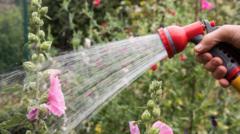
You wake up, look out at a lawn that is rapidly turning the color of digestive biscuits, and reach for the hose. Stop right there. Depending on where you live in the UK, that simple act could land you with a £1,000 fine.
We have officially entered the summer of the great British water squeeze. A relentless march of heatwaves has shattered temperature records—with June 2026 officially crowned the hottest on record for England, peaking at a sweltering 37.7°C in Norfolk. Naturally, millions of us are desperate to cool down, water our parched hydrangeas, and fill up paddling pools for the kids.
But our Victorian-era water infrastructure is buckling under the strain. Water companies are desperately declaring Temporary Usage Bans (the legal term for a hosepipe ban) to stop reservoirs and rivers from running completely dry.
The corporate spin says this is entirely the fault of "unprecedented demand" and climate change. The reality? It is a predictable crisis of underinvestment, massive leaks, and systemic failure.
Here is exactly who is affected, what you can and cannot legally do, and how to keep your garden alive without breaking the law.
The 2026 Hosepipe Ban Map: Is Your Postcode Under Restriction?
The map of restrictions is growing by the day. Because the UK's water network is divided into a patchwork of private companies, a ban might apply to your house but not to your friend's three miles away.
Here is how the land lies right now.
The East of England
Anglian Water has introduced a sweeping ban affecting more than five million customers across the East of England. This is the largest single ban in the country. If you live in this famously dry region, the hose is officially off-limits.
Cambridge
Cambridge Water has taken the step for the first time in thirty years, introducing a ban for its 350,000 customers. Local groundwater reserves and river flows have dropped to critical levels.
Kent
South East Water led the charge earlier this summer, enforcing a ban across most of Kent. This came after weeks of local supply disruptions where some households lost water entirely.
Hampshire and the Isle of Wight
Southern Water has clamped down on roughly one million customers. The flow of the River Test—a world-famous, fragile chalk stream that supplies the region—has plummeted. However, if you are supplied by Portsmouth Water, you are currently exempt, as their underground resources are in a slightly better position.
London and the Midlands
Thames Water and Severn Trent are currently holding off on official bans. But they are sweating. Thames Water has had to pump an extra one billion litres of water a day into its network just to keep up with the heatwave demand. They are begging people to voluntary stop using hosepipes, warning that the network is running at its absolute limit.
The Weird and Wild Rules of a Hosepipe Ban
A hosepipe ban is not a total ban on using water outside. It is specifically a ban on using a mains-fed hosepipe or sprinkler.
The moment you attach a hose to a garden tap, you enter a legal minefield. But some of the loopholes are, quite frankly, bizarre.
What is strictly illegal?
- Watering your lawn or garden using a hosepipe or sprinkler.
- Washing your private car, motorbike, or caravan with a hose.
- Filling or topping up a domestic swimming pool, paddling pool, or hot tub.
- Cleaning patios, driveways, paths, or outdoor windows using a hose.
What is perfectly legal?
- The Bucket and Can Loophole: You can use as much water as you want if you carry it in a watering can or bucket. Yes, really. You can wash your car or water your lawn by hand, bucket by bucket. The logic is that carrying heavy buckets naturally limits how much water you actually waste.
- Drip Irrigation Systems: Some water companies allow drip irrigation systems that operate on a timer and apply water directly to the soil root, but you must check your specific supplier's terms. Many have banned these too during severe shortages.
- The Commercial Loophole: If you run a commercial car wash, a garden centre, or a professional landscaping business, you can generally keep using hosepipes. The ban is aimed squarely at domestic use to protect livelihoods.
- Allotments and Food Crops: You are usually allowed to use a hose to water crops or food plants on an allotment if they cannot easily be watered with a can.
- Greywater and Rainwater: If you have captured rainwater in a water butt, or you are reusing bathwater (greywater), you can pump it through a hose. The ban only covers mains drinking water.
Why Britain is Running Out of Water (Hint: It Is Not Just the Sun)
The water companies want us to look up at the cloudless sky and blame nature. But that is only half the story.
We have had incredibly dry spring seasons lately, with regions like East Anglia getting less than 40% of their normal rainfall. When a major heatwave hits on top of that, everyone turns on their garden taps at the exact same time.
But why is our system so fragile?
First, we have not built a major new reservoir in England for over thirty years. Meanwhile, the population has grown by millions. We are trying to run a modern, crowded country on infrastructure designed for our grandparents.
Second, the leaks are staggering. The UK's privatised water companies lose billions of litres of water every single day through cracked, aging pipes before it ever reaches a household tap. Understandably, people are furious.
"These companies have massive leaks that don't get fixed," says Colin O'Connell, a Kent resident living under the South East Water ban. "This should be addressed before they start fining people for using hosepipes."
The government has stepped in with the Water (Special Measures) Act and a clean water Bill to crack down on failing water bosses and block executive bonuses. But political promises won't water your garden tomorrow.
How to Save Your Garden Without Breaking the Law
If you love your garden, a hosepipe ban feels like a tragedy. But you don't have to watch your plants wither and die. You just need to change your tactics.
1. Stop watering your lawn immediately
Lawns are incredibly resilient. When grass goes brown and looks dead, it has actually just gone dormant. It is a survival mechanism. The moment the autumn rains return, your lawn will bounce back to a lush green. Watering a lawn during a heatwave is a massive waste of energy and water.
2. Prioritize your plants
If you have limited water, triage your garden.
- Priority 1: Newly planted trees and shrubs. They haven't established deep root systems yet and will die without water.
- Priority 2: Fruit and vegetable patches.
- Priority 3: Potted containers and hanging baskets (which dry out incredibly fast).
- Priority 4: Established border plants. They can usually survive a dry spell on their own.
3. Change when you water
Never water in the heat of the midday sun. Most of that water will evaporate into the air before it ever reaches the roots. Instead, water late in the evening or very early in the morning. This gives the water time to soak deep into the soil.
4. Direct the water to the roots
Don't just sprinkle water over the leaves of your plants. Leaves don't drink water. Pour the water directly onto the soil at the base of the plant. Better yet, push a plastic bottle with the bottom cut off upside down into the soil next to your prized plants and pour water into that. It delivers the water straight to the root zone where it is needed most.
5. Mulch like your garden depends on it
Spread a thick layer of organic matter—like bark chips, compost, or even grass clippings—over your flowerbeds. This acts as a protective blanket, blocking the sun and keeping the moisture in the soil from evaporating. It is a total game-changer for surviving a dry summer.
Actionable Next Steps
If you want to stay ahead of the restrictions and do your bit, do these three things today:
- Check your postcode: Go to your local water supplier's website and put in your postcode to see if a formal Temporary Usage Ban is in place. Do not assume you are safe just because your neighbors across the road are.
- Order a water butt: If you don't have one, get one installed on your downpipes before the next downpour. When it does rain, it often comes in heavy summer storms that run off parched soil. Capturing that runoff is the easiest way to get free, ban-proof water.
- Collect "warm-up" water: When you wait for your shower to run hot, or wash your vegetables in the kitchen sink, don't let that water go down the drain. Keep a bucket handy to catch it. It is perfectly clean, safe water that your potted plants will love.