When news broke from Bologna in July 2026 after Abderrahim Fakir died during a police arrest, nobody following Italian politics was genuinely surprised. The violent clashes that erupted outside the city's police headquarters weren't an isolated incident. They're part of an escalating pattern of tension between law enforcement, local communities, and an increasingly tough-on-crime government.
For decades, Italy has struggled with systemic accountability inside its law enforcement agencies. Exactly 25 years after the fatal shooting of Carlo Giuliani during the 2001 G8 summit in Genoa, the structural issues that plagued the country back then remain largely unresolved. If anything, recent legislative shifts under Giorgia Meloni's administration have hardened the state's approach to public protest and civil unrest.
The Bologna Incident and the Immediate Fallout
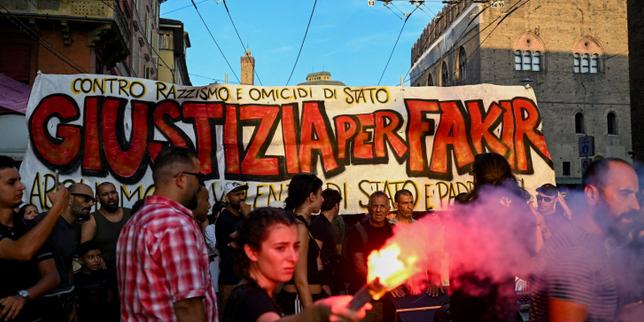
The death of Abderrahim Fakir, a 42-year-old Moroccan national, during an arrest on July 19, 2026, acted as a immediate flashpoint. Within 48 hours, peaceful vigils in Bologna transformed into heated confrontations with riot police. Demonstrators gathered outside the Questura (police headquarters), throwing bottles and firecrackers, while officers responded with batons and tear gas.
Street clashes like these reveal a deep breakdown in trust between police forces and marginalized urban communities. Critics argue that officers frequently rely on aggressive physical restraint methods during routine stops, particularly when dealing with foreign nationals or socioeconomically vulnerable individuals. Police unions, on the other hand, contend that officers face rising hostility on the ground and lack sufficient backing from civic authorities.
The reality sits somewhere in the middle: an overworked police force operating with minimal de-escalation training, thrust into a volatile political climate where tough enforcement is rewarded over community dialogue.
A Systemic Issue Quarter of a Century in the Making
To understand why these events repeat themselves, you have to look back at Genoa 2001. When European courts eventually condemned Italy for the violence at the Diaz school raid and Bolzaneto detention center, human rights advocacy groups hoped it would trigger systemic reform.
That sweeping reform never arrived.
Unlike several neighboring European nations, Italy resisted introducing mandatory body-worn cameras for all patrol officers for years. Identification numbers on police uniforms—a standard accountability measure in many democracies—remain a contentious political debate in Rome rather than standard operating practice. Without clear individual identification or objective video records, internal investigations into alleged officer misconduct routinely stall due to conflicting testimonies.
Tough Security Laws are Changing the Rules on the Ground
Over the past two years, the Italian parliament passed a wave of strict security decrees designed to crack down on public dissent. These measures dramatically raised penalties for blocking roads, occupying public buildings, or resisting law enforcement officers during demonstrations.
While proponents argue these laws protect public order and infrastructure, civil liberties organizations point out that they effectively criminalize passive resistance and peaceful protest. When minor civil disobedience carries the threat of heavy prison sentences, protests tend to escalate faster. Demonstrators feel they have less to lose, while officers feel emboldened to use preemptive force.
The policy shift prioritizes deterrence over conflict resolution. By turning everyday social friction into criminal offenses, the legal framework creates more points of violent contact between citizens and officers rather than fewer.
Real Solutions to Fix Law Enforcement Accountability
Fixing Italy's recurring cycle of police violence requires concrete policy changes rather than political rhetoric. If policymakers actually want to restore public trust and protect both officers and citizens, several practical steps need to happen right now.
- Mandate visible badge numbers and body cameras. Every officer on public order duty must wear clearly legible identification numbers and activated body cameras to ensure transparent record-keeping during arrests and demonstrations.
- Overhaul de-escalation training. Shift police academy curricula away from purely tactical restraint toward conflict mediation and psychological de-escalation tactics used successfully in countries like Germany and Denmark.
- Establish independent oversight boards. Move police disciplinary reviews away from internal police departments and place them under an independent civilian ombudsman with real investigative authority.
- Re-evaluate recent security decrees. Revisiting harsh penalty spikes for non-violent protest actions will reduce unnecessary friction points between officers and civil rights groups.
Without structural transparency and a willingness to hold officers accountable when protocols are breached, every fatal arrest or heavy-handed police response will continue to turn Italian streets into combat zones.