When federal law enforcement operates with total impunity, local justice gets shoved to the side. For six months, the federal government locked away crucial proof surrounding the fatal shootings of protesters Renee Good and Alex Pretti in Minneapolis.
Minnesota state officials just broke through that wall. Meanwhile, you can read similar stories here: What Everyone Gets Wrong About Indias Play For The Un Security Council.
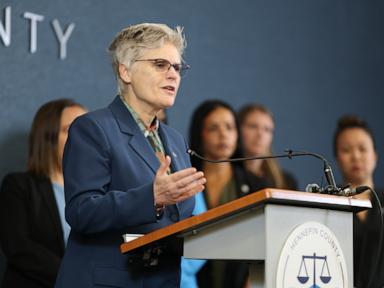
Hennepin County Attorney Mary Moriarty and Minnesota Attorney General Keith Ellison announced they finally forced federal agencies to hand over previously withheld hard drives, body-worn camera footage, witness statements, and physical evidence—including the bullet-riddled car Good was driving when she was killed.
The sudden breakthrough exposes a messy, behind-the-scenes legal game of chicken between local prosecutors and federal departments. It reveals how hard the federal government fought to shield its agents from local accountability. To see the full picture, we recommend the detailed report by Associated Press.
What Kept the Evidence Locked Away
The standoff started during an aggressive federal immigration enforcement crackdown earlier this year. On January 7, Renee Good, a 37-year-old mother of three, was shot and killed in her SUV by an Immigration and Customs Enforcement (ICE) agent during an anti-enforcement protest in Minneapolis. Just over two weeks later, on January 24, federal officers shot and killed Alex Pretti, an intensive care nurse who was acting as a community observer.
Local authorities wanted answers, but the federal government went into full lockdown mode. They refused to share internal reports, blocked access to bodycam video, and wouldn't even hand over Good’s damaged vehicle to local forensic teams.
Federal attorneys dropped a predictable defense, hinting that state prosecutors lacked the actual jurisdiction to investigate federal officers acting on the job. They hoarded the files, leaving local investigators completely stalled while families demanded justice.
The Hardball Strategy That Forced the Hand of the Feds
Federal agencies didn't turn over this data out of sudden goodwill. Minnesota officials used leverage to squeeze it out of them.
The turning point traces back to a third shooting incident involving ICE agent Christian Castro. In May, state prosecutors took the rare step of arresting Castro, charging him with assault and falsely reporting a crime after he allegedly fired through a home's front door and shot local resident Julio Cesar Sosa-Celis in the thigh.
When federal departments approached Minnesota in June asking for the state's evidence against Castro, local leaders realized they had the upper hand. Drew Evans, Superintendent of the Minnesota Bureau of Criminal Apprehension, told federal officials that the state would share its Castro files only if the exchange went both ways.
Minnesota essentially told the federal government: No reciprocity, no deal.
Combined with an amended federal lawsuit filed by Ellison and Moriarty on June 18 detailing the federal stonewalling, the pressure became too intense for the Department of Justice to maintain. The feds blinked.
What Investigators Are Looking for Right Now
The newly acquired hard drives contain hours of unedited federal bodycam footage and direct statements from the agents involved.
Investigators are looking for specific details to build potential criminal cases:
- The First Strike: Eyewitnesses and independent video analysis suggest agents opened fire on Renee Good as she tried to drive away, contradicting early federal claims of self-defense. Forensic teams can now analyze her actual SUV to match bullet trajectories with the bodycam timestamps.
- The Target Profile: Federal officials claimed they mistook vehicles or were acting in self-defense during these escalations. The unedited communications on the hard drives will show exactly what agents knew before pulling their triggers.
- The Pretti Escalation: Alex Pretti was a nurse observing the federal actions. The local team needs to establish whether federal officers gave clear warnings or simply used lethal force on a bystander.
This Is a Systemic Crisis
Don't think this issue is unique to Minneapolis. The federal government’s refusal to cooperate with local district attorneys is a playbook deployed across the country.
The exact same day Minnesota announced its evidence breakthrough, an ICE officer shot and killed a motorist in Maine. Down in Texas, Harris County District Attorney Sean Teare publicly complained that federal officials are actively hiding information regarding an ICE shooting in Houston. Nearly a week after that fatal Texas incident, local police still haven't been given the names of the officers involved.
The federal response to local officer-involved shootings is to circle the wagons, hide the badges, and withhold the data. Minnesota just proved that the only way to break that cycle is through aggressive litigation and a total refusal to play nice.
Actionable Next Steps for Tracking the Investigation
- Monitor the Hennepin County Court Docket: Watch for formal charges or grand jury announcements regarding the agents who shot Good and Pretti. Now that Moriarty has the files, the clock is ticking on a charging decision.
- Follow the Status of State v. Castro: Agent Christian Castro’s assault trial will serve as a legal bellwether. How federal attorneys defend him in state court will reveal their strategy for protecting other agents.
- Watch the Federal Reciprocity Fight: Keep tabs on the federal lawsuits filed by Ellison and Moriarty. The ongoing discussions with the FBI could establish a legal precedent forcing federal agencies to share evidence automatically whenever an agent uses force on state soil.