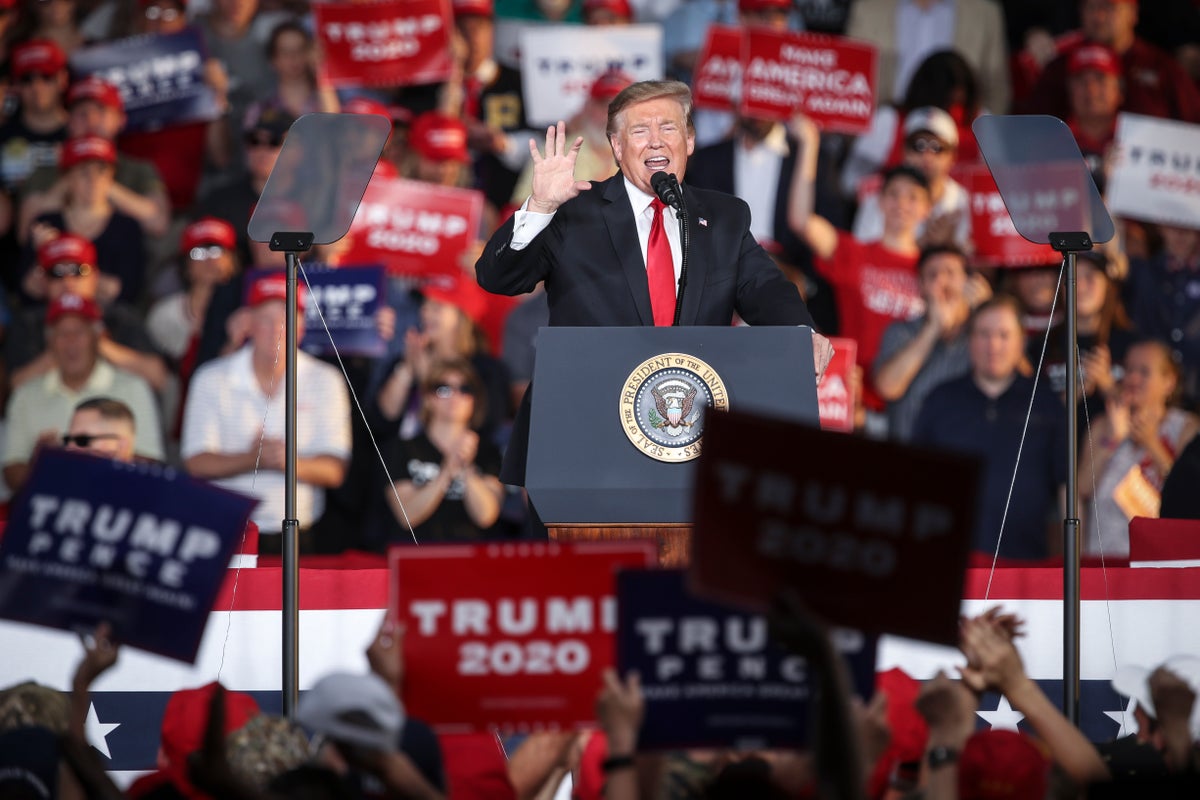
Donald Trump called his late-2020 Facebook address the most important speech he ever made. Frank Luntz, a veteran Republican pollster who spent decades dissecting what makes voters tick, had a different word for it. He called it stupid.
When a campaign strategist with Luntz’s credentials uses that kind of language, it isn't just a personal swipe. It is a fundamental critique of political miscalculation. The hard truth of modern American politics is that elections are won in the razor-thin margins of the undecided center. While deep-red bases devour hours of unverified claims regarding rigged systems and stolen ballots, swing voters live in a completely different world. They don't care about personal grievances. They care about their own lives. For a deeper dive into similar topics, we suggest: this related article.
Politicians frequently fall into the trap of talking to their most vocal supporters while assuming the rest of the country is listening with equal intensity. They aren't. For independent voters, the constant obsession with past contests acts as an immediate off-switch. Understanding why this divide exists explains not just a single failed speech, but the entire breakdown of modern campaign strategy.
The Massive Chasm Between the Base and the Center
Political campaigns are structured around two distinct goals. First, you must energize your base so they actually show up. Second, you have to win over the small sliver of people who genuinely haven't made up their minds. The danger arises when a candidate forgets that these two groups require completely different languages. To get more information on this development, extensive coverage can be read on USA Today.
During his late-2020 address, Trump spent forty-six minutes listing a series of statistical anomalies and alleged voting irregularities. To an active partisan, it felt like an essential battle cry. To a suburban moderate in Pennsylvania or Arizona, it sounded like endless noise. Luntz’s focus groups consistently show that independents view post-election complaints as a distraction from the real issues they face daily, like inflation, job security, and local school quality.
The average swing voter doesn't spend their evening reading election lawsuits. They don't track precinct-level data. When a political figure spends their valuable airtime litigating the past rather than offering solutions for the future, they look weak to the center. Leaders look forward. Grudges look backward.
Why Grievance Language Backfires With Moderates
Language is a precise tool. The words a candidate chooses can either invite people in or lock them out. When campaigns focus entirely on themes of personal betrayal and institutional corruption, they create an insular environment that alienates normal people.
- The fatigue factor: Everyday citizens possess a limited amount of emotional energy for politics. Constant outrage produces exhaustion rather than engagement.
- The relevance gap: A complaint about a past vote count doesn't lower the cost of groceries or make healthcare more affordable.
- The stability preference: Swing voters generally prefer predictability and order. Rhetoric that attacks the foundation of democratic systems signals chaos, which scares off the exact people needed to win a tight race.
Luntz famously noted that Trump was addressing the right topics during his campaigns but using entirely the wrong words. By centering the conversation on his own perceived mistreatment rather than the struggles of the average family, Trump essentially handed the middle of the electorate to his opponents. It was an unforced error of massive proportions.
What Political Strategy Gets Wrong About Independent Minds
Consultants often treat independents as if they are simply less-informed partisans who just need a little push to join a team. This is a profound misunderstanding of the independent mind. Many swing voters are independent precisely because they dislike both political parties and find partisan bickering deeply repulsive.
When you present an independent voter with a highly partisan, emotionally charged argument about voter fraud, they don't immediately believe it or reject it based on tribal loyalty. Instead, they analyze it through a lens of practicality. They ask a simple question. How does this help me? If the answer is that it only helps the politician's ego, the voter walks away.
Focus groups run by veteran strategists across the political spectrum confirm this reality. When voters are asked what matters most to them, the answers are boringly consistent. Roads, jobs, safety, prices. When a primetime address ignores those topics entirely to dive into a rabbit hole of conspiracy theories, it fails the basic test of political utility.
Shifting From Past Grievances to Future Solutions
If you want to win an election in a divided nation, you have to talk about tomorrow. The most successful political movements in American history succeeded because they painted a clear picture of what the future would look like under their watch.
When a leader gets trapped in an endless loop of self-defense, they cede the future to their rival. The competitor's coverage of Luntz’s remarks focused heavily on the immediate drama of a Republican operative criticizing a Republican president. The real story is much deeper than a temporary party feud. It serves as an example of how modern communication channels allow politicians to live inside echo chambers that completely blinding them to the reality of the broader electorate.
To fix this, campaigns must return to a consumer-focused model of messaging. Treat the voter like a customer who needs a product that improves their life. Stop demanding that the customer validate your personal grievances before you agree to help them.
Practical Next Steps for Political Communicators
If you are tasked with designing messages that actually reach past the partisan divide, you need to change your approach immediately.
- Audit your language. Strip out words that only resonate with your online followers. If a normal person wouldn't use a phrase over a casual dinner, don't put it in a speech.
- Focus on concrete outcomes. Replace abstract arguments about systemic corruption with specific, tangible policy proposals that affect daily expenses or safety.
- Listen to the quiet majority. Spend less time reading social media comments and more time listening to actual focus groups of people who didn't vote for your candidate last time.
The lessons of past campaign failures are clear. The center will not adapt to a politician's personal obsessions. The politician must adapt to the center, or they will continue to lose the voters who actually decide who holds power.