In a swift stroke of a pen, President Donald Trump just revived one of the most polarizing environmental battles in American history. Flanked by Utah’s top Republican leaders in the Oval Office, Trump signed proclamations slashing Bears Ears National Monument by 91 percent and Grand Staircase-Escalante by over 90 percent.
It’s a massive rollback—removing federal protections from roughly three million acres of rugged, red-rock desert.
If this feels like déjà vu, that’s because we’ve been here before. Trump did almost the exact same thing in 2017. President Joe Biden restored the original boundaries in 2021. Now, the cycle of political whiplash continues, leaving local communities, Native American tribes, and outdoor enthusiasts caught in the middle.
But while the White House celebrates this as a victory for "local control" and energy independence, the reality on the ground is much more complicated. Here’s what’s actually happening behind the headlines, why the legal battle ahead is unprecedented, and what it really means for these treasured public lands.
The Massive Scale of the Cuts
To understand the scale of this decision, you have to look at the numbers. We aren't talking about minor boundary adjustments.
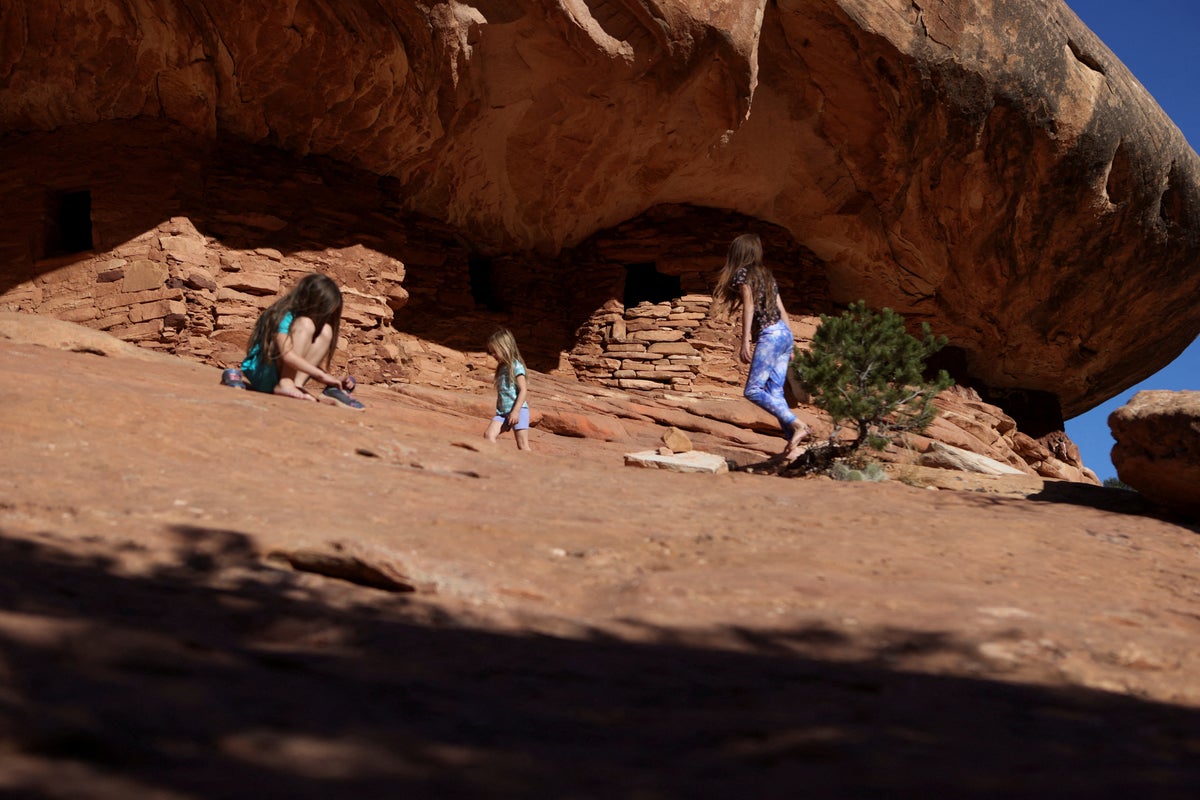
- Bears Ears National Monument: Formerly spanning 1.36 million acres of sacred tribal land, deep canyons, and ancient cliff dwellings, it’s been whittled down to a mere 121,100 acres. That's a 91 percent reduction.
- Grand Staircase-Escalante National Monument: Formerly covering 1.9 million acres of spectacular geological formations, it has been slashed by over 90 percent.
The administration claims this is a "right-sizing" effort. Utah Governor Spencer Cox and Senator Mike Lee argue that previous Democratic presidents abused the Antiquities Act of 1906, which states that monument designations should be limited to the "smallest area compatible" with protecting historic or scientific objects.
But conservationists and tribal coalitions see this as a blatant land grab designed to open up pristine areas for mining, drilling, and commercial exploitation.
Fact-Checking the White House Claims
During the signing ceremony, Trump made a bold claim that raised eyebrows across the outdoor recreation community:
"You can’t go hunting, you can’t go fishing, you can’t do anything, you can virtually not even walk on it."
Honestly, this is flat-out wrong.
National monument designations do not turn public lands into locked-down national parks. Before these cuts, both Bears Ears and Grand Staircase-Escalante allowed hunting, fishing, hiking, camping, and even livestock grazing. The Utah Division of Wildlife still managed the local animal populations. Motorized vehicles were permitted on hundreds of miles of designated dirt roads.
What the monument status did do was block new mining claims, oil and gas leasing, and heavy industrial development. By shrinking the boundaries, the administration is paving the way for energy companies to stake claims on coal, uranium, and oil reserves that have been locked away for years. The executive orders officially open these excluded lands to potential leasing in just 60 days.
The Tribal Co-Stewardship Crisis
Perhaps the most devastating impact of these cuts is the sudden dismantling of tribal partnership agreements.
Bears Ears is deeply sacred to the Hopi Nation, Navajo Nation, Ute Indian Tribe, Ute Mountain Ute Tribe, and Zuni Pueblo. In 2016, these five tribes formed a historic coalition to advocate for the monument’s creation. When Biden restored the boundaries, he established a groundbreaking co-stewardship framework, giving indigenous leaders an active, collaborative voice in managing their ancestral lands.
Trump’s new proclamation effectively disbands the Bears Ears Commission. In its place, the administration is proposing a diluted "advisory committee" that sidelines tribal input. For tribal leaders, this isn’t just a political disagreement; it’s a direct assault on their sovereignty and cultural heritage.
The Legal Battleground: Can a President Do This?
This is the multi-million-dollar question. The Antiquities Act explicitly grants the President the power to create national monuments. However, the law is completely silent on whether a president has the authority to shrink or abolish them.
When Trump slashed the monuments in 2017, a coalition of tribes and conservation groups immediately sued. Those lawsuits were put on hold when Biden took office and restored the boundaries. Because of that pause, federal courts have never actually ruled on whether Trump's original cuts were legal.
Earthjustice, the Southern Utah Wilderness Alliance, and other environmental groups have already announced they are filing fresh lawsuits. This time, they are ready to push the issue all the way to the Supreme Court.
Legal experts are split. Conservatives argue the president’s power to create implies the power to modify. Conservationists argue that once public land is designated by Congress or a president, only Congress has the constitutional authority to strip those protections away.
Public Opinion vs. Political Posturing
Utah’s Republican politicians are cheering this move as a win for their state. But their enthusiasm doesn't match public opinion, even within Utah.
A 2024 poll conducted by the Grand Canyon Trust found that 71 percent of Utah voters support keeping Bears Ears intact, and 74 percent support Grand Staircase-Escalante. Across the wider American West, a massive 89 percent of voters believe existing national monuments should keep their protections.
So why the push? It aligns with Trump’s broader "national energy emergency" agenda, which aims to maximize oil, gas, and mineral extraction on federal lands.
What Happens Next?
Don't expect bulldozers and drilling rigs to roll into Bears Ears tomorrow. The fight is just beginning, and the landscape is going to remain in limbo for a while. If you want to stay informed or get involved, keep these immediate next steps in mind:
- Watch the Courts: Keep a close eye on the incoming injunction requests. Environmental groups will likely ask federal judges to block any mining or drilling permits while the broader lawsuits work their way through the court system.
- Follow the Bureau of Land Management (BLM): The current, highly protective land management plans finalized in early 2025 remain technically active until the BLM drafts new ones. Watch for public comment periods as the agency begins rewriting these rules.
- Support Tribal Led Organizations: Groups like Utah Diné Bikéyah and the Bears Ears Inter-Tribal Coalition are leading the charge on the ground. Supporting them directly helps keep indigenous voices at the center of this battle.
This isn’t just a Utah issue. It’s a referendum on the future of America’s public lands. If the courts rule that a president can unilaterally wipe out 90 percent of a national monument, no protected public land in the country is truly safe.