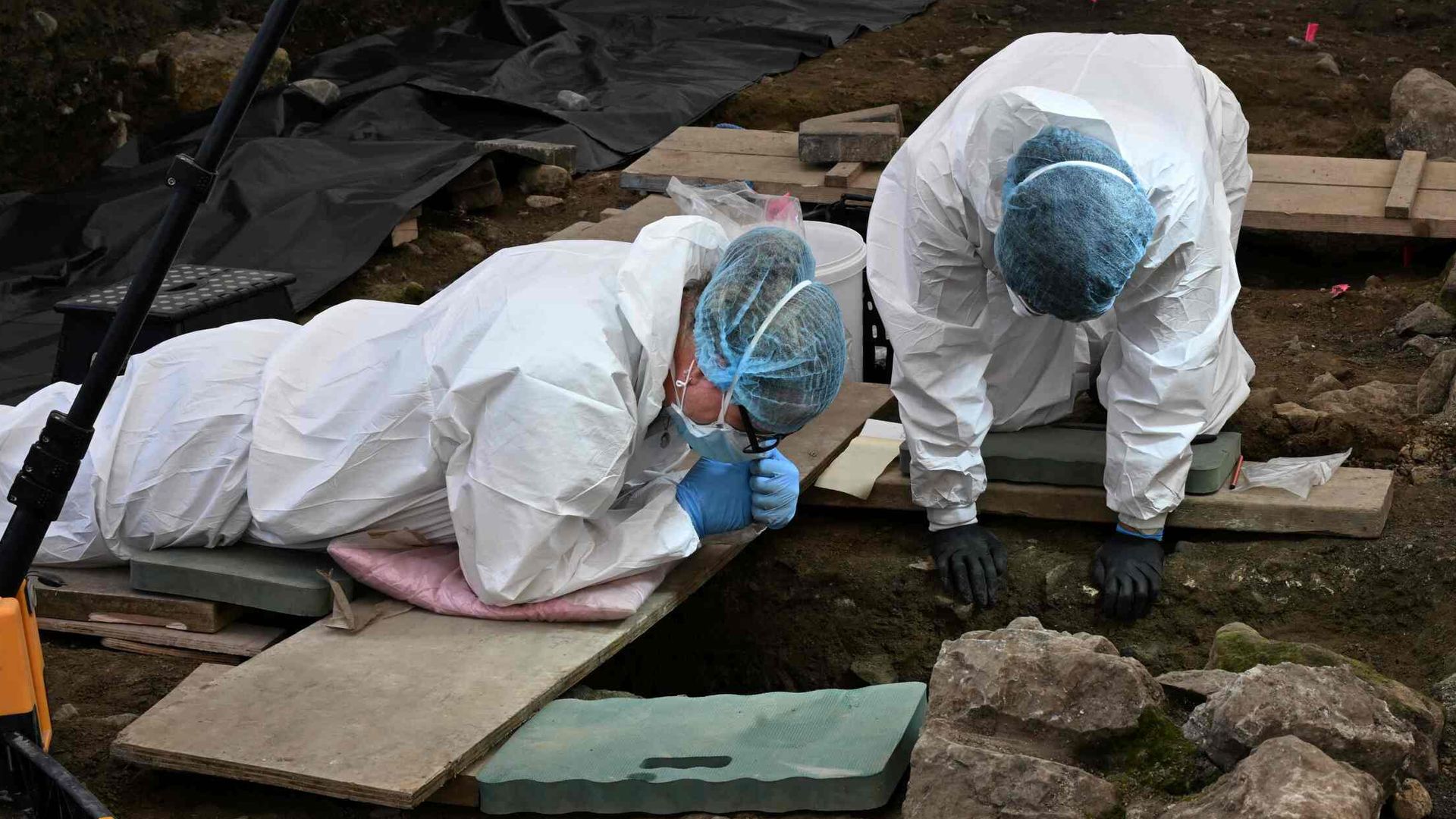
Forensic teams working at the site of the former St Mary's Mother and Baby Home in Tuam, County Galway, have recovered the remains of 22 additional infants. This latest discovery brings the total number of infant remains recovered at the site to 99 since official forensic excavations began a year ago.
The recovery was carried out between 1 July and 15 July in an area previously covered in gravel and used for vehicle access, with no surface markings to indicate burials underneath. Led by the Office of the Director of Authorised Intervention Tuam (ODAIT), investigators are using historical planning maps and advanced forensic methods to systematically search the grounds before moving to the central sewage tank where hundreds more children are believed to be buried.
Understanding why these discoveries are happening now, what the forensic evidence actually shows, and how Ireland is confronting this painful chapter requires looking past headlines and into the reality of the ongoing excavation.
What the Tuam Excavations Have Uncovered So Far
The ongoing work in Tuam isn't a quick search. It's one of the most complex forensic archaeological interventions ever undertaken in modern Europe.
When forensic archaeologists began work at the former St Mary's site in July 2025, they faced a daunting task. The institution, operated by the Bon Secours Sisters from 1925 to 1961, was demolished decades ago, and the land was redeveloped into a suburban housing estate. Today, back gardens, playgrounds, and access roads sit directly on top of or adjacent to former burial zones.
Investigators chose not to start immediately at the central memorial garden, where a 2017 preliminary commission confirmed "significant quantities" of child remains inside underground sewage chambers. Instead, they began outside the garden perimeter, utilizing a 1970s Galway County Council planning document that hinted at possible burial grounds.
That strategic choice paid off.
Over the past 12 months, 99 individual sets of infant remains have been uncovered from this outer zone.
TUAM FORENSIC EXCAVATION PROGRESS (AS OF JULY 2026)
Total Infant Remains Recovered: 99
Latest Recovery Period (1-15 July): 22 sets of remains
Burial Context: Coffined infants buried closely together beneath gravel vehicle access area
DNA Reference Samples Collected: 62 family reference samples
According to ODAIT Director Daniel MacSweeney, finding 99 remains in an area with zero surface markers completely justifies the decision to tackle the site's perimeter first. Every single set of remains represents an individual archaeological context. They can't just dig with heavy machinery. Workers have to hand-excavate under protective weather tents, carefully clearing dirt away inch by inch.
To handle the recovery, ODAIT recently opened a €4.1 million state-of-the-art forensic facility and mortuary at nearby Toghermore. The recovered remains will undergo intensive forensic analysis, carbon dating, and DNA profiling to match them with living relatives.
How Catherine Corless Exposed the Truth
To understand why this excavation is taking place, you have to go back to local historian Catherine Corless.
For decades, rumors circulated around Tuam about what happened behind the high walls of St Mary’s. In 1975, two local boys playing on the site accidentally broke through a concrete slab and saw what appeared to be dozens of small human skeletons inside an underground chamber. At the time, local authorities assumed the bones belonged to victims of the Great Famine or unbaptised babies and re-sealed the slab after a priest said prayers.
Corless wasn't satisfied with that explanation.
Spending her own money and working in her spare time, she painstakingly requested and cross-referenced official state death certificates from the local health executive. Her findings shocked the country:
- 796 children died at St Mary's Home between 1925 and 1961.
- Only two had documented burial records in consecrated cemeteries.
- 0 official markers existed for the remaining 794 missing infants.
The death certificates revealed that children were dying at alarming rates from preventable conditions—gastroenteritis, measles, tuberculosis, pneumonia, and severe marasmus (malnutrition).
Corless matched her documentary research with historical maps showing that the underground chamber found in 1975 was part of the home's decommissioned septic tank system. Her relentless campaigning forced the Irish government to establish the Commission of Investigation into Mother and Baby Homes, ultimately leading to the full statutory forensic recovery effort active today.
Why Were Mortality Rates So High in Ireland's Mother and Baby Homes?
A common question people ask is whether these institutions were active sites of mass murder or victims of their time. The historical evidence paints a picture of systemic, institutional neglect driven by deep-seated societal stigma.
During the 20th century, unmarried pregnant women in Ireland faced intense social ostracization. Church authorities, local parish priests, and even families routinely pressured unmarried mothers into entering institutions run by religious orders.
Once inside, women were stripped of their names, subjected to hard labor, and separated from their children. The infants were placed in overcrowded nurseries where infections spread like wildfire.
KEY SYSTEMIC FACTORS IN HIGH INFANT MORTALITY
- Severe Overcrowding: Dozens of infants housed in tight quarters with poor ventilation.
- Chronic Malnutrition: Diets lacking essential nutrients, leading to conditions like marasmus.
- Medical Neglect: Delayed medical intervention for routine childhood infections.
- Lack of Sanitation: Infant care areas situated near inadequate waste systems.
While infant mortality in Ireland was higher overall prior to widespread antibiotics, the death rate inside Mother and Baby Homes was drastically higher than national averages. In some years at Tuam, nearly one in four children living in the facility died.
When babies passed away, the religious order did not pay for proper individual plots in local graveyards. Instead, they placed the tiny bodies in coffins or wrapped them and deposited them in unrecorded subsurface chambers, including the defunct sewage system.
The Role of DNA and the Search for Identity
For surviving family members—brothers, sisters, and mothers who were forcibly separated from their babies—the Tuam excavation isn't just an archaeological project. It's a race against time for identification and closure.
The ODAIT team has gathered 62 DNA reference samples from living relatives. The strategy relies on comparing genetic material extracted from the recovered infant bones against these family samples.
HOW THE IDENTIFICATION PROCESS WORKS
1. Careful hand excavation and cataloging of remains on site.
2. Transfer of remains to the Toghermore Forensic Facility.
3. Extraction of ancient or degraded DNA from bone and tooth samples.
4. Genetic mapping and matching against ODAIT's relative database.
5. Formal identification and reburial according to family wishes.
The DNA matching process faces significant challenges:
- Degradation: Bones buried in damp, underground environments for 70 to 100 years suffer DNA damage.
- Kinship Distance: Many surviving relatives seeking answers are second-degree or third-degree relatives (such as nieces, nephews, or first cousins), which requires broader genetic mapping techniques.
- Database Size: Gathering enough reference samples requires surviving family members to step forward, which can be difficult due to lingering family secrets or trauma.
Despite these obstacles, forensic specialists remain confident that modern genetic sequencing will allow them to name and properly honor many of the children recovered in Tuam.
Practical Next Steps for Families and Survivors
If you or your family were affected by the Irish Mother and Baby Home system, or if you believe you have a relative who died at St Mary's in Tuam, concrete support and information pathways are available right now.
- Submit a DNA Reference Sample: Contact the Office of the Director of Authorised Intervention Tuam (ODAIT) through their official website to inquire about participating in the Identification Programme. Providing a sample is free, confidential, and vital for matching remains.
- Access Institutional Records: Apply for personal information and birth records under the Birth Information and Tracing Act 2022 through the Adoption Authority of Ireland (AAI) or Tusla (the Child and Family Agency).
- Seek Counseling and Support Services: The Health Service Executive (HSE) provides dedicated, free psychological support services specifically tailored for survivors of Mother and Baby Homes and institutional care.
- Track Excavation Updates: Follow official ODAIT progress briefings directly rather than relying on social media speculation, as site work and DNA matching timelines are updated periodically.