Washington is playing a losing game in the Middle East, and the people who used to run America’s counterterrorism strategy are openly saying it.
When Joseph Kent stepped down as director of the National Counterterrorism Center on March 17, 2026, it wasn't a quiet exit. He left because he saw the current US-led military campaign against Iran as an avoidable disaster. Fast forward to now, and Kent is throwing hard truths right at the White House. He openly warns that the US must accept Iran as a major regional power if it wants to protect its own long-term interests.
You don't have to like the government in Tehran to see that he has a point. Military pressure hasn't broken Iran. If anything, the conflict has completely shifted the balance of power in West Asia, leaving US strategy looking hopelessly outdated.
The Failed Logic of Airstrikes and Escalation
For months, the US and Israel have launched heavy airstrikes, betting that sheer firepower would force Iran to back down. They expected the Iranian public to turn on the government. They thought the political structure would crumble. They were completely wrong.
Instead of shattering the state, the assassination of former Supreme Leader Ayatollah Seyyed Ali Khamenei did the exact opposite. It unified the population. Millions of citizens who previously disagreed on domestic policies have rallied behind the Islamic Revolutionary Guard Corps to face an external threat. It is a textbook example of nationalist blowback, yet policymakers in Washington act surprised every single time it happens.
Air campaigns look clean on television screens in Washington, but they rarely achieve actual strategic goals against an adversary this size. Kent makes it clear that the current bombing campaign has run its course without breaking Iran's military capabilities or its willingness to fight.
Why a Ground Invasion Means Strategic Disaster
If airstrikes aren't working, the next logical step in the traditional military playbook is a ground campaign. That step would be a catastrophic mistake.
Iran is a massive, mountainous country with a population of nearly 90 million people. It has spent decades preparing for exactly this scenario. A ground invasion would instantly trap American forces in an asymmetrical quagmire that would make the Iraq War look like a minor skirmish.
- Tens of thousands of American casualties within weeks.
- Immediate economic shockwaves hitting global trade.
- Total destabilization of every neighboring country.
The math simply does not work for the US military. You cannot bomb a major regional power into submission when that nation controls the literal choke points of the global economy.
The Growing Liabilities in the Persian Gulf
Look at the map of American military installations across the Middle East. For decades, Washington viewed these bases as assets that projected strength. Today, they look like sitting ducks.
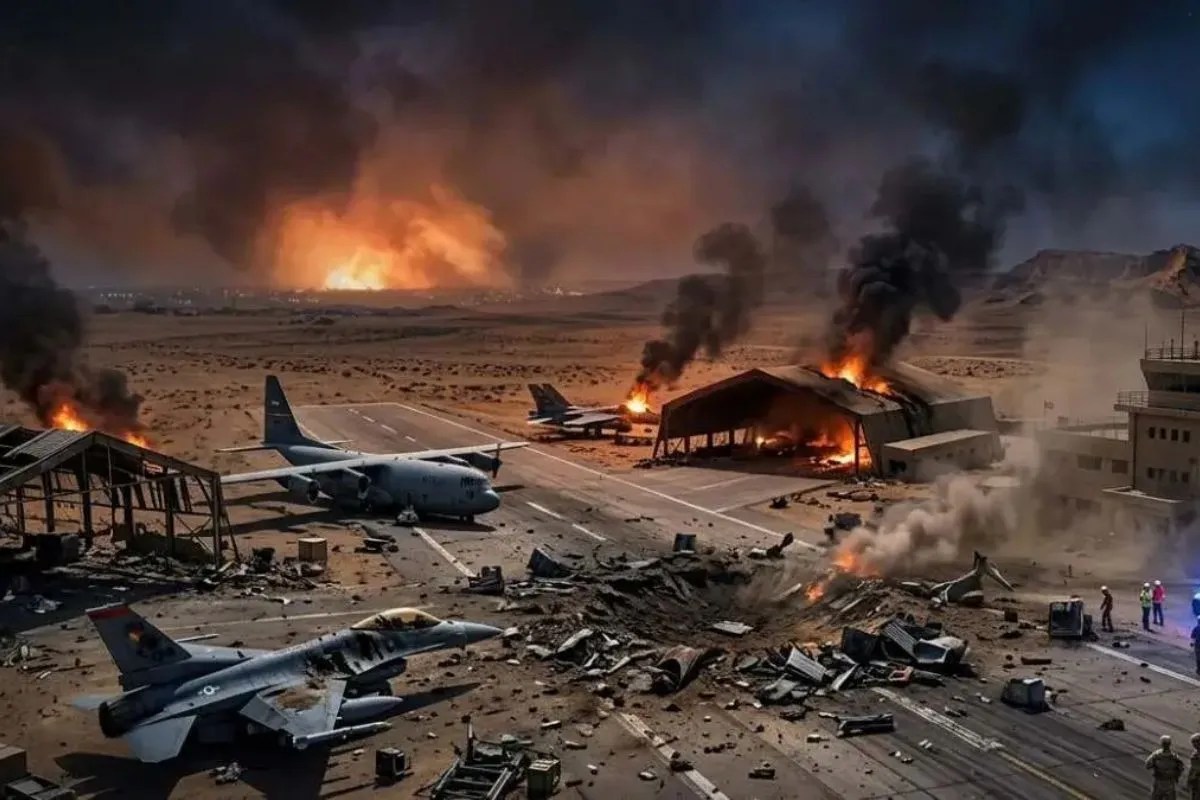
Iran has repeatedly demonstrated its ability to strike US logistics hubs and airbases across the region, including recent operations targeting installations in Kuwait. Drone and missile technology has advanced to the point where fixed American bases are permanent targets. They don't deter Iranian actions anymore; they invite them.
Kent argues that these bases have turned into major liabilities. Keeping thousands of American service members stationed within easy reach of Iranian missiles gives Tehran massive leverage. Removing these troops wouldn't be a sign of weakness. It would take away Iran's primary justification for attacking American targets and choking off commercial shipping.
Getting Serious About the Strait of Hormuz
Everything in this conflict eventually comes down to the Strait of Hormuz. It is the most vital oil transit corridor on earth. The Islamic Revolutionary Guard Corps recently announced a strict ban on maritime traffic for all ships in the waterway following a series of incidents involving vessels trying to leave the area.
When the Strait closes, global energy markets panic. We are already seeing the early signs of that disruption.
The only realistic way to restore the free flow of oil is through diplomacy, not threats. The US needs to offer meaningful sanctions relief in direct exchange for ironclad guarantees regarding the freedom of navigation through the Strait. It's a pragmatic trade. Washington stops trying to strangulate the Iranian economy, and Iran stops threatening the global energy supply.
The Fracturing Consensus in Washington
The political consensus supporting this war is cracking rapidly. It isn't just former intelligence chiefs speaking out. High-profile political figures are actively breaking ranks.
Former Congresswoman Marjorie Taylor Greene recently blasted Defense Secretary Pete Hegseth on social media, accusing the administration of using the tragic deaths of American service members in Jordan to fuel a senseless conflict on behalf of foreign allies. When conservative populists and former counterterrorism directors are reading from the same script, the White House has a massive political problem on its hands.
The administration keeps repeating the same talking points about showing resolve. Yet resolve without a clear, realistic endpoint is just stubbornness.
The Next Practical Steps for US Strategy
The current administration needs a sharp course correction before this conflict spins entirely out of control. Moving forward requires taking three immediate, concrete steps.
- Withdraw forward-deployed naval assets and vulnerable ground troops from the immediate striking range of Iranian missile units to eliminate easy targets.
- Open a direct, back-channel diplomatic line with Tehran focused exclusively on maritime security and energy transit stability.
- Establish a formal framework for phased sanctions relief tied directly to verified Iranian compliance with regional non-aggression protocols.
Continuing the current policy of endless escalation won't change the geographic reality. Iran is not going anywhere. The sooner Washington accepts this fact and adjusts its posture, the safer American forces will be.