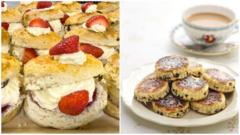
Messing with the afternoon tea menu at the All England Club is a risky move. Wimbledon runs on strict, unwritten rules. White clothing only on the court. Pimms in the stands. Strawberries and cream in the bowl. And, until recently, a mountain of scones to fuel the spectators.
Then came Bryn Williams.
The acclaimed Welsh chef has shaken up the SW19 establishment by swapping out the iconic British scone for traditional Welsh cakes and bara brith. Traditionalists are furious. They want their clotted cream. They want their strawberry jam. But Williams is dug in, defending his choice to bring a distinct Celtic flair to the world's most famous tennis tournament. Honestly, it's about time someone injected some real culinary personality into the event.
The Great Scone Versus Welsh Cake Showdown
Let's look at the numbers because they show exactly how big of a gamble this is. Last year alone, Wimbledon spectators devoured over 72,000 scones. Scones are a guaranteed money-maker and a security blanket for visitors who want the textbook British experience.
Replacing that predictable cash cow with a flat, griddled round of spiced dough from Wales takes guts. Welsh cakes are brilliant. They are a weird, beautiful hybrid of a sweet pastry, a fruit scone, and a pancake. Cooked on a flat iron bakestone rather than baked in an oven, they get a crisp exterior while staying soft and buttery in the middle.
Williams isn't just trying to annoy the English elite. He's celebrating British heritage by broadening the definition of what tournament food can be. For decades, "British tradition" at sports events has meant a very specific, Southern English version of tea time. Bringing in Welsh staples challenges that narrow view.
Why Food Traditions Need to Evolve
People hate change. Go online right now and you'll see fans complaining that the tournament is losing its identity. They're wrong. Identity isn't a museum piece. It stays alive by changing.
Scones will always have a place in the wider British culinary world, but they don't have a monopoly on afternoon tea. Welsh cakes actually solve a practical problem that anyone who has ever eaten a scone at a crowded sports venue knows too well. Scones are messy. They crumb everywhere. You need a knife, a pot of jam, a tub of cream, and a steady hand while balancing a plastic plate on your knees in the stands.
Welsh cakes don't need any of that drama. They are self-contained. They are studded with sultanas or currants, heavily dusted with caster sugar, and best eaten straight out of the hand. It's a far superior food for a live sports environment. Williams recognized this practical advantage, and he's using his platform to prove that comfort food doesn't have to be stagnant.
Baking the Perfect Alternative
If you want to understand why the chef is standing his ground, you have to look at how these things are made. A proper Welsh cake relies on high-quality butter rubbed into plain flour, a touch of baking powder for a slight lift, and a blend of mixed spice or cinnamon. The dough is rolled thin, stamped into rounds, and fried on a medium-hot griddle for about three to four minutes on each side.
It takes precise temperature control. If the pan is too hot, the outside burns while the middle stays raw. Get it right, and you have something spectacular.
Next Steps for Your Afternoon Tea
Don't take the internet's word for it. Test the debate in your own kitchen before picking a side.
Get a heavy cast-iron frying pan or a proper griddle plate. Ditch the oven for your next weekend baking session. Rub 100 grams of cold salted butter into 225 grams of plain flour mixed with 85 grams of sugar and a teaspoon of baking powder. Bind it with a beaten egg and a splash of milk, toss in a handful of currants, and roll it out to about eight millimeters thick. Fry them until golden brown, coat them in caster sugar while they are still warm, and see if you ever want to bother with a crumbly scone again.