You probably played it as a kid without realizing you were participating in a century-old literary tradition. You grab a stick, drop it off one side of a bridge, and rush to the other side to see whose stick emerges first. It's simple, brilliant, and completely timeless.
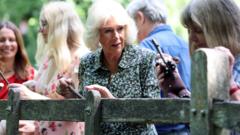
When Queen Camilla stepped onto the famous wooden bridge in Ashdown Forest recently to toss her own stick into the water, she wasn't just indulging in a nostalgic childhood whim. She was marking a massive milestone: 100 years since the world first met a "bear of very little brain" who ended up conquering global pop culture.
Winnie-the-Pooh first appeared in a short story titled The Wrong Sort of Bees, published in the London Evening News on Christmas Eve in 1925. By the time A.A. Milne published the dedicated book in 1926, the silly old bear was on his way to becoming an international phenomenon.
The fact that a British monarch is spending her morning playing Poohsticks alongside children's authors like Dame Julia Donaldson shows just how deeply these stories are woven into our collective cultural DNA. But why does a fictional bear from the 1920s still command this kind of heavyweight attention today?
The Heavyweight Economics of a Fictional Forest
People often treat children's literature as something sweet, soft, and secondary. That's a massive mistake. The financial and cultural footprint of the Hundred Acre Wood is staggering.
Take Ashdown Forest in East Sussex, the real-world inspiration for Milne's fictional setting. Local authorities poured £450,000 of public money into building events and infrastructure specifically to mark this centenary. Why? Because Pooh is a massive economic engine for the region, drawing thousands of global tourists who want to stand on the exact bridge where Christopher Robin played.
Even more impressive is the legacy of the Royal Literary Fund. Queen Camilla recently took over as its patron, and the charity has received a mind-boggling £91 million from the Milne estate since 1972. That money directly funds struggling writers across the UK, turning Pooh's honey pots into a literal lifeline for modern literature.
What Most People Get Wrong About Pooh's Appeal
If you think Winnie-the-Pooh survived for a century just because he's cute, you're missing the point. The real secret to the longevity of these stories is their radical rejection of adult cynicism.
Milne didn't write down to children. He captured a specific brand of gentle philosophy that adults need just as much as kids do. Think about the character dynamics:
- Eeyore represents clinical pessimism, yet his friends never tell him to snap out of it; they simply accept him.
- Piglet deals with chronic anxiety, but he's still invited on every adventure.
- Pooh operates on pure, unadulterated mindfulness. He lives entirely in the present moment.
During the centenary celebrations, broadcaster Gyles Brandreth—sporting a bright red Pooh jumper—led the Queen and a group of local school children through three highly competitive rounds of Poohsticks. Camilla actually finished as the runner-up, proving that the simple joy of watching a stick float down a river still works, even in a world dominated by algorithms and smartphones.
The Transatlantic Tug of War Over the Original Toys
While the British countryside claims the physical landscape of the stories, the actual physical objects that inspired them live thousands of miles away. This remains a point of gentle contention for some literary purists.
The original stuffed animals bought by A.A. Milne for his son, Christopher Robin, live in a climate-controlled display case at the New York Public Library. They've been there since 1987, drawing millions of visitors.
But the collection had a tragic gap for nearly a century. The original Roo doll—the baby kangaroo—was lost in an English apple orchard back in the 1930s.
To bridge this historical divide, Queen Camilla actually traveled to New York to hand-deliver a bespoke, historically accurate replica of Roo to the library. The replacement was crafted by Merrythought, Britain's oldest surviving teddy bear manufacturer, who used archival fabrics to match what the original toy would have looked like. It was a brilliant piece of cultural diplomacy that finally made the world's most famous toy collection whole again.
How to Bring a Little Hundred Acre Wood Into Your Life
You don't need a royal budget or a trip to East Sussex to tap into this century-old magic. The best way to honor the legacy of these characters is to embrace their simplicity.
First, introduce the original text to the next generation. Skip the heavily sanitized modern cartoon reboots for a night and read the original 1926 chapters aloud. Focus on E.H. Shepard's minimalist line illustrations, which are arguably just as important to the story's success as Milne's prose.
Second, disconnect. Find a local bridge over a moving stream this weekend. Leave your phone in your pocket, pick up a couple of dry sticks, and play a round of Poohsticks. Notice how hard it is to stay stressed when you're waiting to see which piece of wood clears the arch first.
The world has changed completely since 1925, but our need for quiet, uncomplicated joy hasn't shifted an inch. That's why the bear survives.
To see the famous landscape that started it all, take a look at this guided tour of the real Hundred Acre Wood which explores how the real-world Ashdown Forest shaped the timeless stories we still celebrate today.