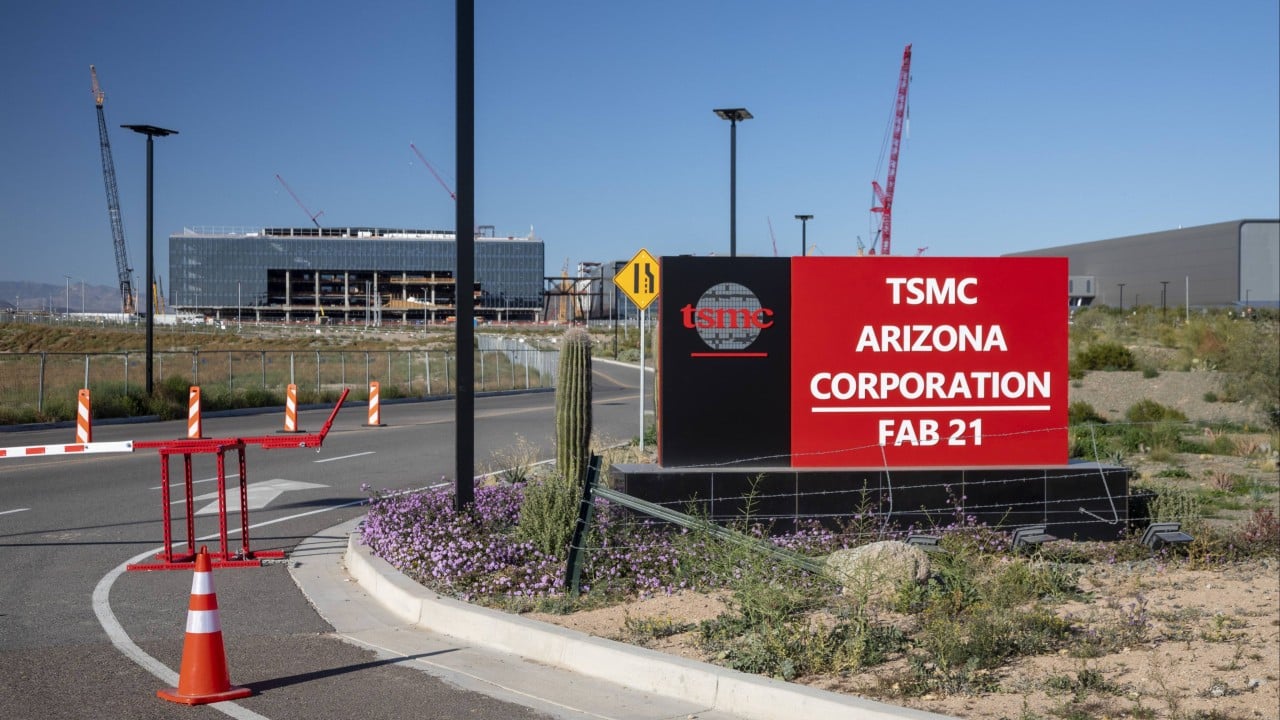
TSMC just dropped a financial bombshell that should silence anyone whispering about an artificial intelligence bubble.
The world's premier contract chipmaker just pledged an extra $100 billion to its Arizona operations. That single decision pushes its total commitment in the desert state to a staggering $265 billion. To put that in perspective, that is more than the entire annual gross domestic product of many European nations. Meanwhile, you can find other stories here: What Everyone Is Missing About Tiktok Under Investigation In Uk Over Child Safety Measures.
But behind the staggering headline figures lies a much more complex, messy, and fascinating chess game. This is not just a story about building bigger factories. It is a story of geopolitical arm-twisting, severe supply chain bottlenecks, and a desperate race to secure the physical hardware that makes modern computing possible.
If you want to understand where the technology industry is heading over the next decade, you have to look past the press releases. Let's look at what is actually happening on the ground in Phoenix. To see the complete picture, we recommend the detailed report by Wired.
Why Silicon Valley is Squeezing TSMC
Let's start with the immediate catalyst. The demand for hardware is absolutely relentless.
During its recent quarterly earnings call, TSMC reported a record net profit of $22 billion. That is a 77 percent jump compared to the same period last year. Revenue shot up 36 percent to $39 billion. The primary engine behind this explosive growth is the massive infrastructure buildout by cloud service providers and tech giants who are buying up every single graphic processing unit they can get their hands on.
TSMC CEO C.C. Wei did not mince words during the call. He pointed to a multi-year structural trend. The company even raised its full-year revenue growth forecast to slightly above 40 percent. They also hiked their capital expenditure budget for the year to a massive $60 billion to $64 billion range.
These are not the actions of a company worried about a temporary tech trend.
Tech giants like Apple, Nvidia, and AMD rely entirely on TSMC to turn their complex designs into physical silicon. Right now, TSMC simply cannot build chips fast enough to satisfy them. This brings us to the core reason for the massive Arizona expansion.
The Real Bottleneck is Packaging
When most people think of a chip factory, they picture massive silicon wafers being etched with microscopic circuits. They think the bottleneck is just printing more silicon.
That is wrong.
The actual bottleneck holding back the production of systems like Nvidia’s Blackwell architecture is advanced packaging.
Modern high-performance processors are not single pieces of silicon anymore. They are complex assemblies of multiple chips, including high-bandwidth memory, placed side-by-side on a silicon substrate and connected with incredibly high-density wiring. TSMC calls its proprietary packaging method CoWoS, or Chip-on-Wafer-on-Substrate.
Right now, almost all of TSMC's advanced packaging capacity is located in Taiwan.
If TSMC builds ten massive fabrication plants in Arizona but still has to ship the completed silicon wafers back across the Pacific Ocean to Taiwan just to package them, the supply chain remains incredibly fragile. It defeats the entire purpose of geographic diversification.
That is why the most critical detail of this new $100 billion investment is the commitment to build advanced packaging facilities right there in Phoenix.
This means US tech firms will finally get a truly domestic supply chain. A chip can be manufactured, packaged, tested, and shipped to a data center without ever leaving the United States. It is a massive technical undertaking that requires specialized machinery, highly skilled technicians, and an entirely new domestic supply network.
The Tariffs and Politics Driving the Deal
We cannot talk about TSMC's Arizona expansion without talking about Washington politics.
The US government has been pushing hard to bring advanced semiconductor manufacturing back to American soil. The original push came through the CHIPS and Science Act, which granted TSMC $6.6 billion in direct funding and billions more in low-cost loans to establish its initial footprint in Arizona.
However, the political climate has shifted. The Trump administration has taken a much more aggressive stance on trade and tariffs. President Trump has frequently pointed out Taiwan's dominance in the global chip industry, suggesting that the US should not rely so heavily on imported silicon and even threatening steep tariffs on chips entering the country.
TSMC’s massive new pledge is a direct, pragmatic response to this pressure.
By committing an additional $100 billion—pushing its total US footprint to an planned ten fabs and two advanced packaging facilities—TSMC is buying political peace of mind. They are demonstrating their commitment to the US economy in a way that is incredibly hard for any administration to criticize. US Commerce Secretary Howard Lutnick made it clear that this investment is expected to create tens of thousands of high-paying American jobs.
It is a high-stakes diplomatic dance. TSMC gets to keep its vital access to the US market, and Washington gets to claim a massive victory for domestic manufacturing.
The Financial Reality Squeezing TSMC's Margins
While the top-line numbers look spectacular, look a bit closer at the balance sheet.
Building and operating a advanced semiconductor fab in the United States is wildly expensive. It costs dramatically more than doing the same work in Taiwan. The costs of construction, labor, raw materials, and navigating complex local environmental regulations in Arizona are incredibly high.
TSMC has openly admitted that its overseas expansion plans will dilute its profit margins in the near term.
Getting thousands of highly specialized construction workers and technicians to Arizona has been a constant struggle. Cleanroom standards are unbelievably strict. A single speck of dust can ruin an entire production run of wafers. Training a local workforce to operate these extraordinarily complex facilities takes years, not months.
To help offset these challenges, TSMC is dragging its entire ecosystem along with it.
Supply chain partners are expected to contribute about $30 billion of the new expansion round to set up local operations in Arizona. This includes chemical suppliers, equipment maintenance firms, and testing companies. Unless an entire ecosystem of suppliers sets up shop within driving distance of the Phoenix fabs, the operations cannot run efficiently.
It is a massive financial gamble. TSMC is betting that its customers will be willing to pay a premium for US-made chips to offset these higher manufacturing costs.
When Will We Actually See These Chips
Do not expect these new fabs to start pumping out chips overnight.
Building a modern fab is one of the most complex engineering projects on earth. A single 2-nanometer fab module with a capacity of 20,000 wafer starts per month can easily cost between $25 billion and $35 billion. It requires installing some of the most expensive machinery ever made, including ASML's Extreme Ultraviolet lithography machines.
TSMC has not set a rigid timeline for the completion of these four additional fabs. C.C. Wei noted that the schedule will depend heavily on market demand and customer needs.
Historically, it takes about three to five years from breaking ground to achieving stable, high-yield commercial production. The Arizona expansion is a project that will play out over the next five to ten years.
In the meantime, the global supply strain is going to persist. Wei expects the current hardware shortage to continue for years, potentially lasting until 2029 or 2030.
What Tech Leaders Need to Do Right Now
If you are a technology leader, an infrastructure architect, or a hardware purchaser, this massive investment should change how you think about your long-term planning.
First, stop expecting hardware prices to drop anytime soon. The massive capital expenditure budgets being committed by TSMC and its competitors mean that advanced silicon will remain a premium product.
Second, pay close attention to where your hardware is packaged, not just where it is fabricated. True supply chain resilience requires looking at the entire process from the raw wafer to the finished accelerator card.
Finally, start planning your hardware procurement cycles years in advance. With key players predicting that shortages could stretch to the end of the decade, relying on just-in-time logistics for high-performance computing is a recipe for disaster.
Your next step should be to audit your current hardware vendors. Ask them directly about their transition plans to US-fabricated and US-packaged silicon, and begin securing your allocations now before the next wave of Arizona fabs comes online.