Everyone in tech is obsessing over chatbots, virtual agents, and digital assistants. They're missing the real shift. The next phase of artificial intelligence won't live inside a browser tab or a phone app. It will have arms, legs, and wheels. It will move things, build things, and manufacture products in the physical world.
Nvidia CEO Jensen Huang calls this "physical AI".
If you want to build AI that operates in the physical world, you can't do it from a desk in Silicon Valley. You have to go to the place that actually builds the physical world. You go to Japan.
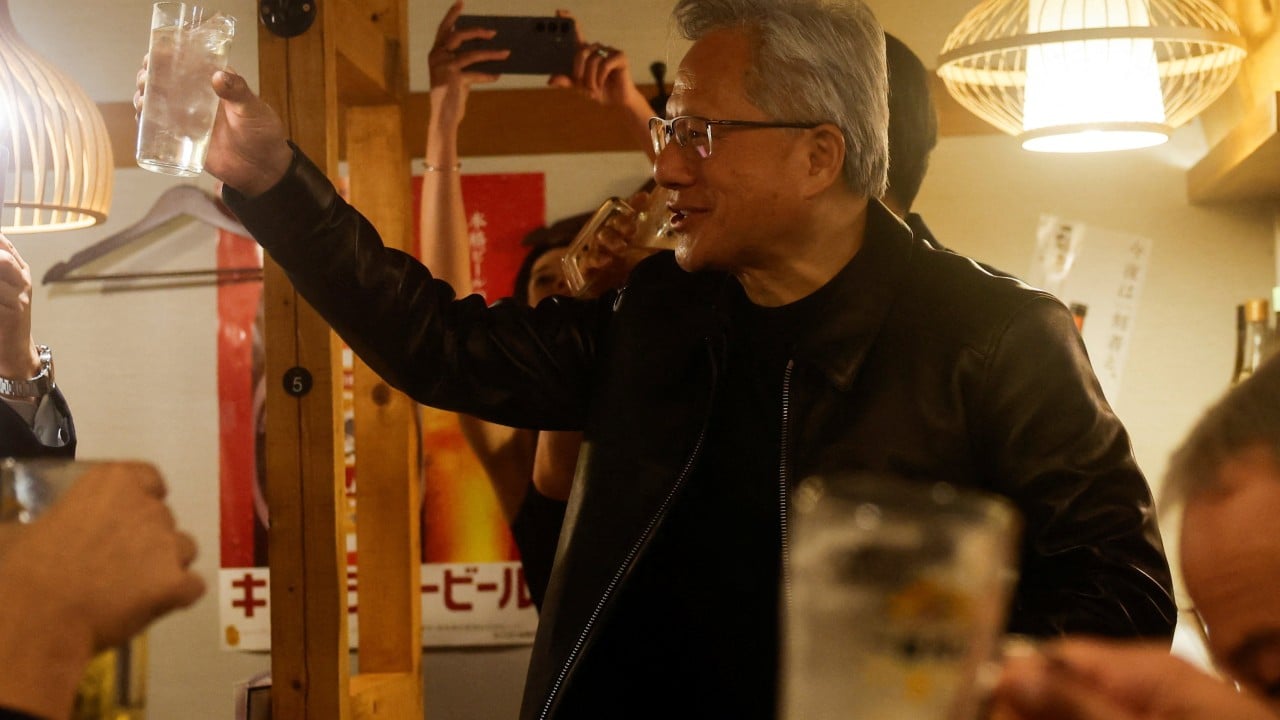
Huang’s recent trip to Tokyo wasn't just a routine corporate PR tour. It was a calculated, strategic lock-in of the entire physical AI supply chain. While the internet focused on a casual dinner photo of him eating pork skewers in a Tokyo back alley, the reality is that the casual dinner was a gathering of the gatekeepers of modern technology.
Without the quiet giants in that room, Nvidia’s high-performance AI chips would simply be expensive paperweights.
Why Silicon Valley Cannot Build Physical AI Without Japan
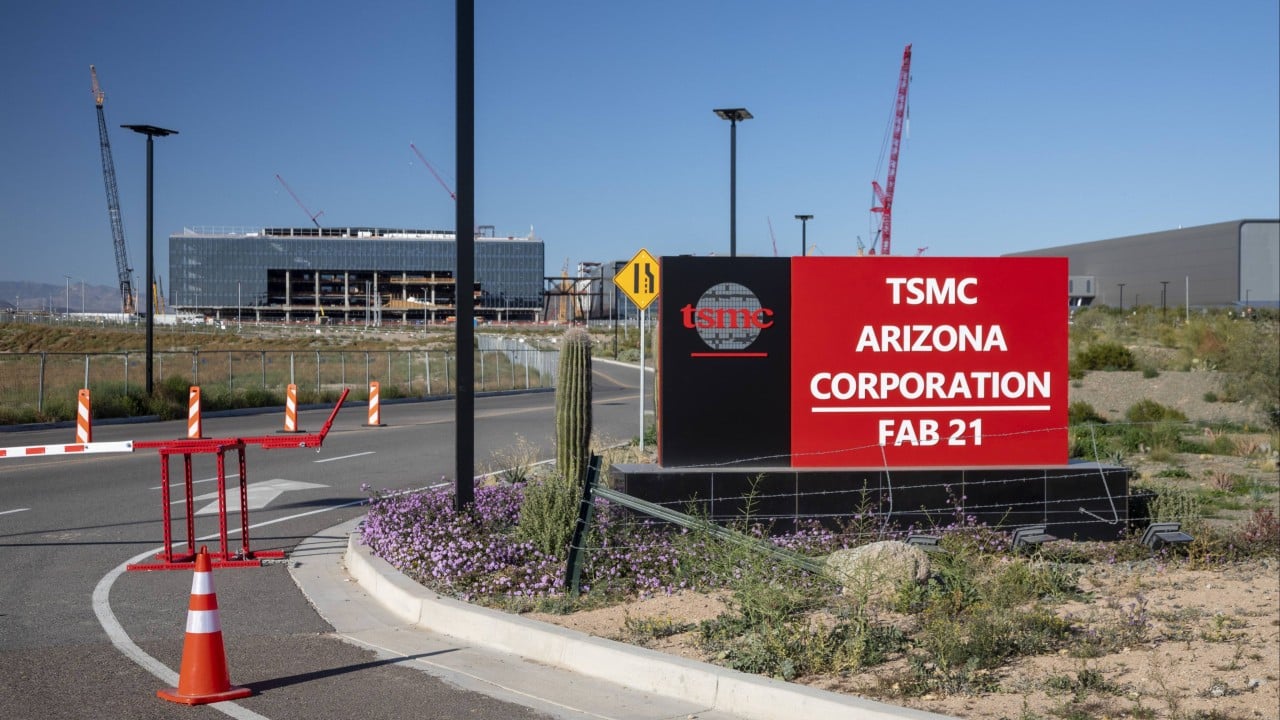
Most people think of Nvidia as a chip company. They think the company designs a graphics processing unit, TSMC manufactures it in Taiwan, and the story ends there. That is a massive oversimplification.
An AI supercomputer is an incredibly complex beast. It requires silicon wafers of absolute purity, specialized packaging films, ultra-fast memory, advanced fiber-optic cables, and highly precise capacitors. If even one of these components is delayed, the entire global AI buildout grinds to a halt.
Japan dominates these quiet, foundational layers of the tech stack.
Think about Ajinomoto. Yes, the MSG company. They also happen to make Ajinomoto Build-up Film (ABF). It is an insulating material that is absolutely critical for high-performance chip packaging. If Ajinomoto stops producing ABF, high-end chip production stops globally.
There are no quick alternatives.
Then look at Shin-Etsu Chemical, which leads the global market in advanced silicon wafers. Or Tokyo Electron, whose machinery is essential for etching the microscopic circuits onto those wafers.
Nvidia understands this bottleneck. While other tech companies focus on software frameworks, Nvidia is securing the physical supply chain. By aligning deeply with Japanese material science and manufacturing giants, they are ensuring that their next-generation architectures, like the Blackwell and upcoming Vera Rubin platforms, actually get built without supply disruptions.
Inside the Kanda Yakiton Summit
On the night of July 15, Huang skipped the high-end, Michelin-starred restaurants of Ginza. Instead, he slipped into a cozy, unassuming izakaya in Tokyo’s Kanda district. The area is famous for salarymen grabbing after-work drinks, grilled pork skewers (yakiton), and beer crates stacked on the sidewalk.
This was the "yakiton summit."
Crowds gathered outside the narrow lane with smartphones raised to catch a glimpse of the billionaire executive in his signature black leather jacket. Inside, the gathering was a masterclass in soft diplomacy and hard business.
[The Yakiton Summit Guest List]
• Shin-Etsu Chemical (Silicon Wafers)
• Tokyo Electron (Semiconductor Equipment)
• Kioxia Holdings (Flash Memory)
• Ajinomoto (ABF Insulating Film)
• Sumitomo Electric Industries (Fiber-Optic Cables)
• Taiyo Yuden (Advanced Capacitors)
• Panasonic (Consumer Electronics & Batteries)
Huang sat with the chiefs of these exact companies. He ate pork skewers, drank beer, and toasted to the future of hardware.
It was a brilliant move. In Japanese business culture, face-to-face trust (信頼 - shinrai) is everything. You don't seal deep, long-term supply commitments over Zoom calls or formal corporate boardrooms. You do it by showing up, showing respect, and sharing a meal in a local neighborhood pub.
By drinking beer with the executives of Shin-Etsu, Tokyo Electron, and Ajinomoto, Huang bypassed the usual corporate red tape. He made it clear that Nvidia views these component makers not as mere vendors, but as core partners in the AI revolution.
This isn't just about goodwill. It is about survival. As demand for AI hardware continues to soar, securing priority access to raw materials and manufacturing machinery is the difference between leading the market and falling behind.
The Cosmos Foundation Model and the Shift to Physical AI
Securing the hardware supply chain is only half the battle. You also need the software to run it.
During his Tokyo visit, Huang laid out Nvidia's software strategy for Japan, built around a core platform called Cosmos.
Traditional AI vs. Physical AI

Traditional AI (LLMs)
- Inputs: Text, images, code
- Output: Chat responses, generated media, software code
- Operating environment: Cloud data centers, digital applications

Physical AI (Cosmos/Isaac)
- Inputs: Real-time sensor data, 3D lidar, camera feeds
- Output: Physics-based motor control, autonomous spatial navigation
- Operating environment: Factory floors, public roads, warehouses
Cosmos is what Nvidia calls a "world foundation model."
Unlike large language models that are trained on text to predict the next word, a world foundation model is trained on physical laws, spatial data, and video feeds to predict how physical objects behave in the real world. It understands gravity, friction, momentum, and spatial geometry.
This is the software layer that robots, autonomous vehicles, and automated factories need to operate safely and efficiently without constant human intervention.
Japan is the perfect testing ground for this technology. The country has a massive manufacturing base, but it faces a severe, structural labor shortage due to an aging population and declining birth rates. Japan needs robots. Not as a novelty, but to keep its economy functioning.
Nvidia has partnered with Japanese industrial robotics giants Fanuc and Yaskawa Electric to integrate Cosmos and the Nvidia Isaac robotics platform directly into factory automation systems.
Fanuc is legendary in manufacturing. Their yellow robotic arms are the backbone of car assembly lines and electronics factories worldwide. Yaskawa is equally dominant in motion control and industrial drives.
Historically, programming an industrial robot was a tedious, rigid process. You had to write precise code telling the arm to move to exact coordinates. If a part was slightly out of place, the robot failed.
By integrating Nvidia's physical AI, these robots become adaptive. They can look at an disorganized bin of parts, figure out how to pick up an item regardless of its orientation, and adjust their grip in real-time based on weight and texture.
It makes industrial automation flexible, intelligent, and incredibly scalable.
Saving Nvidia From the Brink Thirty Years Ago
While this trip was heavily focused on the future of robotics and supply chains, it also featured an emotional, historically significant reunion in Akihabara.
Huang met on stage with Shoichiro Irimajiri, the former president of Sega.
To understand why this meeting matters, you have to go back thirty years. In the mid-1990s, Nvidia was a struggling startup. They had designed their first 3D graphics chip, the NV1, and it was a commercial failure. The company was running out of money and was on the absolute brink of bankruptcy.
Sega, then a titan of the gaming industry, stepped in. They hired Nvidia to build the graphics chip for their next-generation console, the Dreamcast, providing a crucial $7 million contract.
But Nvidia made a mistake. They designed the chip using a technical standard (quadratic texture mapping) that the rest of the industry, led by Microsoft’s Direct3D, was moving away from. Realizing their chip would be obsolete before it even launched, Huang had to go to Irimajiri and admit they couldn't fulfill the contract.
Instead of suing Nvidia or demanding the money back, Irimajiri made a legendary bet on Huang. He convinced Sega to let Nvidia keep the funding to pivot and develop a new chip. That pivot resulted in the NV3 (RIVA 128), which became a massive hit and saved the company.
"Without him, Nvidia would not exist today," Huang has noted in various reflections on the company's survival.
Seeing the two executives embrace on stage in Tokyo is a reminder that Nvidia’s deep ties to Japan are not just a recent commercial calculation. They are woven into the very origin story of the company. It explains why Nvidia is willing to invest so heavily in long-term relationships here when other Silicon Valley companies treat international suppliers as disposable links in a chain.
The Battle for Sovereign AI and What Happens Next
Nvidia's push into Japan goes far beyond individual corporate partnerships. It aligns directly with Japan's national security and economic strategy, specifically through the lens of sovereign AI.
Governments worldwide are realizing that relying entirely on foreign cloud providers for artificial intelligence is a massive geopolitical risk. Japan wants its own AI infrastructure, trained on its own data, reflecting its own cultural values and language.
This is where the Noetra project comes in.
Led by SoftBank and involving 44 Japanese companies—including Honda, NEC, and major research institutions—Noetra is a national consortium backed by over $6 billion in government subsidies. Its goal is to develop national-scale AI models optimized for Japanese industries.
Nvidia is positioning itself as the primary infrastructure provider for this initiative. They are supplying the high-end computing clusters needed to train these sovereign models, ensuring that Japan’s public and private sectors run on Nvidia architecture.
They are also partnering with Toyota to apply these models to autonomous driving, virtual factory simulation, and smart city infrastructure.
By embedding themselves into both the physical manufacturing sector (Toyota, Fanuc, Yaskawa) and the sovereign digital infrastructure (SoftBank, Noetra), Nvidia is building a moat that is almost impossible for competitors like AMD or Intel to breach.
Actionable Steps for Industry Observers and Investors
If you are trying to understand where the AI market is heading next, stop staring at LLM benchmarks and start looking at the physical integration layer. Here is what you should do next to stay ahead of this shift:
- Watch the component suppliers, not just the chip designers. Keep a close eye on the financial health and production capacity of companies like Shin-Etsu Chemical, Tokyo Electron, and Ajinomoto. Their performance is a leading indicator of global tech production capacity.
- Follow the industrial robotics integration. Watch how quickly Fanuc and Yaskawa adopt the Cosmos and Isaac platforms. If these integrations succeed, it will trigger a massive wave of factory automation upgrades across the globe, driving down manufacturing costs and shifting supply chain dynamics.
- Monitor sovereign AI spending. Pay attention to how government subsidies in regions like Japan, Europe, and the Middle East are distributed. The companies that win the contracts to build these localized, sovereign data centers will see sustained, long-term infrastructure revenue that is largely insulated from commercial market cycles.