Norway has a transport problem that most countries can barely comprehend. The rugged west coast is a stunning maze of deep fjords, towering mountains, and isolated islands. If you want to drive the 1,100-kilometer stretch of the E39 highway from Kristiansand to Trondheim, you have to brace yourself. It takes a grueling 21 hours. You have to time your drive around seven different ferry crossings. Missing one can ruin your entire day.
To solve this, the country is executing one of the most daring engineering projects ever attempted. It is called the Rogfast tunnel.
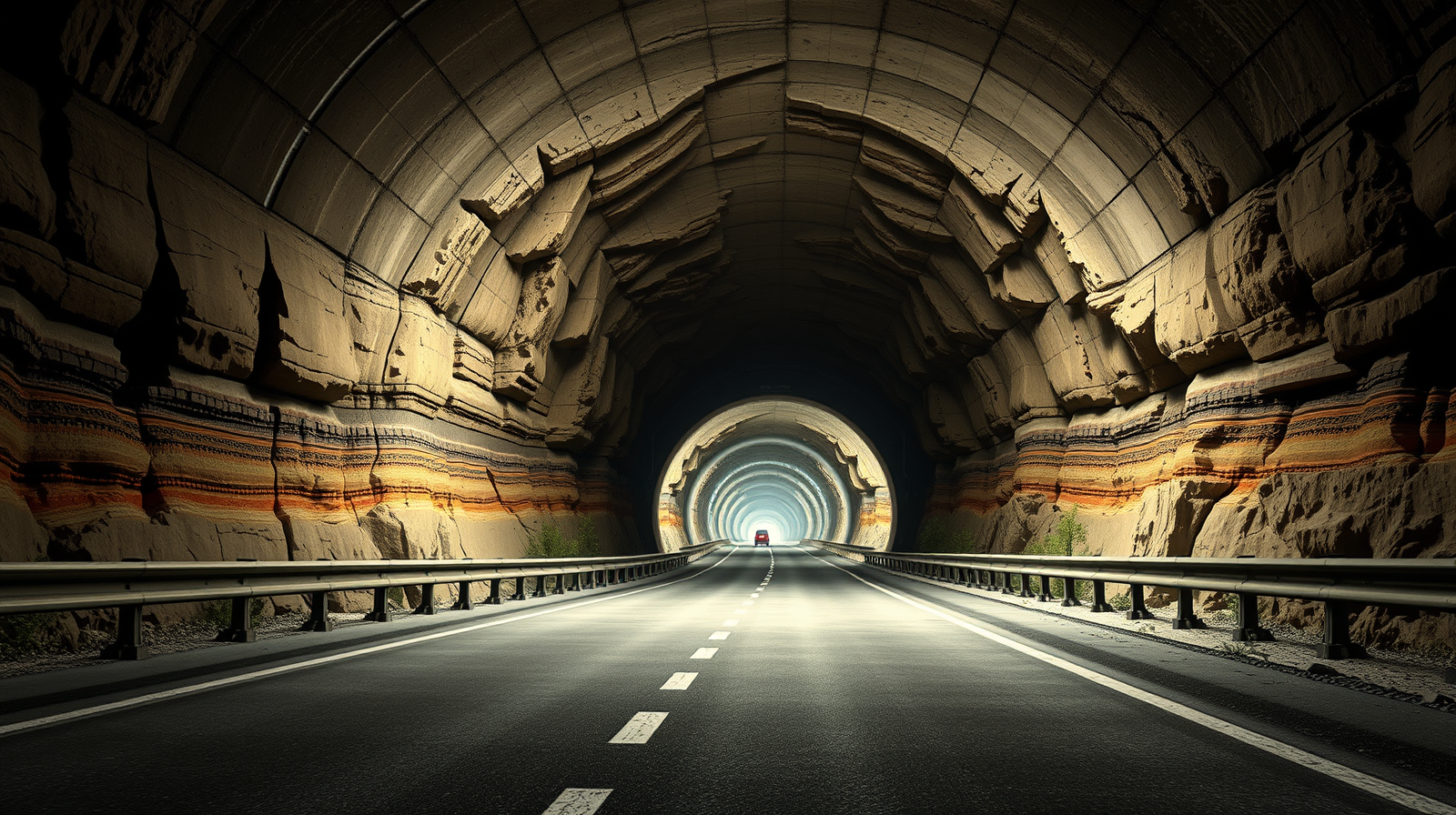
This is not just another tunnel. When it opens, it will be the longest and deepest subsea road tunnel on earth, stretching 27 kilometers and diving to an astonishing 392 meters below the ocean surface.
Most people look at the record-breaking numbers and think of the prestige. Engineers look at those numbers and think of a nightmare. They are currently drilling through active fault zones and fractured rock that is constantly trying to let the Atlantic Ocean leak in.
The Vision Behind the Boldest Highway Project on Earth
To understand why Norway is spending 25 billion Norwegian kroner (roughly $2.4 billion) on a single tunnel, you have to look at the economic reality of the region. The west coast is the powerhouse of the country. It is home to dominant fishing, oil, and gas industries. Heavy trucks carry billions of dollars in goods along this route every year.
Yet, those trucks are entirely at the mercy of ferry schedules, winter storms, and rough seas.
The Rogfast project is the first major step in a broader, decades-long plan to make the entire E39 highway completely ferry-free by 2050. By bypassing the Boknafjord with a continuous four-lane underwater road, the project will immediately slash 40 minutes off the travel time between the major cities of Stavanger and Bergen.
It sounds simple on paper. Just build a road under the water. In practice, it means going deep into territory where humans were never meant to operate.
Why Norway Rejects Prefabricated Tubes
When other countries build massive underwater crossings, they often use a method called immersed tube tunneling. You can see this in Denmark's Fehmarn Belt tunnel. Crews dredge a massive trench along the seabed, float prefabricated concrete tunnel sections out on barges, sink them into place, and connect them like giant Lego bricks.
Norway cannot do this.
The Boknafjord is far too deep and wide for prefabricated sections. The seabed is uneven, scarred by ancient glaciers, and exposed to the full, violent force of the North Sea.
Instead, Norwegian engineers are doing what they do best. They are drilling and blasting directly through the solid bedrock beneath the seafloor.
This is a slow, violent, and highly demanding process. It requires decades of specialized underground expertise. Norway has plenty of that. They have built thousands of tunnels over the last century, but even their most seasoned geologists are finding Rogfast to be a massive test of their abilities.
The Nightmarish Geology of the Boknafjord
The rock deep beneath the Boknafjord is not a uniform, solid block of granite. It is a chaotic mess.
Millions of years of tectonic activity have crushed, folded, and fractured the earth along the Norwegian coast. The tunnel alignment has to cut through several entirely different geological formations.
At the southern end, crews are working through dense phyllite. This rock is relatively easy to deal with because it is predictable and predictable rock is a driller's best friend.
But as the drills push deeper toward the middle of the fjord, they hit massive fault zones. Here, the rock has been ground down into weak, unstable gravel and clay by ancient tectonic shifts.
If you blast into a zone like this without preparation, the immense pressure of the rock and water above can cause a catastrophic collapse. The tunnel roof could simply cave in, bringing the ocean down with it.
To prevent this, the Norwegian Public Roads Administration requires a strict safety margin. There must always be at least 50 meters of solid bedrock between the top of the tunnel and the actual seabed.
But 50 meters of rock does not stop water from finding a way through.
Blocking High Pressure Seawater with Liquid Cement
Imagine working nearly 300 meters below the ocean, looking at a wall of dark rock, and watching saltwater start to spray out of tiny cracks. This is a regular occurrence for the crews working on the project.
The hydrostatic pressure at these depths is immense. Water is constantly seeking any path of least resistance to fill the empty void of the tunnel.
To fight this, engineers do not wait for a leak to happen. They use a technique called high-pressure pre-grouting.
Before they blast a single meter of new tunnel, they drill long, thin probe holes ahead of the excavation face. If these probe holes hit water, they know they are entering a wet zone.
They then pump a specialized, rapid-hardening chemical cement mixture into the holes at incredibly high pressure. This grout is forced deep into the microscopic cracks and fissures of the surrounding rock, sealing them from the inside out.
Only after the grout has cured and formed an impermeable umbrella of reinforced rock around the future tunnel do the crews bring in the heavy drilling rigs to blast the next section.
It is a tedious, repetitive dance. Drill, test, grout, wait, blast, repeat. If they rush, they risk flooding the entire system.
An Underground Roundabout 250 Meters Down
If the sheer depth of the project is not enough to make your head spin, consider the junction beneath the island of Kvitsøy.
Kvitsøy is a tiny, picturesque island community situated right in the middle of the fjord. The residents there wanted to be connected to the new highway system.
To make this happen, engineers are building a massive, complex underground interchange directly beneath the island.
It will feature the world's deepest road junction, including a full-scale underground roundabout located roughly 250 meters below sea level.
Think about that for a second. You will be driving deep under the ocean, and instead of just heading straight through, you will navigate a glowing, multi-lane roundabout blasted out of raw bedrock to take an exit ramp that climbs up to a tiny island.
Building this junction is an incredible geometrical challenge. Crews are carving out massive rock caverns, steep exit ramps, and vertical ventilation shafts to ensure the air remains breathable and the system stays dry.
The Hard Lessons of Cost Overruns and Delays
Projects of this scale rarely go perfectly. Rogfast is no exception.
Construction originally kicked off in 2018, but the project ground to a sudden halt in late 2019.
The early bidding processes for the complex Kvitsøy sections came in staggeringly higher than the government had anticipated. One bid was a full billion kroner over budget. Realizing they had severely underestimated the geological risks and materials costs, the Norwegian government halted the project to conduct a complete financial restructure.
They did not give up. They restructured the contracts, split the work into more manageable packages, and increased the total budget to 24.8 billion kroner.
Work officially resumed in late 2021. Major contracts were handed out to heavyweights like Skanska and Implenia to tackle the northern, southern, and central sections of the massive route.
The new target opening date is set for 2033. It is a long wait, but for a tunnel built to last over a century, a few years of delay is just a blip on the timeline.
Why This Project Matters Beyond Norway
The innovations being developed deep under the Boknafjord are being watched closely by civil engineers worldwide.
Managing immense water pressure, navigating unpredictable tectonic fault lines, and successfully grouting unstable bedrock at these depths are problems that will become more common as cities and countries look to go deeper underground.
The next time you complain about a detour or a delayed ferry, think of the crews working in the dark, 392 meters below the freezing waters of a Norwegian fjord, holding back the ocean with nothing but cement, steel, and pure engineering grit.
If you want to keep an eye on how these massive subsea projects are changing global travel, your next step is to follow the progress of the Fehmarn Belt fixed link in Denmark, which is taking a completely different, prefabricated approach to conquering the sea. Comparing how these two European titans finish their respective mega-projects over the next decade will show us which engineering style truly rules the deep.