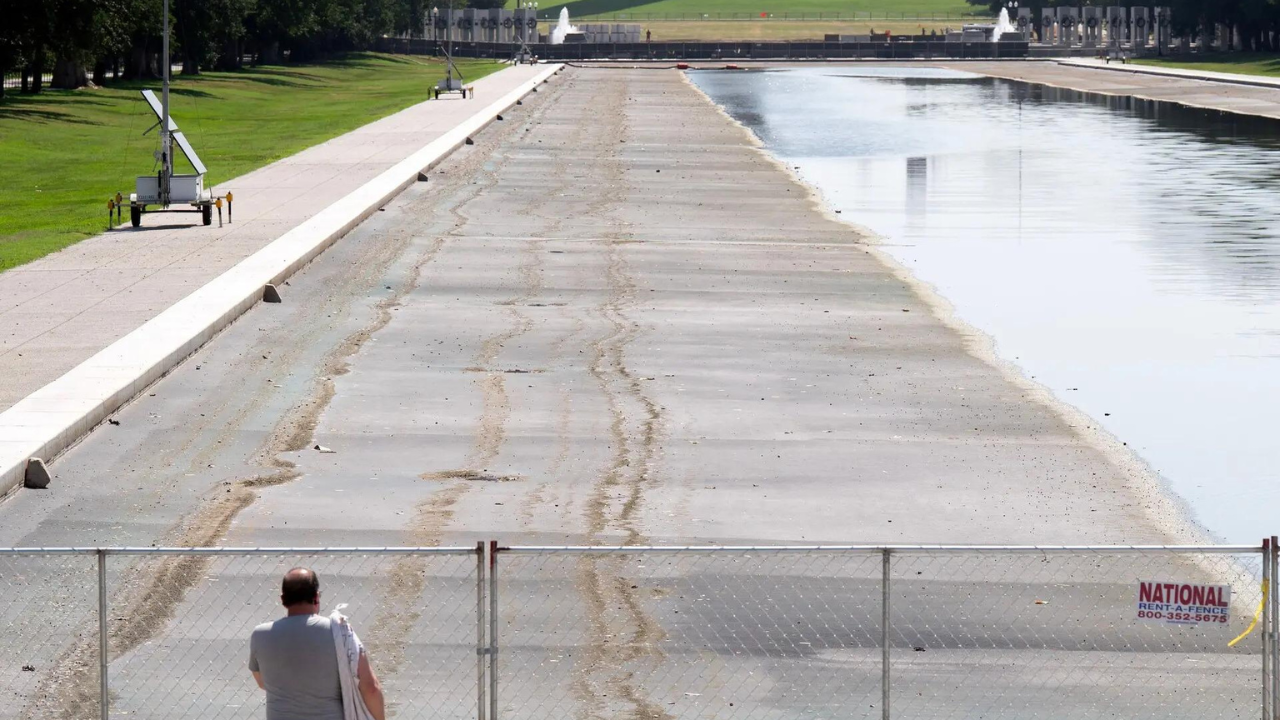
You stand at the base of the Lincoln Memorial, expecting that iconic, glass-like sheet of water reflecting the sky and the Washington Monument. Instead, you get a massive, dry concrete ditch baking in the summer sun. It is muddy. It smells slightly like old river muck.
This is the reality right now in Washington, D.C. Just weeks after a heavily publicized $14 million renovation project promised to make the landmark more beautiful than ever, crews had to pull the plug and empty the entire basin.
The media loves a quick headline about government waste. They focus entirely on the eye-popping price tag or the dramatic political finger-pointing. But if you want to understand why this keeps happening, you have to look past the political theater. The real story behind the drained reflecting pool is a messy mix of basic biology, rushed engineering choices, and a failure to understand how large bodies of urban water actually function.
The Illusion of American Flag Blue
The trouble started with a cosmetic choice. The administration decided the concrete bottom of the Lincoln Memorial Reflecting Pool needed a complete overhaul before the nation's big summer celebrations. The goal was to coat the floor in a deep, rich shade dubbed "American flag blue". On day one, it looked striking. The water appeared deep, crisp, and clean.
But physics does not care about aesthetics.
The reflecting pool is exceptionally shallow. It is an open-air basin exposed to intense, direct sunlight all day long. When you paint the bottom of a shallow basin a very dark blue—bordering on black—you create a giant solar heater. Dark colors absorb heat rapidly. Within days of refilling the pool, the water temperature spiked.
When you combine warm, stagnant water with bright sunlight, you create a perfect incubator. The pool did not stay blue for long. It turned a thick, soup-like green almost immediately.
New Pond Syndrome and the Potomac Problem
Where did the green come from so quickly? The answer lies in where the water comes from and how it sits. The reflecting pool relies heavily on water pumped in from the nearby Potomac River. River water is alive. It is full of microscopic organisms, organic debris, and algae spores.
When you pump that untreated, nutrient-rich river water into a brand-new, freshly painted basin, you trigger a biological phenomenon known to pool professionals as "new pond syndrome".
[ Potomac River Water ] ---> [ Contains Algae Spores & Nutrients ]
                                       |
                                       v
[ Shallow Dark Blue Basin ] ---> [ Absorbs Intense Solar Heat ]
                                       |
                                       v
                     [ RESULT: Explosive Algae Bloom ]
The ecosystem undergoes an explosive bloom because there are no established balancing organisms to check the algae growth. The water filtration system currently in place simply could not keep up with the sheer volume of organic material blooming under the summer sun.
To fight the green sludge, workers tried everything. They deployed advanced nanobubbler systems designed to pump microscopic oxygen bubbles into the water to break down the organic matter. They waded into the shallows with industrial vacuums. They even dumped massive quantities of hydrogen peroxide directly into the pool to bleach the algae out of existence.
None of it worked for long. The chemical treatments were too diluted to handle a biological bloom of that scale. The administration claimed the water was crystal clear, but anyone standing on the National Mall could see the murky green truth.
Sabotage Versus Shoddy Workmanship
As the green water grew more embarrassing, the official narrative shifted from technical hiccups to deliberate sabotage. The public was told that vandals had targeted the project, using blades to slash a massive gash through the pool's expensive new waterproof liner.
The rhetoric escalated quickly. Officials claimed that bad actors had poured destructive, corrosive chemicals into the water to intentionally ruin the refurbishment. A few people were even arrested and charged with misdemeanors for removing pieces of material from the pool, including an ex-Olympic canoe racer who maintained he was simply inspecting the peeling sealant out of curiosity.
But independent observers and engineering critics tell a completely different story.
When you look closely at the edges of the pool, the blue protective coating isn't just cut; it is peeling up in giant, flapping sheets. This points to a classic structural failure: improper curing or bad bonding between the sealant and the concrete substrate. If you apply a waterproof coating to a concrete floor that hasn't been prepped perfectly, or if you fill the pool with water before the chemicals fully cure, the water will find its way underneath. Once the water gets under the liner, hydrostatic pressure lifts the paint right off the ground.
Blaming vandals makes for a convenient political shield, but it doesn't change the engineering reality. The liner failed because the project was rushed to meet a strict summer deadline.
Moving Beyond Quick Cosmetic Fixes
You can't fix a deep infrastructure problem with a fresh coat of paint, no matter how much that coat of paint costs. The Lincoln Memorial Reflecting Pool has suffered from filtration issues for decades. A major renovation back in 2012 attempted to fix things by installing an ozone supply system, but urban water bodies face constant pressure from stagnant conditions, high tourist traffic, and local wildlife.
If Washington wants a pool that actually reflects the sky instead of growing slime, the city needs to take specific, practical steps.
First, stop choosing paint colors based on political messaging. The basin floor needs a light, heat-reflective color that keeps water temperatures low. Lower temperatures naturally slow down the reproduction cycle of green algae.
Second, the water intake pipeline needs a serious modernization upgrade. Pumping raw, unfiltered Potomac River water straight into a stagnant sun-baked box is design suicide. The water needs to go through a rigorous, multi-stage mechanical and UV filtration process before it ever touches the visible pool basin.
Right now, the plan is simply to clean up the current mess, patch the peeling sections, and fill it right back up using the same contractors. Expect the exact same green results by the end of the month.