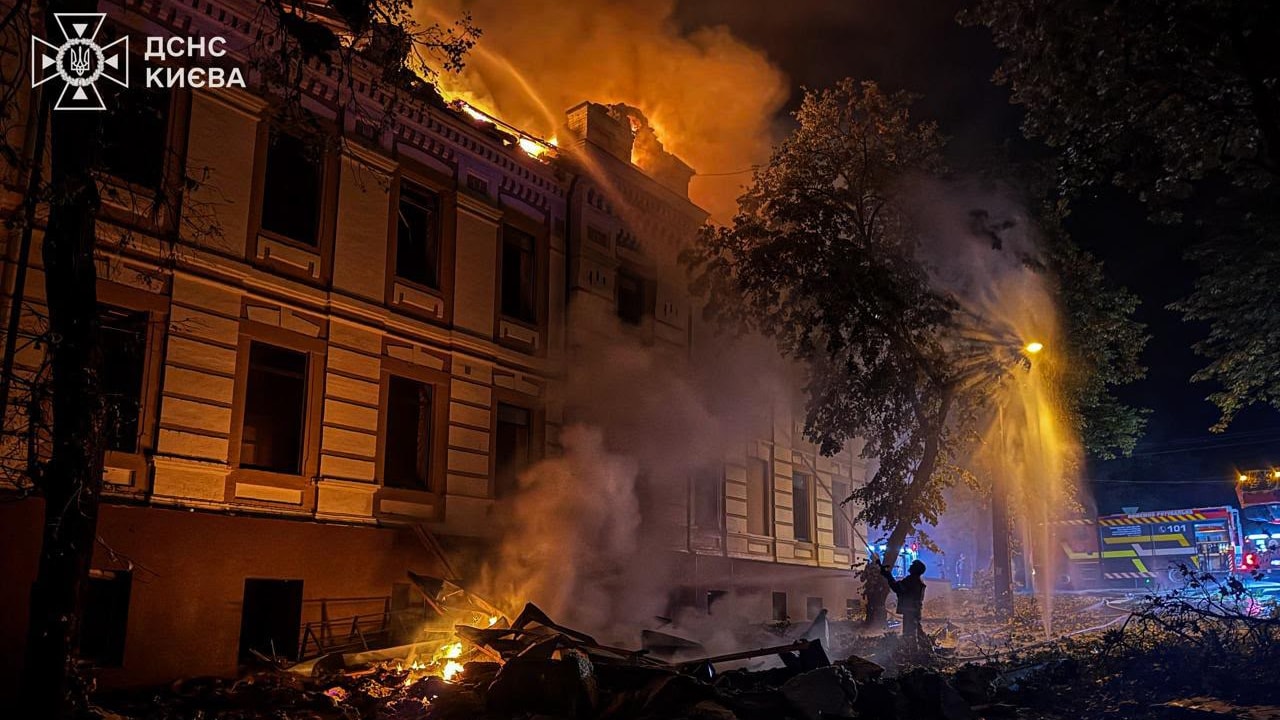
Kyiv just faced one of its most terrifying nights in recent memory. Overnight on July 19, 2026, a massive wave of Russian ballistic and hypersonic missiles hammered the Ukrainian capital, leaving one person dead and at least 16 others injured. Sirens began wailing around 1:30 a.m. local time, kicking off an intense hour of consecutive explosions that shook the foundations of residential districts across the city.
This was not just another routine aerial attack. It marks a dangerous shift in Moscow’s strategy, specifically designed to exploit Ukraine's shrinking stockpiles of air defense interceptors. If you think the air war over Ukraine has reached a stalemate, this latest strike proves otherwise.
The Reality of the July 19 Attack on the Capital
The sheer volume of advanced weaponry used in this raid shows a deliberate effort to overwhelm local defenses. According to local monitoring channels and military updates, the assault involved roughly 41 missiles of various types alongside more than 120 attack drones. What makes this specific barrage highly alarming is the heavy reliance on ballistic missiles, including reports of at least eight Zircon hypersonic missiles directed at the heart of the city.
The physical destruction spread across several major districts. In the Solomyanskyi district, a missile strike ignited a massive fire on the roof of a local supermarket and heavily damaged a nearby residential building. Emergency crews had to rescue residents from a burning five-story apartment complex. Over in the Dniprovskyi district, falling debris sparked a fire in a crowded dormitory. Meanwhile, the Lukyanivska metro station, a vital transit hub, had to close its above-ground entrance due to severe blast damage.
For the people living in Kyiv, the statistics translate to pure terror. Residents described doors being blown off hinges and windows shattering instantly as multiple explosions detonated within minutes of each other. The State Emergency Service scrambled teams to clear debris and pull survivors from collapsed structures well into Sunday morning.
The Math Behind Broken Air Defenses
Ukraine’s Air Force reported that it successfully intercepted 18 of the incoming missiles and 108 of the drones. While downing over a hundred targets sounds impressive, the numbers reveal a stark vulnerability. More than half of the missiles got through.
Stopping a slow-moving Shahed drone is a relatively straightforward task for mobile air defense teams. Intercepting a ballistic missile or a Zircon hypersonic weapon is an entirely different story. These weapons travel at extreme speeds and follow steep trajectories, leaving only a tiny window for interception. They require specialized systems like the American-made Patriot or the European SAMP/T to knock them down.
President Volodymyr Zelenskyy immediately pointed out the core issue following the attack. Ukraine is running on empty when it comes to anti-ballistic missiles. Western allies have supplied a handful of advanced batteries, but the supply of interceptor missiles has failed to keep pace with Russia's manufacturing output. When a single barrage demands dozens of multi-million-dollar interceptors, the math quickly turns against the defender. You cannot protect a major European capital when you are forced to ration your best ammunition.
Military Targets vs Civilian Reality
Moscow quickly issued a statement through its Defense Ministry confirming the massive strike. Russian officials claimed the operation successfully targeted key military-industrial facilities, electronics companies, and logistics hubs. They specifically named defense manufacturers like Radioniks and Spetsoboronmash, alleging these sites produce components for Ukrainian drones and electronic warfare systems.
The scene on the ground tells a far more complicated story. Even if military facilities were the primary objective, using inaccurate ballistic weapons or relying on falling debris to do the rest ensures civilian areas pay the price. A supermarket roof, a civilian dormitory, and an underground pedestrian passage have nothing to do with missile production.
This reveals a cold truth about the current phase of the war. Russia is fully aware that every missile fired forces Ukraine to make an impossible choice. Do they protect critical infrastructure, front-line military concentrations, or civilian population centers? By targeting Kyiv with a dense mix of drones and high-speed missiles, Moscow forces the expenditure of rare air defense assets right where civilian casualties are guaranteed to spike if an interception fails.
What This Means for Western Interceptors Moving Forward
The long-term solution cannot rely on emergency shipments of a dozen missiles at a time. Zelenskyy noted that political agreements exist to begin producing Patriot interceptors directly inside Ukraine, but that production will not start until late this year at the absolute earliest. Until then, Kyiv relies entirely on Western political will.
Western partners need to drastically scale up their own manufacturing timelines. The current strategy of transferring existing stockpiles from NATO warehouses is hitting a hard ceiling. Countries like Germany, the United States, and the Netherlands have pledged more systems, but the delivery schedules remain agonizingly slow while civilian infrastructure burns.
If international backers want to prevent Kyiv from becoming completely defenseless against ballistic strikes, they have to treat interceptor production with the urgency of a wartime economy. The alternative is watching a major metropolis slowly get ground down by relentless, high-velocity bombardments.
Immediate next steps require immediate action. Western allies must fast-track the transfer of remaining promised air defense batteries before the winter freeze sets in. Ukraine must continue shifting its domestic defense footprint underground or out of major urban centers to minimize the fallout from these high-impact strikes. Air defense is no longer a luxury asset. It is the single most vital variable dictating whether Ukraine's capital can continue to function.