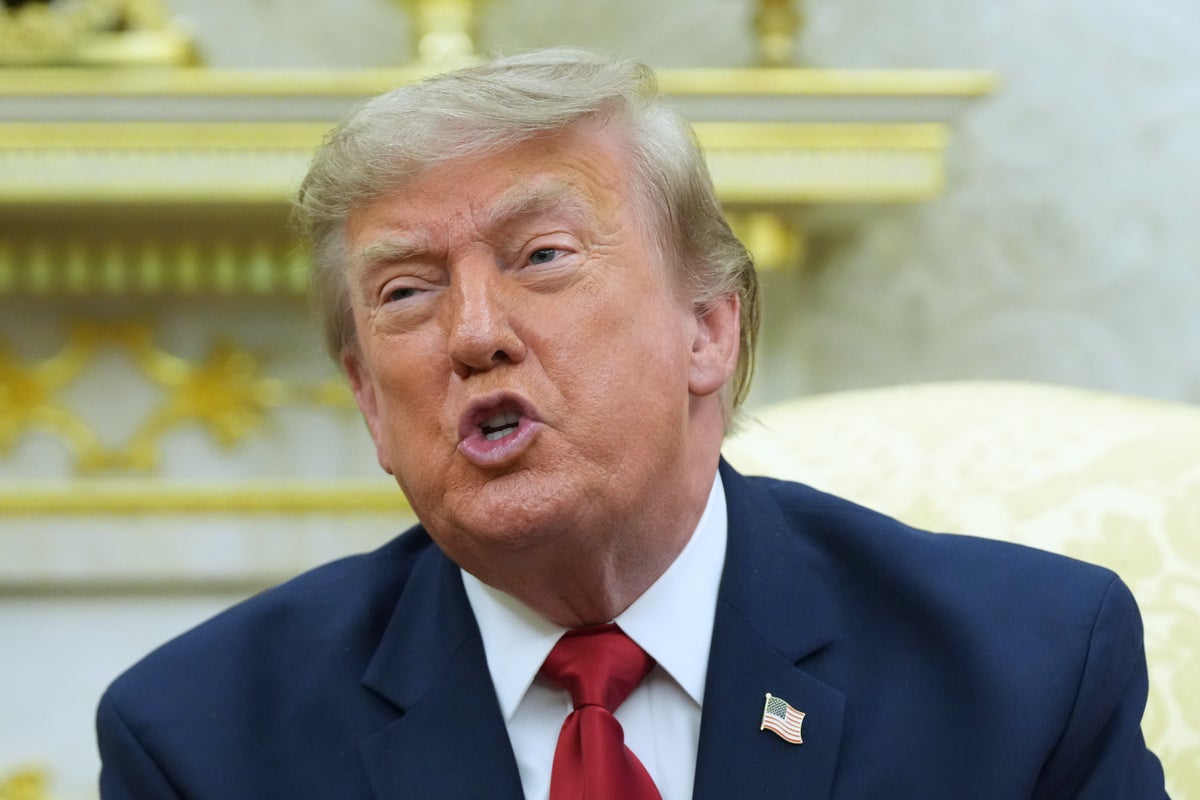
The white-hot debate over immigration enforcement just took its most whiplash-inducing turn yet. On a Tuesday, the Department of Homeland Security quietly ordered federal agents to halt most ICE traffic stops. The temporary ban followed a series of deadly officer-involved shootings during vehicle pull-overs. But the pause did not even last a full day. By Wednesday morning, President Donald Trump fired off a social media post asserting that "we CANNOT give up one of ICE's most important and effective Crime Fighting tools, THE TRAFFIC STOP!".
Just like that, the White House confirmed the suspension was dead on arrival. You might also find this related article useful: Why Trump Just Blocked His Own Administration From Stopping Ice Traffic Stops.
This sudden reversal reveals a deep, messy fracture at the highest levels of American border policy. On one side, you have Department of Homeland Security Secretary Markwayne Mullin and career law enforcement officials trying to manage severe public relations and safety crises. On the other, you have a president determined to maintain an uncompromising, hardline image, regardless of the tactical risks or local blowback.
The fallout from this 24-hour policy flip-flop is still settling. It leaves local communities, immigrant rights groups, and even ICE agents themselves in a highly volatile position. As highlighted in detailed coverage by Associated Press, the implications are worth noting.
The Chaos Behind the Twenty Four Hour Turnaround
To understand how we got here, look at the timeline.
Internal memos obtained from Immigration and Customs Enforcement showed that officers under Enforcement and Removal Operations were told to immediately suspend vehicle stops. The directive allowed very few exceptions, such as executing a criminal warrant on a specific high-profile target inside a car.
Border Czar Tom Homan took to television to spin the move as a standard tactical pause. He insisted the agency simply wanted to look at the recent fatal encounters and see if officers needed better training.
But the political optics were terrible for an administration built on the promise of mass deportations. Trump viewed the pause as a sign of weakness. He immediately signaled his opposition online, arguing that pausing these stops played directly into the hands of criminals.
Within hours of his post, Secretary Mullin fell back into alignment, stating that undocumented immigrants would be arrested and deported wherever they are found. The temporary pause was effectively dismantled before most field offices could even implement it.
This is not just standard bureaucratic bickering. It is a fundamental disagreement on how federal power should be projected on American streets.
The Fatal Encounters That Triggered the Panic
DHS did not just decide to pause ICE traffic stops out of nowhere. The decision came after three people died during encounters with federal immigration officers in the span of a single week.
In Biddeford, Maine, ICE officers shot and killed Johan Sebastián Durán Guerrero, a 26-year-old Colombian national. Officers were watching a home where they believed an undocumented individual with a final removal order lived. When Durán Guerrero drove away from the residence, officers tried to block his car. According to federal officials, the driver tried to flee, prompting an officer to open fire in what they claimed was fear for public safety.
Photos of the aftermath showed bullet holes riddling the windshield. The problem is, the officers involved were not wearing body cameras. This lack of visual evidence has left local authorities and community members highly skeptical of the official narrative.
Just six days before the Maine shooting, a similar incident occurred in Houston, Texas. Officers shot and killed Lorenzo Salgado Araujo after initiating a traffic stop. Federal reports allege Salgado Araujo ignored verbal commands and tried to ram an officer with his vehicle.
The third tragedy happened in Florida. A 28-year-old man fled from immigration and other federal officers on foot and was struck and killed by a passing tractor-trailer.
Three lives were ended in rapid succession, all connected to active federal sweeps. It is easy to see why DHS leadership felt they had to hit the brakes, if only to prevent a complete public relations collapse.
Why Pulling Over Cars Is Such a Tactical Nightmare
Policing experts have warned for decades about the extreme dangers of shooting into moving vehicles. Most municipal police departments explicitly ban or heavily restrict officers from firing at moving cars unless someone inside is actively using deadly force other than the vehicle itself.
A car is a multi-ton weapon. If you shoot the driver, you now have an unguided, fast-moving projectile hurtling down a public street.
John Sandweg, a former acting director of ICE, noted that there have been roughly 18 traffic stop shootings during the current immigration crackdown. This trend has alarmed local law enforcement partners who often have to clean up the physical and political mess left behind.
Civilian traffic stops are inherently unpredictable. When a local police officer pulls a car over, they usually have clear, visible markings on their cruiser and uniform. ICE agents often operate in unmarked vehicles and wear tactical vests that do not clearly identify them to a panicked driver from a distance.
If a driver does not realize they are being stopped by actual law enforcement, their natural instinct might be to flee. When they do, agents sometimes interpret that flight as a physical threat, drawing their weapons and firing. It is a recipe for disaster.
The Boiling Political Tension
The political fallout from the canceled suspension has been swift and fierce.
In Maine, the shooting of Durán Guerrero sparked immediate outrage. Protesters gathered outside a federal detention center, demanding an end to what they called unchecked federal terror on their streets. Even Republican U.S. Senator Susan Collins of Maine got involved, revealing that she had personally pressured Secretary Mullin to halt all non-urgent vehicle stops.
When the White House overrode that very pause, it put local politicians in an incredibly difficult spot.
Maine Senator Angus King, an independent, openly questioned the credibility of federal investigations into these shootings. He publicly stated that the people of his state would not accept an investigation run strictly by the feds. Meanwhile, some local Democrats went as far as to say ICE should be completely abolished if it cannot control its officers.
This situation highlights a massive disconnect. The White House wants to project total, unyielding strength on border security. Local officials, including some Republicans, are left dealing with the reality of dead residents, bullet-riddled cars in their neighborhoods, and a growing distrust of any law enforcement officer in a tactical vest.
What You Should Do If Faced With a Federal Vehicle Stop
With the White House officially greenlighting the return to aggressive traffic stops, immigrants and advocates must prepare for what comes next. ICE is not going to slow down.
If you find yourself or a loved one in a situation where federal immigration officers are attempting to pull over your vehicle, knowing your rights is crucial for your safety.
- Pull over safely and immediately. Never attempt to flee or maneuver your car in a way that could be interpreted as trying to hit an officer. As we have seen in Texas and Maine, agents are quick to use deadly force if they claim they feel threatened by a moving car.
- Keep your hands visible. Place both hands on the steering wheel where the officers can see them clearly. Do not make sudden reaches for the glove compartment or your pockets.
- Show required state driving documents. You are generally required to show a valid driver's license, registration, and proof of insurance to any officer who pulls you over.
- Remember your right to remain silent. You do not have to answer questions about your immigration status, where you were born, or how you entered the country. You can tell the officer, "I am choosing to remain silent."
- Do not present false documents. Handing over fake papers or lying about your identity is a federal crime and can severely damage any future legal immigration cases.
- Ask if you are free to go. If the officer does not write you a ticket or arrest you, ask, "Am I free to go?" If the answer is yes, drive away calmly.
The reversal of the traffic stop ban proves that the federal government is prioritizing numbers and optics over tactical caution. By staying informed, remaining calm, and knowing how to navigate these high-stress encounters, you can protect your rights and, most importantly, your life.