You can always count on football to turn a geopolitical simmer into a full-blown diplomatic firestorm.
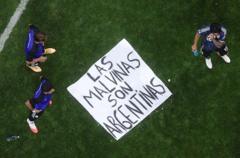
Right after Argentina broke English hearts with a late 2-1 comeback win in the World Cup semifinal in Atlanta, the pitch transformed from a sporting arena into a political soapbox. Tottenham defender Cristian Romero and midfielder Giovani Lo Celso stood grinning before thousands of fans, holding a banner thrown from the stands. It read: "Las Malvinas son Argentinas"—The Malvinas are Argentine. You might also find this related story insightful: What Most People Get Wrong About Andy Burnham's New Labour Government.
Downing Street exploded. Prime Minister Keir Starmer immediately backed calls for FIFA to investigate, with UK Business Secretary Peter Kyle slamming the stunt as "entirely inappropriate."
Then the White House entered the chat. As discussed in recent reports by The Washington Post, the implications are notable.
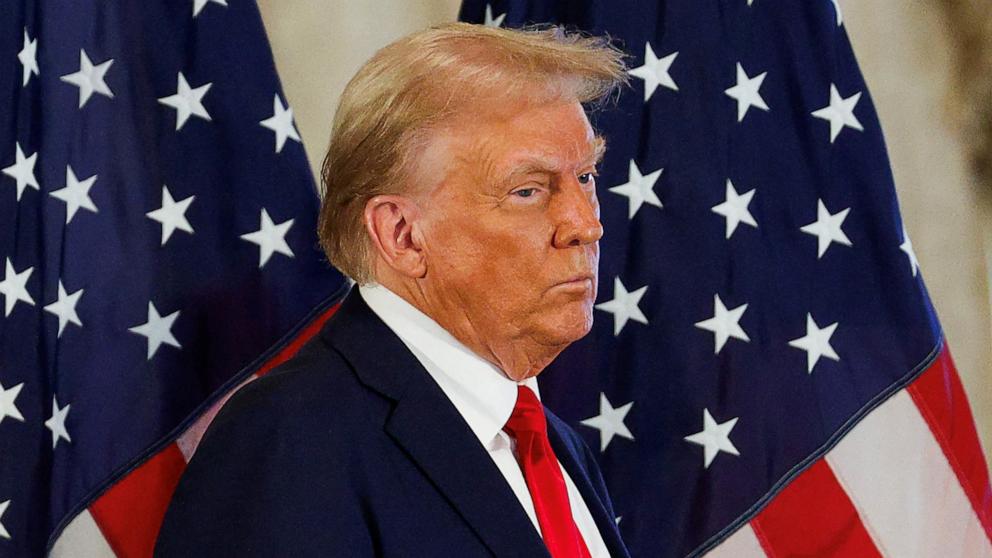
Instead of backing its historic ally across the Atlantic, Donald Trump's administration did something unexpected. It defended the Argentine players. Andrew Giuliani, Trump’s World Cup chief, quickly shut down British demands to ban the players from Sunday's blockbuster final against Spain at the MetLife Stadium. His reasoning? The players were simply exercising their First Amendment right to freedom of expression.
It is a wild take that has completely blind-sided the UK government.
The First Amendment doesn't run FIFA
Let's look at what the White House is getting wrong here. Citing the US Constitution to defend international football players inside a stadium is brilliant political theater, but it makes zero sense under sports law.
FIFA isn't a US government agency. It's a private, Swiss-based governing body with its own strict disciplinary code. Its stadium rules explicitly bar any materials, banners, flags, or apparel that are of a political, offensive, or ideological nature. The rules don't care about American constitutional protections.
If you bring politics onto the pitch, you get hammered. FIFA has a long history of policing this fiercely. Take a look at past precedents:
- Argentina (2014): The country's FA was fined £20,000 when players displayed the exact same Malvinas banner before a friendly against Slovenia.
- Park Jong-woo (2012): The South Korean player was hit with a two-match ban after holding up a sign claiming a disputed territory against Japan during the London Olympics.
Argentine President Javier Milei openly admitted he expects FIFA to issue a fine, calling the players' actions "perfectly valid" but acknowledging the financial reality of the rules. Meanwhile, his Vice President, Victoria Villarruel, doubled down on social media, writing that the islands are carried "in our blood and in our hearts."
Why this hit a British nerve
To understand the fury coming out of London, you have to look at the raw history. The Falklands War in 1982 lasted 10 weeks and cost the lives of 649 Argentine troops, 255 British service personnel, and three islanders. It's a deeply painful chapter that still feels incredibly fresh for veterans and families on both sides.
The Falkland Islands government didn't hold back either, stating they were disappointed but not surprised that the Argentine team decided to "tarnish" the semifinal result with an insensitive display.
The match itself was already boiling over with tension. Argentina was down 1-0 with only five minutes left on the clock before scoring two quick goals to secure their spot in the final. For Argentine players like Lisandro Martínez, the banner wasn't a calculated political attack, but an emotional reflex. "I can picture a Malvinas veteran seeing that and weeping," Martínez said after the match. "We couldn't let the Argentine people down."
Compounding the tension, Argentina's Ministry of Foreign Affairs had already lodged a formal protest against the UK just days prior to the match. They claimed a Royal Navy vessel, HMS Medway, passed through Argentine national waters without permission while traveling from the Falklands to Chile. The UK rejected the claim, stating the ship was on a routine, legally compliant logistical voyage.
What happens next
If you're waiting for Romero or Lo Celso to get kicked out of the World Cup final, don't hold your breath.
While the UK government wants blood, FIFA's independent Disciplinary Committee is currently reviewing the match reports. Given past precedents, a hefty financial fine against the Argentine Football Association is the most likely outcome. FIFA rarely hands out immediate player bans for fan-handed banners unless forced into a corner, and the logistical nightmare of banning star players right before a global final is something soccer bureaucrats will desperately try to avoid.
If you are following this drama, here is what you should watch for next:
- Monitor FIFA's official media channel: Look out for the formal disciplinary announcement, which is expected before Sunday's kickoff.
- Watch the pre-match warm-ups: See if the Argentine squad attempts any further subtle nods to the dispute during the final against Spain.
- Keep an eye on Downing Street: Watch for whether Starmer pivots his rhetoric to focus purely on supporting Spain on Sunday as a quiet diplomatic snub.
The World Cup final is supposed to be about Lionel Messi's squad trying to defend their global crown against a rampant Spain. Instead, Donald Trump and Keir Starmer are trading diplomatic barbs over a rocky archipelago 8,000 miles away. Politics and football are supposed to be separate, but as this week proved, they're completely inseparable.